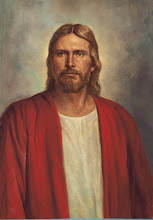
Daniel C. Peterson and Stephen D. Ricks, “Comparing LDS Beliefs with First-Century Christianity,” Ensign, Mar 1988, 7
Since the inception of The Church of Jesus Christ of Latter-day Saints, many critics have denied that it is Christian. Surprisingly, the basis for the claim has little to do with the standard definition of Christian: anyone or any group that believes in Jesus Christ as the Savior and Son of God. Rather, it has to do with Latter-day Saint doctrines that some feel are alien to “traditional Christianity,” where “traditional Christianity” means that body of beliefs held by most present-day Christian churches. The argument essentially goes that if the LDS church believes in certain doctrines not believed in by most present-day Christian churches, then the LDS church cannot be Christian.
The problem with this argument is that the major doctrines under attack are amazingly similar to Christian beliefs held during the New Testament period and the generations immediately following.
Does the New Testament define Christianity?
The Gospels lack any explicit treatment of the word Christian. Indeed, the word appears only three times in the New Testament, and never from the mouth of Christ himself. The word Christianity is entirely absent from the New Testament.
Acts 11:26 tells us that “the disciples were called Christians first in Antioch.” Here, the passive construction “were called Christians” suggests that the term was first used not by Christians, but by non-Christians. (Similarly, the names Yankee and Mormon were first used by outsiders.)
The term was probably modeled on such words as Herodian and Caesarian, already in circulation at that time, and meant nothing more complicated than Christ’s people or, perhaps, partisans of Christ. Note that the Christian congregation at Antioch represented a wide range of backgrounds, including Jews and non-Jews. These believers displayed the whole spectrum of attitudes toward the Jewish law—from continued adherence to the traditions of Judaism to rejection of all things Jewish.
The next mention of the term Christian is in Acts 26:28, where Agrippa makes his famous reply to Paul: “Almost thou persuadest me to be a Christian.” The Apostle had related to Agrippa and Festus the story of his conversion. The doctrinal content of Paul’s speech is simple and straightforward: Paul bears witness that Jesus had been foretold by the Jewish prophets, that he suffered and rose from the dead, and that forgiveness may be obtained through him. Paul described Christ’s mission as summoning people to “repent and turn to God, and do works meet for repentance.” (Acts 26:20.) The scriptural account gives no indication that Paul had to correct Agrippa’s use of the word Christian to describe one who believes in these basic doctrines.
First Peter 4:16 is the last instance of the word’s appearance in the New Testament. This verse is virtually without doctrinal definition, merely assuring the believer that he need not be ashamed if he suffer as a “Christian.” Even here, the term may be one that persecuting outsiders were using. It may have derived from current Roman, that is, non-Christian, legal usage.
In each of these instances, the term appears to originate from someone outside the community of believers themselves. In neither of the two passages from Acts does Paul use the word himself; it is non-Christians who use it. Where the term is used, the stated and implied beliefs of the Christians are far different from the present-day beliefs used to deny that Latter-day Saints are Christians, as can be clearly shown.
Is it true that because Latter-day Saints reject the traditional doctrine of the Trinity, they are not Christians?
The Church’s first Article of Faith is “We believe in God, the Eternal Father, and in His Son, Jesus Christ, and in the Holy Ghost.” This is a straightforward statement of belief that there are three members in the Godhead. However, Latter-day Saints do reject the doctrines of the Trinity as taught by most Christian churches today. For the most part, these creeds—the most famous of which is the Nicene Creed—were canonized in the fourth and fifth centuries a.d. following centuries of debate about the nature of the Godhead. Consequently, it is highly questionable whether these creeds reflect the thinking or beliefs of the New Testament church.
“The exact theological definition of the doctrine of the Trinity,” notes J. R. Dummelow, “was the result of a long process of development, which was not complete until the fifth century, or maybe even later.” 1 As Bill Forrest remarks, “To insist that a belief in the Trinity is requisite to being Christian, is to acknowledge that for centuries after the New Testament was completed thousands of Jesus’ followers were in fact not really ‘Christian.’ ” 2 Certainly the revelatory manner by which Joseph Smith learned of the doctrine of the Godhead pierces through the centuries-old debate on the subject.
Is it true that because Latter-day Saints believe that human beings can eventually become like God, they are not Christian?
As even a cursory glance at early Christian thought reveals, the idea that man might become as God—known in Greek as theosis or theopoiesis—may be found virtually everywhere, from the New Testament through the writings of the first four centuries. Church members take seriously such passages as Psalm 82:6 [Ps. 82:6], John 10:33–36, and Philippians 2:5–6 [Philip. 2:5–6], in which a plurality of gods and the idea of becoming like God are mentioned.
The notion of theosis is characteristic of church fathers Irenaeus (second century a.d.), Clement of Alexandria (third century a.d.), and Athanasius (fourth century a.d.). Indeed, so pervasive was the doctrine in the fourth century that Athanasius’s archenemies, the Arians, also held the belief 3 and the Origenist monks at Jerusalem heatedly debated “whether all men would finally become like Christ or whether Christ was really a different creature.” 4
According to an ancient formula, “God became man that man might become God.” Early Christians “were invited to ‘study’ to become gods” (note the plural). 5
Though the idea of human deification waned in the Western church in the Middle Ages, it remained very much alive in the Eastern Orthodox faith, which includes such Christian sects today as the Greek Orthodox and Russian Orthodox churches. 6 Jaroslav Pelikan notes, “The chief idea of St. Maximus, as of all Eastern theology, [was] the idea of deification.” 7
Is the subject of deification truly a closed question? After all, echoes of man becoming like God are still found in the work of later and modern writers in the West. For instance, C. S. Lewis’s writings are full of the language of human deification. 8 Even Martin Luther was capable of speaking of the “deification of human nature,” although in what sense it is not clear. 9
Related to the claim that Latter-day Saints are not Christians because of their belief in deification is the assertion that if they hold to some kind of belief in deification then it must be that Church members do not view Jesus as uniquely divine. Such an assertion is totally erroneous. The phrase “Only Begotten Son” occurs with its variants at least ten times in the Book of Mormon, fourteen times in the Doctrine and Covenants, and nineteen times in the Pearl of Great Price. Basic to Latter-day Saint theology is the uniqueness of Jesus Christ as the Only Begotten Son of the Father in the flesh.
Is it true that because Latter-day Saints practice baptism for the dead, they are not Christian?
The argument that Latter-day Saints cannot be Christians because they practice baptism for the dead presumes that it has been definitely established that 1 Corinthians 15:29 [1 Cor. 15:29] has nothing to do with an early Christian practice of baptism for the dead. The argument ignores the fact that such second-century groups as the Montanists and Marcionites—who are invariably referred to as Christians—practiced a similar rite. The practice was condemned in a.d. 393 by the Council of Hippo, which certainly implies that it was still a vital issue. 10 As Hugh Nibley has shown in great detail, many of the Church Fathers understood this verse literally, even when they did not always know what to make of it. 11
Mormon temple ritual in general is another source of controversy, largely because many think that the reticence to talk about it is not Christian. But the New Testament scholar Joachim Jeremias has shown that “the desire to keep the most sacred things from profanation”—a concern shared by the Latter-day Saints—is widely found in the New Testament and in the early Christian community. 12
The second-century church father Ignatius of Antioch was known to have held “secret” doctrines. The historian Tertullian (second century a.d.) even takes the heretics to task because they provide access to their services to everyone without distinction. As a result, the demeanor of these heretics becomes frivolous, merely human, without seriousness and without authority. 13
The pagan critic Celsus (second century a.d.) probably referred to Christianity as a “secret system of belief” because access to the various ordinances of the church—baptism and the sacrament—was available only to the initiated. In his response to Celsus, Origen (third century a.d.) readily admitted that many practices and doctrines were not available to everyone, but he argues that this was not unique to Christianity. 14 As late as the fourth century, some groups were making efforts to return to an earlier Christian tradition of preserving certain doctrines and practices for the initiated only. 15
Is it true that because Latter-day Saints do not accept the Bible as their sole authority in faith and doctrine, they are not Christians?
Latter-day Saints accept the Book of Mormon, the Doctrine and Covenants, and the Pearl of Great Price as scriptural, in addition to the Bible. But the whole question of canon—which writings are sacred, inspired, and binding on disciples—has always been a complicated one in the history of traditional Christianity.
In the earliest period of the Christian church, it is difficult to see a distinction being made between canonical writings and some books not in the present Protestant canon. For example, the Epistle of Jude draws heavily on noncanonical books such as 1 Enoch and The Assumption of Moses. As E. Isaac says of 1 Enoch, “It influenced Matthew, Luke, John, Acts, Romans, 1 and 2 Corinthians, Ephesians, Colossians, 1 and 2 Thessalonians, 1 Timothy, Hebrews, 1 John, Jude (which quotes it directly) and Revelation (with numerous points of contact) … in molding New Testament doctrines concerning the nature of the Messiah, the Son of Man, the messianic kingdom, demonology, the future, resurrection, the final judgment, the whole eschatological theater, and symbolism.” 16
The so-called Muratorian Fragment, dating from the late second century a.d., shows that some Christians of the period accepted the Apocalypse of Peter as scripture. Clement of Alexandria, writing around a.d. 200, seems to admit a New Testament canon of thirty books, including the Epistle of Barnabas, the Epistle of Clement, and the Preaching of Peter. Origen recognized the Epistle of Barnabas and the letter from the Shepherd of Hermas. 17
Even in more recent times, the question of canon has not been unanimously resolved. Martin Luther characterized the Epistle of James as “an epistle of straw”—largely because it seemed to disagree with his teaching of justification by faith alone—and mistrusted the book of Revelation. 18 Roman Catholics and the Orthodox churches tend to accept the Apocrypha as canonical—books included in their Bibles but left out of most Protestant Bibles, including the current King James Version. In fact, Eastern Orthodox churches have never settled the question of canon. A number of scholars have pointed out that the church has priority, both logically and historically, over the Bible—that is, a group of believers existed before a certain body of texts, such as the books of the Old and New Testament, were declared canonical. 19
Is it true that because Latter-day Saints deny the doctrine of original sin, they are not Christian?
The notion of original sin as it is usually understood today in traditional Christianity is a distinctly late invention that evolved from the controversies of the fourth and fifth centuries. Tertullian (second century a.d.), who was very concerned with the idea of sin, says nothing of the doctrine of original sin. Indeed, very few of the Church Fathers up to the fourth century show any interest in it at all. It was not clearly enunciated until Augustine (fourth/fifth century) needed it in his battle with the Christian Pelagians, who denied the doctrine, and it came to be associated with the Council of Carthage in a.d. 418. 20
As Norbert Brox points out, “Pelagian theology was the traditional one, especially in Rome. But the Africans, under the theological leadership of Augustine, managed to make their charge of heresy stick within the church, thereby establishing the Augustinian theology of grace as the basis of the Western tradition.” 21 Some modern scholars now raise the issue that Augustine, and not Pelagius, was the real heretic. 22
Is it true that because Latter-day Saints reject the doctrine of salvation by grace alone, they are not Christians?
Perhaps the most famous statement of the Latter-day Saint understanding of the relation between grace and works is in 2 Nephi 25:23: “It is by grace that we are saved, after all we can do.” [2 Ne. 25:23] This idea is sometimes called synergism—a term Van A. Harvey has used to describe Roman Catholicism. 23
The doctrine that salvation depends both on God’s grace and man’s good works is very old in Catholic theology. One of the canons at the Council of Trent specifically repudiates the notion of grace alone: “If anyone saith that justifying faith is nothing else but confidence in the divine mercy which remits sin for Christ’s sake alone; or, that this confidence alone is that whereby we are justified, let him be anathema.” 24 Are we to say, then, that Roman Catholicism is not Christian because it does not subscribe to the doctrine of salvation by grace alone?
The doctrine of salvation through faith alone, sometimes called solafidianism, is not a biblical doctrine: there are no instances in the New Testament of the phrases “grace alone” or “faith alone.” The philosopher-theologian Frederick Sontag argues that Jesus himself was interested not in words, and not even in theological dogma, but in action: For the Jesus in Matthew, he says, “Action is more important than definition.” 25 Richard Lloyd Anderson shows that even in Paul’s major treatments of the doctrine of grace, particularly in Romans and Ephesians, there is a balancing element of works as well. 26 Other New Testament writers, most notably James, make it clear that saving faith can only be recognized through works: “Faith, if it hath not works, is dead, being alone.” (James 2:17.)
The generations immediately following the New Testament period also recognized the need for both grace and works for salvation. The famous Didache—The Teaching of the Twelve Apostles—which dates back to before a.d. 70, is conspicuous for its moralism and legalism. 27 It is also significant that “the oldest datable literary document of Christian religion soon after the time of the Apostles”—the letter of Clement of Rome to the Corinthians, written in the last decade of the first century—emphasizes “good works, as it is in the Epistle of James, which may belong to the same time.” 28 The second-century document Shepherd of Hermas contains twelve commandments. J. L. Gonzales writes that they “are a summary of the duties of a Christian, and Hermas affirms that in obeying them there is eternal life.” 29
Even F. F. Bruce, who contends that Paul taught a doctrine of salvation by grace alone, concurs sadly that the doctrine was not a part of the early Christian church: “The Biblical doctrine of divine grace, God’s favour shown to sinful humanity, … seems almost, in the post-apostolic age, to reappear only with Augustine. Certainly the majority of Christian writers who flourished between the apostles and Augustine do not seem to have grasped what Paul was really getting at. … Marcion has been called the only one of these writers who understood Paul.” 30
Marcion, incidentally, was a second-century gnostic Christian who distinguished between the gods of the Old and New Testament. He felt that the Old Testament deity was a lesser deity than the God of the New Testament and rejected the Old Testament entirely, as well as any New Testament writing “tainted” with Old Testament ideas. Marcion produced a canon of scripture that recognized no Apostle of Jesus except Paul. He considered the other Apostles falsifiers of God.
By contrast, in the fourth century, one prominent Christian bishop was teaching the necessity of rituals. “If any man receive not Baptism,” wrote Cyril of Jerusalem, “he hath not salvation.” He also wrote about an ordinance of anointing, which he called “chrism”: “Having been counted worthy of this Holy Chrism, ye are called Christians. … For before you were deemed worthy of this grace, ye had no proper claim to that title.” 31
The Eastern Orthodox churches also do not accept solafidianism, the doctrine of salvation by faith alone. “Eastern Orthodox Christians emphasize a unity of faith and works. For the Orthodox, being conformed to the image of Christ … includes a response of our faith and works.” 32 Sensing the danger that a “grace alone” position could become “cheap grace” (to borrow an expression from the theologian Dietrich Bonhoeffer) or “a theologically thin, no-sweat Christianity,” some modern Protestant writers have adopted a similar position, recognizing that works also play a vital role in salvation. 33
With so many other past and present Christians rejecting the position that grace alone brings salvation, excluding the Latter-day Saints from “Christianity” for their belief in faith and works is not justified.
Members of The Church of Jesus Christ of Latter-day Saints easily meet the definition of a Christian as implicitly defined in the New Testament: they believe that ancient prophets foretold Christ’s coming, that Jesus Christ suffered for our transgressions, that he was put to death but rose from the dead, that through him we may obtain forgiveness of our sins, and that he will come again in glory.
The doctrinal reasons some Christians give for excluding the Latter-day Saints from Christianity make little sense, because many of the doctrines used by traditional Christianity are late developments, reflective of creeds formulated in the fourth and fifth century or developed during the Reformation.
Given the wide variety of beliefs among the various Christian churches, it is better to take persons claiming to be Christians at their word and to let the Lord be the judge.
Notes
1. Cited by Bill Forrest, “Are Mormons Christians?” Mormon Miscellaneous Response Series (Salt Lake City: Mormon Miscellaneous, n.d.).
2. Ibid.
3. See appropriate index entries in Jaroslav Pelikan, The Emergence of the Catholic Tradition (100–600): The Christian Tradition (Chicago: Univ. of Chicago Press, 1971) and the index entry “Salvation—defined as deification,” in The Spirit of Eastern Christendom (600–1700): The Christian Tradition (Chicago: Univ. of Chicago Press, 1974). See also K. E. Norman, Deification: The Content of Athanasian Soteriology, Ph.D. dissertation, Duke Univ., 1980.
4. Clyde L. Manschreck, A History of Christianity in the World, 2d. ed. (Englewood Cliffs, N.J.: Prentice Hall, 1985), p. 52.
5. P. Barlow, “Unorthodox Orthodoxy: The Idea of Deification in Christian History,” Sunstone 8 (Sep./Oct. 1983):16–17.
6. See G. I. Mantzarides, The Deification of Man: Saint Gregory Palamas and Orthodox Tradition, trans. Liadain Sherrard (Crestwood, N.Y.: St. Vladimir’s Seminary Press, 1984).
7. The Spirit of Eastern Christendom, p. 10.
8. A Grief Observed (New York: Bantam Books, 1963), pp. 84–85; Mere Christianity (New York: Macmillan, 1960), pp. 138–40, 174, 187.
9. Jack R. Pressau, I’m Saved, You’re Saved … Maybe (Atlanta: John Knox, 1977), p. 57; A. Nygren, Agape and Eros, trans. Philip S. Watson (Chicago: Univ. of Chicago Press, 1982), p. 734.
10. Samuel M. Gilimour, “Baptism for the Dead,” in An Encyclopedia of Religion, ed. V. Ferm (New York: The Philosophical Library, 1945), p. 54.
11. “Baptism for the Dead in Ancient Times,” Improvement Era, Dec. 1948, pp. 786–88, 836; Jan. 1949, pp. 24–26, 60; Feb. 1949, pp. 90–91, 109–10, 112; Mar. 1949, pp. 146–48, 180–83; Apr. 1949, pp. 212–14.
12. The Eucharistic Words of Jesus (New York: Scribner’s, 1966), p. 130.
13. Tertullianus, Apologia 7–8; De praescriptionibus adversus haereticos 41.
14. Origen, Contra Celsum 1:7.
15. Norbert Brox, Kirchengeschichte des Altertums (Düsseldorf, West Germany: Patmos Verlag, 1983), p. 134.
16. E. Isaac, “1 (Ethiopic Apocalypse of) Enoch,” in The Old Testament Pseudepigrapha, ed. J. H. Charlesworth, 2 vols. (Garden City, N.Y.: Doubleday, 1983), 1:10. See also “Apocrypha,” in The Interpreter’s Dictionary of the Bible, ed. G. A. Buttrick (Nashville: Abingdon, 1953), 1:161–69.
17. Manschreck, p. 33.
18. R. Bainton, Here I Stand: A Life of Martin Luther (Nashville: Abingdon-Cokesbury Press, 1950), pp. 177, 331–32; Max Lackmann, Sola Fide: Eine exegetische Studie über Jakobus 2 zur reformatorischen Rechtfertigungslehre (Gütersloh, West Germany: C. Bertelsmann Verlag, 1949).
19. H. Holzapfel, Die Sekten in Deutschland (Regensburg, West Germany: Verlag Josef Koesel & Friedrich Pustet A. G., 1925), pp. 20, 23–27; P. Johnson, A History of Christianity (New York: Atheneum, 1983), p. 22.
20. K. Rahner, “Original Sin,” in Sacramentum Mundi: An Encyclopedia of Theology, ed. Rahner et al., 6 vols. (London: Burns and Oates, 1969), 4:329.
21. Kirchengeschichte, p. 141 (authors’ translation).
22. W. E. Phipps, “The Heresiarch: Pelagius or Augustine?” Anglican Theological Review 62 (1980):124–33.
23. A Handbook of Theological Terms (London: George Allen & Unwin, 1966), p. 199.
24. Session VI, Canon 12, cited in L. Boettner, Roman Catholicism (Phillipsburg, N.J.: The Presbyterian and Reformed Publishing Co., 1986), p. 261.
25. “The Once and Future Christian,” International Journal for Philosophy of Religion 19 (1986):116–18.
26. Understanding Paul (Salt Lake City: Deseret Book Co., 1983), pp. 185–86, 272–76, 355–62.
27. Justo L. Gonzales, A History of Christian Thought, 3 vols. (Nashville: Abingdon, 1970), 1:69, 94–96.
28. Werner Jaeger, Early Christianity and Greek Paideia (Cambridge: Harvard Univ. Press, 1961), pp. 12, 15–16.
29. Gonzales, p. 89.
30. The Spreading Flame (Grand Rapids, Mich.: Wm. B. Eerdmans Publishing Co., 1979), p. 334.
31. Catechetical Lectures 3:10; 21:5.
32. W. G. Rusch, “Getting to Know the Orthodox,” The Lutheran, 2 Apr. 1986, p. 12.
33. Pressau, p. 38. See also J. Macquarrie, An Existentialist Theology (Harmondsworth, England: Penguin Books, 1973), pp. 144–49.
Showing posts with label trinity. Show all posts
Showing posts with label trinity. Show all posts
Friday, October 10, 2008


Is the LDS View of God Consistent with the Bible?
William O. Nelson, “Is the LDS View of God Consistent with the Bible?,” Ensign, Jul 1987, 56
Latter-day Saints are sometimes accused of having an antibiblical theology because they believe that God is a glorified being of flesh and bones—not just a spirit essence. Some who write anti-Mormon pamphlets insist that the LDS concept of Deity is contrary to what is recognized as traditional Christian doctrine. In this they are quite correct. The traditional view about the Trinity is well over a thousand years old, and time has a way of hallowing ideas, whether or not they are true.
One of the most demonstrable truths from the Bible is the physical, bodily resurrection of Jesus Christ. When Jesus came forth from the tomb, he showed himself to his Apostles. Even they thought him to be a spirit, but he said: “Behold my hands and my feet, that it is I myself: handle me, and see; for a spirit hath not flesh and bones, as ye see me have.”
Then he showed them his hands and feet, and when they were still skeptical, he asked for meat and honeycomb and ate before them. (Luke 24:36–43.) Then they saw he was no apparition.
Thomas was not present at the first appearance to the Twelve, so he remained skeptical. He told the others: “Except I shall see in his hands the print of the nails, and put my finger into the print of the nails, and thrust my hand into his side, I will not believe.” (John 20:24–25.)
One week later, Jesus again appeared to the disciples. This time, Thomas was among them. The Lord greeted them, then spoke to Thomas: “Reach hither thy finger, and behold my hands; and reach hither thy hand, and thrust it into my side: and be not faithless, but believing.”
Thomas could only exclaim, “My Lord and my God.” (John 20:26–28.) That day he became a special witness of the Lord’s literal resurrection.
After Jesus was resurrected, more than five hundred also saw him and testified of his physical resurrection. (1 Cor. 15:5–8.) The Apostles, too, were witnesses of his ascension into heaven when two angels told them that Jesus would return in like manner as he had ascended. (Acts 1:9–11.)
We also know that at his second coming, Christ will appear with a physical body. John testified that “every eye shall see him.” (Rev. 1:7.) Zechariah prophesied that “his feet shall stand in that day upon the mount of Olives” (Zech. 14:4; italics added), and the beleaguered Israelites “shall look upon [him] whom they have pierced, and they shall mourn for him.” (Zech. 12:10.) And then “one shall say unto him, What are these wounds in thine hands? Then he shall answer, Those with which I was wounded in the house of my friends.” (Zech. 13:6; italics added.)
With such an abundance of biblical testimony from the ancient Apostles and prophets, how did traditional Christianity come to the idea that somehow Jesus’ bodily identity was dissolved into spirit essence? How did the Christian sects come to accept the idea that though three personages comprise the Godhead, they are one immaterial spirit? Certainly the ideas are not apostolic in origin.
The early Apostles took the gospel into a Greco-Roman world that espoused Neoplatonism—a philosophy derived from Plato’s teachings on idealism. One idea that came down from Plato was that matter is essentially evil. (James L. Barker, Apostasy from the Divine Church, Salt Lake City: Bookcraft, 1960, pp. 229–35.)
As long as Apostles led the Church, they opposed the philosophies of the day. Paul’s first letter to the Corinthians is an example of this. Apparently, some who held to the belief that matter was evil were baptized but had difficulty accepting the physical resurrection of Jesus. They reasoned that since Jesus was perfectly good, he could not have a material body. In his letter, Paul addressed the Greek belief in the body’s corruptibility by bearing testimony that a resurrected body, like Christ’s, is incorruptible. (1 Cor. 15:3–8, 12–20, 35–42.)
Likewise the Apostle John asserted in his gospel and epistles that Jesus was a divine being of flesh in mortality to counteract the heresy that he was not or could not have been flesh because matter was evil. (John 1:14; 1 Jn. 1:1–3; 1 Jn. 4:3.)
The dilemma of the church after the first century was how to sustain a unified church without a body of general authorities. By the early second century, the church had gone through three major persecutions by the Roman emperors Nero (a.d. 54–68), Domitian (a.d. 81–96), and Trajan (a.d. 98–117), and apostasy and heresy were rampant. The Apostles were gone—all martyred except for John—and church leaders who had known the Apostles but did not have their apostolic keys, like Papias, Clement of Rome, and Polycarp, were dead.
The defenders of the church in the late second and third century were Christian apologists and scholars, many of whom were trained in Greek philosophy and in rhetoric and logic.
They brought the classical culture of Greece into the church for two reasons: first, to rhetorically and logically “prove” the Christian gospel to a world steeped in Greek culture; second, to make Christianity intellectually respectable. Their efforts were an understandable human reaction to counteract the persecution that the church had suffered for two centuries. But it made the church compatible with the very culture the church had once disdained.
The synthesis of Greek philosophy and the Christian gospel is well documented. H. I. Marrou describes how Origen and others caused the church to embrace Hellenistic culture and ideas. (A History of Education in Antiquity, tr. George Lamb, New York: Mentor Book, 1956, pp. 424–29.) Edwin Hatch, in his definitive work on the subject, wrote that the early Christians’ study of Greek philosophy created a certain “habit of mind”:
“When Christianity came into contact with the society in which that habit of mind existed, it modified, it reformed, it elevated, the ideas which it contained and the motives which stimulated it to action; but in its turn it was itself profoundly modified by the habit of mind of those who accepted it. It was impossible for Greeks, … with an education which penetrated their whole nature, to receive or to retain Christianity in its primitive simplicity.” (The Influence of Greek Ideas on Christianity, New York: Harper & Row, 1957, p. 49.)
As the church entered the third century, many ridiculed Christianity because they regarded it as polytheistic—that is, it had a theology of three Gods: the Father, Son, and Holy Ghost. By this time the more sophisticated had rejected polytheistic pagan deities and had become monotheistic, accepting but one God. So the issue for the church was how to make Christian theology accord with respectable opinion.
Tertullian, a lawyer, offered this solution: The true God was composed of immaterial spiritual substance, and though the three personages that comprised the Godhead were distinct, this was only a material manifestation of an invisible God. As for how three persons could be one, it was explained that the persons were legally conceived entities, “just as a corporation is composed of various people though it is not the people.” (T. Edgar Lyon, Apostasy to Restoration, Salt Lake City: The Church of Jesus Christ of Latter-day Saints, 1960, p. 113.)
Fusing the ideas of church theologians, such as Irenaeus, Origeu, Tertullian, and Athanasius, the Trinitarian formula of three spirits in one was finally accepted as official doctrine by the council of Nicea in a.d. 325. (Lyon, pp. 144–53; Barker, pp. 249–71.)
The key issue through these early centuries was whether Christians would accept a God who was corporeal and material, or one who was pure spirit. Here Greek philosophy prevailed, with its antipathy to materialism, opposition to polytheism, and revulsion to the idea that God had a body.
The unsurpassed intellectual in Christian history was Augustine. He was the one who thoroughly fused the theology of the New Testament with Platonism. In examining Christian doctrine, Augustine confessed to a strong preconception—a repugnance to the idea that God had a body. (The Confessions, V, x:19–20; VII, 1:1. In Great Books of the Western World, vol. 18, Chicago: Encyclopedia Britannica, 1952, pp. 32, 43.) He acknowledged that he had labored on the thesis of the Trinity for fifteen years without “ever reaching a satisfactory conclusion.” (Hugh Nibley, The World and the Prophets, Salt Lake City: Deseret Book Co., 1954, p. 86.)
Finally he rationalized that if one accepts the Platonic idea that spirit essence is the purest manifestation of reality and that matter is the most corrupt, God must therefore be an immaterial being. He was then able to accept the doctrine of the Trinity. (Confessions, IV, xvi:29, 31; V, x:19–20; VI, iii:4–iv:5; The City of God, VIII, ch. 5–6. In Great Books, vol. 18, pp. 26, 32, 36, 267–69.) As Plato had done before him, Augustine decided that since God is the ultimate good, he cannot be associated with anything material.
Augustine’s personal theology became that of the Roman Empire and remains an influence in historic Christianity to this day. Such is the basis for traditional Christianity’s teaching on the Trinity—a belief described by modern clerics as a mystery.
In view of biblical teachings on the nature of God and the historic development of the concept of the Trinity, we might ask, Which view is more biblically defensible?
As a child reared in a Protestant home and educated in a parochial grammar school, I vividly recall many occasions when teachers would vainly attempt to explain the mystery of the Trinity. We were told that there were three persons, but not three Gods. The three persons were one spiritual substance, so there could not be three separate beings.
One explanation likened the Trinity to water, steam, and ice, which are different formations of the same element. Another likened the Trinity to writing a book. The author starts with an idea, then the idea becomes incarnate when the writer converts the idea to words. Then when others read the words of the book, it has an effect on the reader. The Idea is the Father, the Word is the Son, and the Effect is the Holy Ghost.
It was hard to fathom a Deity of this nature, let alone love him. But even more significant, the great teaching of Paul that we are God’s literal offspring (Acts 17:28–29) is not even taught in traditional Christian theology. Unfortunately, because of this misunderstanding of God’s true nature, millions of our Heavenly Father’s children have failed to understand their true identity.
In contrast to the preponderance of scriptural support for the physical body of the Lord, there is meager evidence in the Bible to support belief in a God who is a spirit essence. The most frequently cited passage is a conversation between Jesus and a Samaritan woman. The Samaritans had a corrupted form of Jewish and heathen worship. The Savior said to the woman:
“Ye worship ye know not what: we know what we worship. …
“But the hour cometh, and now is, when the true worshippers shall worship the Father in spirit and in truth: for the Father seeketh such to worship him.
“God is a Spirit: and they that worship him must worship him in spirit and in truth.” (John 4:22–24; italics added.)
By revelation, the Prophet Joseph Smith translated verse 24 to read “For unto such hath God promised his Spirit. And they who worship him, must worship in spirit and in truth.” (JST, John 4:26.)
The Prophet’s interpretation not only harmonizes with the other passages and episodes in the scriptural records, but it also demonstrates how taking one isolated passage out of context creates false theology. Even without Joseph Smith’s changes, the passage makes sense. One can say that God is a Spirit, just as it can be said, “Man is spirit.” (D&C 93:33.) President Gordon B. Hinckley explained:
“Of course God is a spirit, and so are you, in the combination of spirit and body that makes of you a living being. …
“Each of us is a dual being of spiritual entity and physical entity. All know of the reality of death when the body dies, and each of us also knows that the spirit lives on as an individual entity and that at some time, under the divine plan made possible by the sacrifice of the Son of God, there will be a reunion of spirit and body. Jesus’ declaration that God is a spirit no more denies that he has a body than does the statement that I am a spirit while also having a body.” (Ensign, Nov. 1986, p. 49.)
An important point to remember with regard to doctrinal teachings is that the Lord’s church functions on the basis of two fundamental principles: (1) the testimony of apostolic witnesses, who know by personal experience the reality and truth of the Lord and his teachings; and (2) the testimony of each member, based upon knowledge, faith, and the witness of the Holy Ghost.
A modern prophet, Joseph Smith, Jr., provided the world with an eyewitness testimony of God’s true nature. Concerning a glorious visitation by the Father and the Son, Joseph testified, “I saw two Personages, whose brightness and glory defy all description, standing above me in the air. One of them spake unto me, calling me by name and said, pointing to the other—This is my Beloved Son. Hear Him!” (JS—H 1:17.)
Joseph Smith saw a confirmation of what Jesus had impressed upon Philip long ago: “Have I been so long time with you, and yet hast thou not known me, Philip? he that hath seen me hath seen the Father; and how sayest thou then, Shew us the Father?” (John 14:9.) Jesus was apparently informing his disciples that he and his Father were alike in attributes, in power, and in bodily appearance.
How different from the prevailing beliefs that were propounded from the pulpits at the time of Joseph Smith! The resurrected Jesus declared to the Prophet that those creeds were “abominable,” for so strongly were they riveted to the hearts of men that their hearts were drawn away from their Heavenly Father. (JS—H 1:19; D&C 123:7.)
The greatest contribution of the Prophet Joseph Smith to this modern era is the Book of Mormon, which contains a testimony of the resurrected Christ and his ministry to the people of the Western Hemisphere after his resurrection in Jerusalem. The Book of Mormon records that 2,500 people saw and heard the Savior and testified of his bodily resurrection of flesh and bones.
Compare with the idea of an all-powerful yet immaterial three-in-one spiritual essence these two sentences from Joseph Smith, who was speaking as revelation dictated:
“The Father has a body of flesh and bones as tangible as man’s; the Son also; but the Holy Ghost has not a body of flesh and bones, but is a personage of Spirit.” (D&C 130:22.)
“There is no such thing as immaterial matter. All spirit is matter, but it is more fine or pure.” (D&C 131:7.)
Living prophets and Apostles today continue to teach of God’s true nature. They testify that Jesus Christ is a living, resurrected being with a body of flesh and bones. How do they know? Like Apostles of old, they are his special witnesses.
With regard to the second principle, each individual may receive confirmation of spiritual truths by the power of the Holy Ghost. As Moroni in the Book of Mormon urges us to do:
“Ask God, the Eternal Father, in the name of Christ, if these things are not true; and if ye shall ask with a sincere heart, with real intent, having faith in Christ, he will manifest the truth of it unto you, by the power of the Holy Ghost.” (Moro. 10:4.)
On the basis of knowledge prompted by the Holy Ghost, we can know that the nature of God the Father, his Son Jesus Christ, and the Holy Ghost, as taught by the Bible and as revealed to the Prophet Joseph Smith, is true. Those who have received their understanding about God from errant traditional Christianity need no longer struggle with that confused and confusing doctrine. The Prophet’s inspired declarations about the Godhead are in total agreement with the biblical evidence that Jesus and the Father have distinct, material bodies.
[illustration] “He Appeared to the Eleven As They Sat at Meat,” by James J. Tissot
[illustration] “The First Vision,” by Minerva Teichert
Latter-day Saints are sometimes accused of having an antibiblical theology because they believe that God is a glorified being of flesh and bones—not just a spirit essence. Some who write anti-Mormon pamphlets insist that the LDS concept of Deity is contrary to what is recognized as traditional Christian doctrine. In this they are quite correct. The traditional view about the Trinity is well over a thousand years old, and time has a way of hallowing ideas, whether or not they are true.
One of the most demonstrable truths from the Bible is the physical, bodily resurrection of Jesus Christ. When Jesus came forth from the tomb, he showed himself to his Apostles. Even they thought him to be a spirit, but he said: “Behold my hands and my feet, that it is I myself: handle me, and see; for a spirit hath not flesh and bones, as ye see me have.”
Then he showed them his hands and feet, and when they were still skeptical, he asked for meat and honeycomb and ate before them. (Luke 24:36–43.) Then they saw he was no apparition.
Thomas was not present at the first appearance to the Twelve, so he remained skeptical. He told the others: “Except I shall see in his hands the print of the nails, and put my finger into the print of the nails, and thrust my hand into his side, I will not believe.” (John 20:24–25.)
One week later, Jesus again appeared to the disciples. This time, Thomas was among them. The Lord greeted them, then spoke to Thomas: “Reach hither thy finger, and behold my hands; and reach hither thy hand, and thrust it into my side: and be not faithless, but believing.”
Thomas could only exclaim, “My Lord and my God.” (John 20:26–28.) That day he became a special witness of the Lord’s literal resurrection.
After Jesus was resurrected, more than five hundred also saw him and testified of his physical resurrection. (1 Cor. 15:5–8.) The Apostles, too, were witnesses of his ascension into heaven when two angels told them that Jesus would return in like manner as he had ascended. (Acts 1:9–11.)
We also know that at his second coming, Christ will appear with a physical body. John testified that “every eye shall see him.” (Rev. 1:7.) Zechariah prophesied that “his feet shall stand in that day upon the mount of Olives” (Zech. 14:4; italics added), and the beleaguered Israelites “shall look upon [him] whom they have pierced, and they shall mourn for him.” (Zech. 12:10.) And then “one shall say unto him, What are these wounds in thine hands? Then he shall answer, Those with which I was wounded in the house of my friends.” (Zech. 13:6; italics added.)
With such an abundance of biblical testimony from the ancient Apostles and prophets, how did traditional Christianity come to the idea that somehow Jesus’ bodily identity was dissolved into spirit essence? How did the Christian sects come to accept the idea that though three personages comprise the Godhead, they are one immaterial spirit? Certainly the ideas are not apostolic in origin.
The early Apostles took the gospel into a Greco-Roman world that espoused Neoplatonism—a philosophy derived from Plato’s teachings on idealism. One idea that came down from Plato was that matter is essentially evil. (James L. Barker, Apostasy from the Divine Church, Salt Lake City: Bookcraft, 1960, pp. 229–35.)
As long as Apostles led the Church, they opposed the philosophies of the day. Paul’s first letter to the Corinthians is an example of this. Apparently, some who held to the belief that matter was evil were baptized but had difficulty accepting the physical resurrection of Jesus. They reasoned that since Jesus was perfectly good, he could not have a material body. In his letter, Paul addressed the Greek belief in the body’s corruptibility by bearing testimony that a resurrected body, like Christ’s, is incorruptible. (1 Cor. 15:3–8, 12–20, 35–42.)
Likewise the Apostle John asserted in his gospel and epistles that Jesus was a divine being of flesh in mortality to counteract the heresy that he was not or could not have been flesh because matter was evil. (John 1:14; 1 Jn. 1:1–3; 1 Jn. 4:3.)
The dilemma of the church after the first century was how to sustain a unified church without a body of general authorities. By the early second century, the church had gone through three major persecutions by the Roman emperors Nero (a.d. 54–68), Domitian (a.d. 81–96), and Trajan (a.d. 98–117), and apostasy and heresy were rampant. The Apostles were gone—all martyred except for John—and church leaders who had known the Apostles but did not have their apostolic keys, like Papias, Clement of Rome, and Polycarp, were dead.
The defenders of the church in the late second and third century were Christian apologists and scholars, many of whom were trained in Greek philosophy and in rhetoric and logic.
They brought the classical culture of Greece into the church for two reasons: first, to rhetorically and logically “prove” the Christian gospel to a world steeped in Greek culture; second, to make Christianity intellectually respectable. Their efforts were an understandable human reaction to counteract the persecution that the church had suffered for two centuries. But it made the church compatible with the very culture the church had once disdained.
The synthesis of Greek philosophy and the Christian gospel is well documented. H. I. Marrou describes how Origen and others caused the church to embrace Hellenistic culture and ideas. (A History of Education in Antiquity, tr. George Lamb, New York: Mentor Book, 1956, pp. 424–29.) Edwin Hatch, in his definitive work on the subject, wrote that the early Christians’ study of Greek philosophy created a certain “habit of mind”:
“When Christianity came into contact with the society in which that habit of mind existed, it modified, it reformed, it elevated, the ideas which it contained and the motives which stimulated it to action; but in its turn it was itself profoundly modified by the habit of mind of those who accepted it. It was impossible for Greeks, … with an education which penetrated their whole nature, to receive or to retain Christianity in its primitive simplicity.” (The Influence of Greek Ideas on Christianity, New York: Harper & Row, 1957, p. 49.)
As the church entered the third century, many ridiculed Christianity because they regarded it as polytheistic—that is, it had a theology of three Gods: the Father, Son, and Holy Ghost. By this time the more sophisticated had rejected polytheistic pagan deities and had become monotheistic, accepting but one God. So the issue for the church was how to make Christian theology accord with respectable opinion.
Tertullian, a lawyer, offered this solution: The true God was composed of immaterial spiritual substance, and though the three personages that comprised the Godhead were distinct, this was only a material manifestation of an invisible God. As for how three persons could be one, it was explained that the persons were legally conceived entities, “just as a corporation is composed of various people though it is not the people.” (T. Edgar Lyon, Apostasy to Restoration, Salt Lake City: The Church of Jesus Christ of Latter-day Saints, 1960, p. 113.)
Fusing the ideas of church theologians, such as Irenaeus, Origeu, Tertullian, and Athanasius, the Trinitarian formula of three spirits in one was finally accepted as official doctrine by the council of Nicea in a.d. 325. (Lyon, pp. 144–53; Barker, pp. 249–71.)
The key issue through these early centuries was whether Christians would accept a God who was corporeal and material, or one who was pure spirit. Here Greek philosophy prevailed, with its antipathy to materialism, opposition to polytheism, and revulsion to the idea that God had a body.
The unsurpassed intellectual in Christian history was Augustine. He was the one who thoroughly fused the theology of the New Testament with Platonism. In examining Christian doctrine, Augustine confessed to a strong preconception—a repugnance to the idea that God had a body. (The Confessions, V, x:19–20; VII, 1:1. In Great Books of the Western World, vol. 18, Chicago: Encyclopedia Britannica, 1952, pp. 32, 43.) He acknowledged that he had labored on the thesis of the Trinity for fifteen years without “ever reaching a satisfactory conclusion.” (Hugh Nibley, The World and the Prophets, Salt Lake City: Deseret Book Co., 1954, p. 86.)
Finally he rationalized that if one accepts the Platonic idea that spirit essence is the purest manifestation of reality and that matter is the most corrupt, God must therefore be an immaterial being. He was then able to accept the doctrine of the Trinity. (Confessions, IV, xvi:29, 31; V, x:19–20; VI, iii:4–iv:5; The City of God, VIII, ch. 5–6. In Great Books, vol. 18, pp. 26, 32, 36, 267–69.) As Plato had done before him, Augustine decided that since God is the ultimate good, he cannot be associated with anything material.
Augustine’s personal theology became that of the Roman Empire and remains an influence in historic Christianity to this day. Such is the basis for traditional Christianity’s teaching on the Trinity—a belief described by modern clerics as a mystery.
In view of biblical teachings on the nature of God and the historic development of the concept of the Trinity, we might ask, Which view is more biblically defensible?
As a child reared in a Protestant home and educated in a parochial grammar school, I vividly recall many occasions when teachers would vainly attempt to explain the mystery of the Trinity. We were told that there were three persons, but not three Gods. The three persons were one spiritual substance, so there could not be three separate beings.
One explanation likened the Trinity to water, steam, and ice, which are different formations of the same element. Another likened the Trinity to writing a book. The author starts with an idea, then the idea becomes incarnate when the writer converts the idea to words. Then when others read the words of the book, it has an effect on the reader. The Idea is the Father, the Word is the Son, and the Effect is the Holy Ghost.
It was hard to fathom a Deity of this nature, let alone love him. But even more significant, the great teaching of Paul that we are God’s literal offspring (Acts 17:28–29) is not even taught in traditional Christian theology. Unfortunately, because of this misunderstanding of God’s true nature, millions of our Heavenly Father’s children have failed to understand their true identity.
In contrast to the preponderance of scriptural support for the physical body of the Lord, there is meager evidence in the Bible to support belief in a God who is a spirit essence. The most frequently cited passage is a conversation between Jesus and a Samaritan woman. The Samaritans had a corrupted form of Jewish and heathen worship. The Savior said to the woman:
“Ye worship ye know not what: we know what we worship. …
“But the hour cometh, and now is, when the true worshippers shall worship the Father in spirit and in truth: for the Father seeketh such to worship him.
“God is a Spirit: and they that worship him must worship him in spirit and in truth.” (John 4:22–24; italics added.)
By revelation, the Prophet Joseph Smith translated verse 24 to read “For unto such hath God promised his Spirit. And they who worship him, must worship in spirit and in truth.” (JST, John 4:26.)
The Prophet’s interpretation not only harmonizes with the other passages and episodes in the scriptural records, but it also demonstrates how taking one isolated passage out of context creates false theology. Even without Joseph Smith’s changes, the passage makes sense. One can say that God is a Spirit, just as it can be said, “Man is spirit.” (D&C 93:33.) President Gordon B. Hinckley explained:
“Of course God is a spirit, and so are you, in the combination of spirit and body that makes of you a living being. …
“Each of us is a dual being of spiritual entity and physical entity. All know of the reality of death when the body dies, and each of us also knows that the spirit lives on as an individual entity and that at some time, under the divine plan made possible by the sacrifice of the Son of God, there will be a reunion of spirit and body. Jesus’ declaration that God is a spirit no more denies that he has a body than does the statement that I am a spirit while also having a body.” (Ensign, Nov. 1986, p. 49.)
An important point to remember with regard to doctrinal teachings is that the Lord’s church functions on the basis of two fundamental principles: (1) the testimony of apostolic witnesses, who know by personal experience the reality and truth of the Lord and his teachings; and (2) the testimony of each member, based upon knowledge, faith, and the witness of the Holy Ghost.
A modern prophet, Joseph Smith, Jr., provided the world with an eyewitness testimony of God’s true nature. Concerning a glorious visitation by the Father and the Son, Joseph testified, “I saw two Personages, whose brightness and glory defy all description, standing above me in the air. One of them spake unto me, calling me by name and said, pointing to the other—This is my Beloved Son. Hear Him!” (JS—H 1:17.)
Joseph Smith saw a confirmation of what Jesus had impressed upon Philip long ago: “Have I been so long time with you, and yet hast thou not known me, Philip? he that hath seen me hath seen the Father; and how sayest thou then, Shew us the Father?” (John 14:9.) Jesus was apparently informing his disciples that he and his Father were alike in attributes, in power, and in bodily appearance.
How different from the prevailing beliefs that were propounded from the pulpits at the time of Joseph Smith! The resurrected Jesus declared to the Prophet that those creeds were “abominable,” for so strongly were they riveted to the hearts of men that their hearts were drawn away from their Heavenly Father. (JS—H 1:19; D&C 123:7.)
The greatest contribution of the Prophet Joseph Smith to this modern era is the Book of Mormon, which contains a testimony of the resurrected Christ and his ministry to the people of the Western Hemisphere after his resurrection in Jerusalem. The Book of Mormon records that 2,500 people saw and heard the Savior and testified of his bodily resurrection of flesh and bones.
Compare with the idea of an all-powerful yet immaterial three-in-one spiritual essence these two sentences from Joseph Smith, who was speaking as revelation dictated:
“The Father has a body of flesh and bones as tangible as man’s; the Son also; but the Holy Ghost has not a body of flesh and bones, but is a personage of Spirit.” (D&C 130:22.)
“There is no such thing as immaterial matter. All spirit is matter, but it is more fine or pure.” (D&C 131:7.)
Living prophets and Apostles today continue to teach of God’s true nature. They testify that Jesus Christ is a living, resurrected being with a body of flesh and bones. How do they know? Like Apostles of old, they are his special witnesses.
With regard to the second principle, each individual may receive confirmation of spiritual truths by the power of the Holy Ghost. As Moroni in the Book of Mormon urges us to do:
“Ask God, the Eternal Father, in the name of Christ, if these things are not true; and if ye shall ask with a sincere heart, with real intent, having faith in Christ, he will manifest the truth of it unto you, by the power of the Holy Ghost.” (Moro. 10:4.)
On the basis of knowledge prompted by the Holy Ghost, we can know that the nature of God the Father, his Son Jesus Christ, and the Holy Ghost, as taught by the Bible and as revealed to the Prophet Joseph Smith, is true. Those who have received their understanding about God from errant traditional Christianity need no longer struggle with that confused and confusing doctrine. The Prophet’s inspired declarations about the Godhead are in total agreement with the biblical evidence that Jesus and the Father have distinct, material bodies.
[illustration] “He Appeared to the Eleven As They Sat at Meat,” by James J. Tissot
[illustration] “The First Vision,” by Minerva Teichert
Subscribe to:
Posts (Atom)