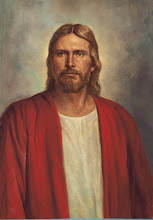
This glorious truth [salvation for the dead] is well calculated to enlarge the understanding, and to sustain the soul under troubles, difficulties and distresses. For illustration, suppose the case of two men, brothers, equally intelligent, learned, virtuous and lovely, walking in uprightness and in all good conscience, so far as they have been able to discern duty from the muddy stream of tradition, or from the blotted page of the book of nature.
One dies and is buried, having never heard the Gospel of reconciliation; to the other the message of salvation is sent, he hears and embraces it, and is made the heir of eternal life. Shall the one become the partaker of glory and the other be consigned to hopeless perdition? Is there no chance for his escape? Sectarianism answers "none." Such an idea is worse than atheism. The truth shall break down and dash in pieces all such bigoted Pharisaism; the sects shall be sifted, the honest in heart brought out, and their priests left in the midst of their corruption. (Joseph Smith, History of The Church of Jesus Christ of Latter-day Saints, 7 Vols. 4:425-26)
Showing posts with label Joseph Smith. Show all posts
Showing posts with label Joseph Smith. Show all posts
Tuesday, July 24, 2007


Tuesday, July 17, 2007
Contention: Joseph Smith
[Do not] contend with others on account of their faith, or systems of religion, but pursue a steady course. This I delivered by way of commandment; and all who observe it not, will pull down persecution upon their heads, while those who do, shall always be filled with the Holy Ghost; this I pronounced as a prophecy, and sealed with hosanna and amen. (Joseph Smith, History of The Church of Jesus Christ of Latter-day Saints, 7 vols. 2:431)
There are many that creep in unawares, and endeavor to sow discord, strife, and animosity in our midst, and by so doing, bring evil upon the Saints. These things we have to bear with, and these things will prevail either to a greater or less extent until "the floor be thoroughly purged," and "the chaff be burnt up." (Joseph Smith, History of The Church of Jesus Christ of Latter-day Saints, 7 vols. 4:272-73)
If we get puffed up by thinking that we have much knowledge, we are apt to get a contentious spirit, and correct knowledge is necessary to cast out that spirit.
The evil of being puffed up with correct (though useless) knowledge is not so great as the evil of contention. (Joseph Smith, History of The Church of Jesus Christ of Latter-day Saints, 7 vols. 5:340)
There are many that creep in unawares, and endeavor to sow discord, strife, and animosity in our midst, and by so doing, bring evil upon the Saints. These things we have to bear with, and these things will prevail either to a greater or less extent until "the floor be thoroughly purged," and "the chaff be burnt up." (Joseph Smith, History of The Church of Jesus Christ of Latter-day Saints, 7 vols. 4:272-73)
If we get puffed up by thinking that we have much knowledge, we are apt to get a contentious spirit, and correct knowledge is necessary to cast out that spirit.
The evil of being puffed up with correct (though useless) knowledge is not so great as the evil of contention. (Joseph Smith, History of The Church of Jesus Christ of Latter-day Saints, 7 vols. 5:340)
Saturday, June 9, 2007
Joseph Smith
Joseph Smith
Those who revile Joseph Smith will not change Joseph's status with the Lord (see 2 Ne. 3:8)-merely their own! (Ensign, November 1983, p. 56.)
His prayer [in the Sacred Grove] was for personal and tactical guidance. The response, however, was of global and eternal significance. (Ensign, May 1992, p. 37.)
Yes, Joseph received remarkable manifestations, along with constant vexations. True, for instance, there were periodic arrivals of heavenly messengers, but these were punctuated by the periodic arrivals of earthly mobs. (Ensign, May 1992, p. 38.)
While Joseph was befriended by heavenly notables, he was also betrayed by some of his earthly friends. Receiving keys and gifts was real, but so was the painful loss of six of the eleven children born to him and Emma. Granted, Joseph had revealed to him glimpses of far horizons-the first and third estates. But these periodic glories occurred amid Joseph's arduous daily life in the second estate. (Ensign, May 1992, p. 38.)
Whenever we speak of the Prophet Joseph Smith … it should be in reverent appreciation of the Lord who called him and whom Joseph served so well. ("'A Choice Seer,'" p. 113.)
What came through Joseph Smith was beyond Joseph Smith, and it stretched him! In fact, the doctrines that came through that "choice seer" (2 Ne. 3:6-7) by translation or revelation are often so light-intensive that, like radioactive materials, they must be handled with great care! ("'A Choice Seer,'" p. 114.)
The Everest of ecclesiastical truth built from the translations and revelations of the Prophet Joseph Smith speaks for itself as it towers above the foothills of philosophy.… Revelations came to us through an inspired prophet, Joseph Smith. His spelling left something to be desired, but how he provided us with the essential grammar of the gospel! ("'A Choice Seer,'" p. 115.)
Yet another way of testing and appreciating the significance of the ministry of the Prophet Joseph Smith is to ask oneself: (1) "What would we know about the holy temples and about the sealing power without the Prophet Joseph Smith?"; (2) "What would we know about the plan of salvation with its different estates without the Prophet Joseph Smith?"; (3) "What would we know about the precious and plain doctrine of premortality of mankind without the Prophet Joseph Smith?" The answer to each question is the same: "Very, very little; certainly not enough." ("'A Choice Seer.'")
Joseph Smith reflected some of the anxieties and activities of his time and period. Yet a torrent of truth came through that brilliant, good, but imperfect conduit, almost more than Joseph could communicate. (Sermons Not Spoken, p. 5.)
There was another factor at work in the soul stretching of the Prophet in the [Liberty,] Missouri dungeon. Earlier, Joseph had Oliver Cowdery and Sidney Rigdon to be not only his aides-de-camp but also in a measure as his spokesmen. After the Liberty Jail experience, however, Joseph was clearly his own spokesman. From that time forward, we begin to receive Joseph's stretching sermons, involving some of the gospel's most powerful doctrines. ("But for a Small Moment", p. 17.)
The prophecy given by the angel Moroni was that Joseph's name "should be had for good and evil among all nations" [JS-H 1:33]. The adversary will be doing his relentless part with regard to the negative portion of that prophecy. (See D&C 122:1.) By word and deed, faithful Church members must see to it that the positive portion is fulfilled. ("But for a Small Moment", p. 133.)
Let us examine an important verse in the third chapter of Second Nephi in which ancient Joseph spoke of the latter-day seer and said, "And he shall be like unto me." (2 Ne. 3:15.) The comparisons between the two Josephs, of course, reflect varying degrees of exactitude, but they are, nevertheless, quite striking. Some similarities are situational, others dispositional. First, both Josephs had inauspicious beginnings. Initially, they were unlikely candidates to have had the impact they did on Egyptian history and American history, respectively; indeed, upon world history. Next, both were falsely accused. Further, both were jailed. Both, in their extremities, helped others who later forgot them. In the case of ancient Joseph, it was the chief butler. (Gen. 40:20-23.) Joseph Smith had many fair-weather friends, including Sidney Rigdon, who, finally, did not merit Joseph's full confidence. Both Josephs were torn from their families, although ancient Joseph for a much, much longer time. Very significantly, both were "like unto" each other in being amazingly resilient in the midst of adversity. It is a truly striking quality. Indeed, good but lesser men could not have borne what the "Josephs" bore; the Lord knew His prophets-from back of the beyond. Both Josephs were generous to those who betrayed them. Ancient Joseph was generous to his once-betraying brothers whom he later saved from starvation. Joseph Smith, in but one example, was generous to W. W. Phelps whose brief betrayal, ironically, helped put Joseph Smith in Liberty Jail. Both were understandably anxious about their loved ones and friends. Ancient Joseph, when his true identity became known, inquired tenderly of his brothers, "Doth my father yet live?" (Gen. 45:3.) From Liberty Jail, the Prophet Joseph Smith, doubtless with comparative awareness, wrote, "Doth my friends yet live, and if they do, do they remember me?" (Writings, p. 409.) ("'A Choice Seer.'")
Mine is an apostolic witness of Jesus, the great Redeemer of mankind. It was He who called the Prophet Joseph Smith, tutored him, and nurtured him through his adversities, which were to be "but a small moment" (D&C 121:7). Once the Prophet Joseph hoped aloud that he might so live amid his own suffering that one day he could take his place among Abraham and the "ancients," hoping to "hold an even[w[e]ight in the balances with them" (The Personal Writings of Joseph Smith, ed. Dean C. Jessee [1984], 395). I testify that Joseph so triumphed, which is why we rightly sing of his being "crowned in the midst of the prophets of old." (Hymns, no. 27). (Ensign, January 1997, p. 41.)
(Cory H. Maxwell, ed., The Neal A. Maxwell Quote Book [Salt Lake City: Bookcraft, 1997], 183.)
Those who revile Joseph Smith will not change Joseph's status with the Lord (see 2 Ne. 3:8)-merely their own! (Ensign, November 1983, p. 56.)
His prayer [in the Sacred Grove] was for personal and tactical guidance. The response, however, was of global and eternal significance. (Ensign, May 1992, p. 37.)
Yes, Joseph received remarkable manifestations, along with constant vexations. True, for instance, there were periodic arrivals of heavenly messengers, but these were punctuated by the periodic arrivals of earthly mobs. (Ensign, May 1992, p. 38.)
While Joseph was befriended by heavenly notables, he was also betrayed by some of his earthly friends. Receiving keys and gifts was real, but so was the painful loss of six of the eleven children born to him and Emma. Granted, Joseph had revealed to him glimpses of far horizons-the first and third estates. But these periodic glories occurred amid Joseph's arduous daily life in the second estate. (Ensign, May 1992, p. 38.)
Whenever we speak of the Prophet Joseph Smith … it should be in reverent appreciation of the Lord who called him and whom Joseph served so well. ("'A Choice Seer,'" p. 113.)
What came through Joseph Smith was beyond Joseph Smith, and it stretched him! In fact, the doctrines that came through that "choice seer" (2 Ne. 3:6-7) by translation or revelation are often so light-intensive that, like radioactive materials, they must be handled with great care! ("'A Choice Seer,'" p. 114.)
The Everest of ecclesiastical truth built from the translations and revelations of the Prophet Joseph Smith speaks for itself as it towers above the foothills of philosophy.… Revelations came to us through an inspired prophet, Joseph Smith. His spelling left something to be desired, but how he provided us with the essential grammar of the gospel! ("'A Choice Seer,'" p. 115.)
Yet another way of testing and appreciating the significance of the ministry of the Prophet Joseph Smith is to ask oneself: (1) "What would we know about the holy temples and about the sealing power without the Prophet Joseph Smith?"; (2) "What would we know about the plan of salvation with its different estates without the Prophet Joseph Smith?"; (3) "What would we know about the precious and plain doctrine of premortality of mankind without the Prophet Joseph Smith?" The answer to each question is the same: "Very, very little; certainly not enough." ("'A Choice Seer.'")
Joseph Smith reflected some of the anxieties and activities of his time and period. Yet a torrent of truth came through that brilliant, good, but imperfect conduit, almost more than Joseph could communicate. (Sermons Not Spoken, p. 5.)
There was another factor at work in the soul stretching of the Prophet in the [Liberty,] Missouri dungeon. Earlier, Joseph had Oliver Cowdery and Sidney Rigdon to be not only his aides-de-camp but also in a measure as his spokesmen. After the Liberty Jail experience, however, Joseph was clearly his own spokesman. From that time forward, we begin to receive Joseph's stretching sermons, involving some of the gospel's most powerful doctrines. ("But for a Small Moment", p. 17.)
The prophecy given by the angel Moroni was that Joseph's name "should be had for good and evil among all nations" [JS-H 1:33]. The adversary will be doing his relentless part with regard to the negative portion of that prophecy. (See D&C 122:1.) By word and deed, faithful Church members must see to it that the positive portion is fulfilled. ("But for a Small Moment", p. 133.)
Let us examine an important verse in the third chapter of Second Nephi in which ancient Joseph spoke of the latter-day seer and said, "And he shall be like unto me." (2 Ne. 3:15.) The comparisons between the two Josephs, of course, reflect varying degrees of exactitude, but they are, nevertheless, quite striking. Some similarities are situational, others dispositional. First, both Josephs had inauspicious beginnings. Initially, they were unlikely candidates to have had the impact they did on Egyptian history and American history, respectively; indeed, upon world history. Next, both were falsely accused. Further, both were jailed. Both, in their extremities, helped others who later forgot them. In the case of ancient Joseph, it was the chief butler. (Gen. 40:20-23.) Joseph Smith had many fair-weather friends, including Sidney Rigdon, who, finally, did not merit Joseph's full confidence. Both Josephs were torn from their families, although ancient Joseph for a much, much longer time. Very significantly, both were "like unto" each other in being amazingly resilient in the midst of adversity. It is a truly striking quality. Indeed, good but lesser men could not have borne what the "Josephs" bore; the Lord knew His prophets-from back of the beyond. Both Josephs were generous to those who betrayed them. Ancient Joseph was generous to his once-betraying brothers whom he later saved from starvation. Joseph Smith, in but one example, was generous to W. W. Phelps whose brief betrayal, ironically, helped put Joseph Smith in Liberty Jail. Both were understandably anxious about their loved ones and friends. Ancient Joseph, when his true identity became known, inquired tenderly of his brothers, "Doth my father yet live?" (Gen. 45:3.) From Liberty Jail, the Prophet Joseph Smith, doubtless with comparative awareness, wrote, "Doth my friends yet live, and if they do, do they remember me?" (Writings, p. 409.) ("'A Choice Seer.'")
Mine is an apostolic witness of Jesus, the great Redeemer of mankind. It was He who called the Prophet Joseph Smith, tutored him, and nurtured him through his adversities, which were to be "but a small moment" (D&C 121:7). Once the Prophet Joseph hoped aloud that he might so live amid his own suffering that one day he could take his place among Abraham and the "ancients," hoping to "hold an even[w[e]ight in the balances with them" (The Personal Writings of Joseph Smith, ed. Dean C. Jessee [1984], 395). I testify that Joseph so triumphed, which is why we rightly sing of his being "crowned in the midst of the prophets of old." (Hymns, no. 27). (Ensign, January 1997, p. 41.)
(Cory H. Maxwell, ed., The Neal A. Maxwell Quote Book [Salt Lake City: Bookcraft, 1997], 183.)
Friday, June 8, 2007
Churches, Other: Teachings of Joseph Smith
Rail not against the sects, neither talk against their tenets. But preach Christ and him crucified, love to God, and love to man. (Joseph Smith, The Personal Writings of Joseph Smith, p. 347)
We ought always to be aware of those prejudices which sometimes so strangely present themselves, and are so congenial to human nature, against our friends, neighbors, and brethren of the world, who choose to differ from us in opinion and in matters of faith. Our religion is between us and our God. Their religion is between them and their God. (Joseph Smith, History of The Church of Jesus Christ of Latter-day Saints, 7 vols. 3:303-4)
Many objections are urged against the Latter-day Saints for not admitting the validity of sectarian baptism, and for withholding fellowship from sectarian churches. Yet to do otherwise would be like putting new wine into old bottles, and putting old wine into new bottles. What! new revelations in the old churches? New revelations would knock out the bottom of their bottomless pit. New wine into old bottles! The bottles burst and the wine runs out! What! Sadducees in the new church! Old wine in new leathern bottles will leak through the pores and escape. (Joseph Smith, History of The Church of Jesus Christ of Latter-day Saints, 7 vols. 4:426)
Here is a principle of logic that most men have no more sense than to adopt. I will illustrate it by an old apple tree. Here jumps off a branch and says, I am the true tree, and you are corrupt. If the whole tree is corrupt, are not its branches corrupt? If the Catholic religion is a false religion, how can any true religion come out of it? If the Catholic church is bad, how can any good thing come out of it? The character of the old churches have always been slandered by all apostates since the world began. (Joseph Smith, History of The Church of Jesus Christ of Latter-day Saints, 7 vols. 6:478)
Footnotes
386. Letter to Hezekiah Peck, a Church leader in Missouri, Kirtland, 31 August 1835.
387. Letter to the Saints from Liberty Jail, 20-25 March 1839.
388. General conference address, Nauvoo, 3 October 1841.
389. Sabbath address, Nauvoo, 16 June 1844.
(Joseph Smith, Encyclopedia of Joseph Smith's Teachings, edited by Larry E. Dahl and Donald Q.Cannon [Salt Lake City: Bookcraft, 1997], .)
We ought always to be aware of those prejudices which sometimes so strangely present themselves, and are so congenial to human nature, against our friends, neighbors, and brethren of the world, who choose to differ from us in opinion and in matters of faith. Our religion is between us and our God. Their religion is between them and their God. (Joseph Smith, History of The Church of Jesus Christ of Latter-day Saints, 7 vols. 3:303-4)
Many objections are urged against the Latter-day Saints for not admitting the validity of sectarian baptism, and for withholding fellowship from sectarian churches. Yet to do otherwise would be like putting new wine into old bottles, and putting old wine into new bottles. What! new revelations in the old churches? New revelations would knock out the bottom of their bottomless pit. New wine into old bottles! The bottles burst and the wine runs out! What! Sadducees in the new church! Old wine in new leathern bottles will leak through the pores and escape. (Joseph Smith, History of The Church of Jesus Christ of Latter-day Saints, 7 vols. 4:426)
Here is a principle of logic that most men have no more sense than to adopt. I will illustrate it by an old apple tree. Here jumps off a branch and says, I am the true tree, and you are corrupt. If the whole tree is corrupt, are not its branches corrupt? If the Catholic religion is a false religion, how can any true religion come out of it? If the Catholic church is bad, how can any good thing come out of it? The character of the old churches have always been slandered by all apostates since the world began. (Joseph Smith, History of The Church of Jesus Christ of Latter-day Saints, 7 vols. 6:478)
Footnotes
386. Letter to Hezekiah Peck, a Church leader in Missouri, Kirtland, 31 August 1835.
387. Letter to the Saints from Liberty Jail, 20-25 March 1839.
388. General conference address, Nauvoo, 3 October 1841.
389. Sabbath address, Nauvoo, 16 June 1844.
(Joseph Smith, Encyclopedia of Joseph Smith's Teachings, edited by Larry E. Dahl and Donald Q.Cannon [Salt Lake City: Bookcraft, 1997], .)
Friday, June 1, 2007
Revelation: Joseph Smith's Commentary on the Bible
Revelation
Revelation 1-22
This is the first time I have ever taken a text in Revelation, and if the young elders would let such things alone, it would be far better. fn
I have seldom spoken from the revelations, and I do it now to do away [with] divisions and not that the knowledge is so much needed. fn
Revelation is one of the plainest books God ever caused to be written. fn
Revelation 1:1
There is a grand difference and distinction between the visions and figures spoken of by the prophets and those spoken of in the revelations of John. None of the things John saw had any allusion to the scenes of the days of Adam or of Enoch or of Abraham or Jesus, only as far as is plainly represented by John and clearly set forth. John only saw that which was "shortly to come to pass" and that which was yet in futurity. Now I make this declaration, that those things which John saw in heaven had no allusion to anything that had been on the earth, because John says he saw what was "shortly to come to pass" and not what had already transpired. John saw beasts that had to do with things on the earth, but not in past ages. The beasts which he saw had to devour the inhabitants of the earth in days to come. The revelations do not give us to understand anything of the past in relation to the kingdom of God.
What John saw and spoke of were things which were in heaven. What the prophets saw and spoke of were things pertaining to the earth. fn
The things John saw had no allusion to the day of Adam, Enoch, Abraham, or Jesus, only as clearly specified and set forth to John. [He] saw that which was lying in futurity. Revelation 1:1 is [the] key to the whole subject. fn
Revelation 1:6
It is altogether correct in the translation. . . . The apostles have discovered that there were Gods above. God was the Father of our Lord Jesus Christ. My object was to preach the scripture and preach the doctrine, there being a God above the Father of our Lord Jesus Christ. I am bold to declare I have taught all the strong doctrines publicly, and always stronger than what I preach in private. John was one of the men and the apostles [to] declare they were made kings and priests unto God the Father of our Lord Jesus Christ. It reads just so, hence the doctrine of a plurality of Gods is as prominent in the Bible as any doctrine. It is all over the face of the Bible. It stands beyond the power of controversy. . . . Paul says, "There are gods many, and lords many" [1 Cor. 8:5]. I want to set it in a plain, simple manner. But to us, there is but one God pertaining to us, in all, through all. . . .
No man can limit the bounds, or the eternal existence, of eternal time. Hath he beheld the eternal world? And is he authorized to say that there is only God? He makes himself a fool, and there is an end of his career in knowledge. He cannot obtain all knowledge, for he has sealed up the gate to [it]. . . . In the very beginning there is a plurality of Gods. [It is] beyond the power of refutation. It is a great subject I am dwelling on. . . . The heads of the Gods appointed one God for us. When you take a view of the subject, it sets one free to see all the beauty, holiness, and perfection of the Gods. All I want is to get the simple truth, [the] naked and the whole truth. . . .
I want to reason. I learned it by translating the papyrus now in my house. I learned a testimony concerning Abraham. He reasoned concerning the God of Heaven. In order to do that, said he, "Suppose we have two facts. That supposes that another fact may exist. Two men on the earth, one wiser than the other, would show that another who is wiser than the wisest may exist. Intelligences exist one above another, that there is no end to it" [Abr. 3:16-19]. If Abraham reasoned thus, if Jesus Christ was the Son of God and John discovered that God the Father of Jesus Christ had a father, you may suppose that he had a father also. Where was there ever a son without a father? Where ever did [a] tree or anything spring into existence without a progenitor? Everything comes in this way. Paul says, that which is earthly is in likeness of that which is heavenly [1 Cor. 15:46-48]. Hence if Jesus had a father, can we not believe that he had a father also? . . .
When things that are great are passed over without even a thought, I want to see all, in all its bearings, and hug it to my bosom. I believe all that God ever revealed, and I never hear of a man being damned for believing too much, but they are damned for unbelief. fn
Rev 1 6See also under 1 Corinthians 8:5-6.
Revelation 2:17
There is no angel [who] ministers to this earth [but who] either does belong or has belonged to this earth. And the angels do not reside on a planet like our earth, but they dwell with God, and the planet where he dwells is like crystal, and like a sea of glass before the throne. This is the great urim and thummim whereon all things are manifest—both things past, present, and future—and are continually before the Lord. The urim and thummim is a small representation of this globe. The earth, when it is purified, will be made like unto crystal and will be a urim and thummim whereby all things pertaining to an inferior kingdom, or all kingdoms of a lower order, will be manifest to those who dwell on it. And this earth will be with Christ. Then, the white stone mentioned in Revelation 2:17 is the urim and thummim whereby all things pertaining to a higher order of kingdoms, even all kingdoms, will be made known. And a white stone is given to each of those who come into this celestial kingdom, whereon is a new name written which no man knoweth save he that receiveth it. The new name is the key word. fn
Revelation 3:5
We find [a] promise to individuals living in the church at Sardis which will show something of the blessings held out to the ancients who walked worthily before the Lord. . . . The ancients, though persecuted and afflicted by men, obtained from God promises of such weight and glory that our hearts are often filled with gratitude that we are even permitted to look upon them, while we contemplate that there is no respect of persons in his sight and that "in every nation he that feareth him, and worketh righteousness, is acceptable with him" [Acts 10:34-35]. But . . . we can draw the conclusion that there is to be a day when all will be judged of their works and rewarded according to the same, that those who have kept the faith will be crowned with a crown of righteousness [2 Tim. 4:8], be clothed in white raiment [Rev. 3:5], be admitted to the marriage feast [Rev. 19:7-8], be free from every affliction, and reign with Christ on the earth [Rev. 20:4], where, according to the ancient promise, they will partake of the fruit of the vine new in the glorious kingdom with him [Matt. 26:29; Mark 14:25].
At least we find that such promises were made to the ancient Saints. And though we cannot claim these promises which were made to the ancients, or that they are our property merely because they were made to them, yet if we are the children of the Most High and are called with the same calling with which they were called and embrace the same covenant that they embraced and are faithful to the testimony of our Lord as they were, we can approach the Father in the name of Christ as they approached him and for ourselves obtain the same promises. These promises, when obtained if ever by us, will not be because Peter, John, and the other apostles, with the churches at Sardis, Pergamos, Philadelphia, and elsewhere, walked in the fear of God and had power and faith to prevail and obtain them. But it will be because we ourselves have faith and approach God in the name of his Son Jesus Christ, even as they did. And when these promises are obtained, they will be promises directly to us or they will do us no good—communicated for our benefit, being our own property (though the gift of God), earned by our own diligence in keeping his commandments and walking uprightly before him. If not, to what end serves the gospel of our Lord Jesus Christ, and why was it ever communicated to us? fn
Revelation 4:6
The angels do not reside on a planet like this earth, but they reside in the presence of God, on a globe like a sea of glass and fire, [a] sea of glass before the throne, where all things are manifest—past, present, and to come. The place where God resides is a great urim and thummim. This earth, in its sanctified and immortal state, will be a urim and thummim for all things below it in the scale of creation, but not above it. fn
Rev 4 6See also under Revelation 2:17.
Revelation 5:6
Probably those were beasts which had lived on another planet than ours. fn
To have knowledge in relation to the meaning of beasts and heads and horns and other figures made use of in the revelations is not very essential to the elders. fn
Revelation 5:10
You have got to learn how to be a God yourself and be a king and priest to God, same as all have done, by going from a small capacity to another, from grace to grace, until the resurrection, and sit in everlasting power as they who have gone before. fn
You have got to learn how to be a God yourself in order to save yourself, to be priests and kings as all Gods have done, by going from a small degree to another, from exaltation to exaltation, until you are able to sit in glory as with those who sit enthroned. fn
You have got to know how to make yourselves Gods, kings, priests, by going from a small to [a] great capacity, till you are able to dwell in everlasting burning and everlasting power. fn
You have got to learn how to make yourselves God, king, and priest, by going from a small capacity to a great capacity, to the resurrection of the dead, to dwelling in everlasting burnings. fn
Revelation 5:11-14
John saw the actual beast in heaven, to show to John that that being did actually exist there. When the prophets speak of seeing beasts in their visions, they saw the images—types to represent certain things. And at the same time they received the interpretation as to what those images or types were designed to represent. I make this broad declaration, that where God ever gives a vision of an image, or beast, or figure of any kind, he always holds himself responsible to give a revelation or interpretation of the meaning thereof, otherwise we are not responsible or accountable for our belief in it. Don't be afraid of being damned for not knowing the meaning of a vision or figure where God has not given a revelation or interpretation on the subject.
John saw curious-looking beasts in heaven. He saw every creature that was in heaven—all the beasts, fowls, and fish in heaven, actually there, giving glory to God. I suppose John saw beings there that had been saved from ten thousand times ten thousand earths like this, strange beasts of which we have no conception. All might be seen in heaven. John learned that God glorified himself by saving all that his hands had made, whether beasts, fowl, fishes, or man. Any man who would tell you that this could not be would tell you that the revelations are not true. John heard the words of the beasts giving glory to God and understood them. God, who made the beasts, could understand every language spoken by them. The beasts were intelligent beings and were seen and heard by John praising and glorifying God. The popular religionists of the day say that the beasts spoken of in the revelations represent kingdoms. Very well, on the same principle we can say that the twenty-four elders spoken of represent beasts, for they are all spoken of at the same time and [are] represented as all uniting in the same acts of praise and devotion. . . .
Ye elders of Israel, hearken to my voice. When ye are sent into the world to preach, preach and cry aloud, "Repent ye, for the kingdom of heaven is at hand. Repent and believe the gospel!" Never meddle with the visions of beasts and subjects you do not understand. fn
Revelation 5:13 proves that John saw beasts in heaven and heard them speak praise to God. [I] do not know what language they speak. fn
John saw the actual beast itself. It was to let John know that beasts existed there and not to represent figures of things on the earth.
The prophets always had interpretations of their visions, and God always holds himself responsible to give revelations of his visions. If he does it not, we are not responsible. . . .
John saw all beasts in heaven, for I expect he saw the beasts of one thousand forms from ten thousand worlds like this. The grand secret was to tell what was in heaven. God will glorify himself with all these animals. Says one, "I cannot believe in salvation of beasts." I suppose God could understand the beasts in certain worlds. The four beasts were angels there. [I] don't know where they come from. They were intelligent. . . . There is no revelation anywhere to show that the beasts meant any thing but beasts. . . .
O ye elders of Israel, hearken to my voice. When ye are sent into the world to preach, tell them things you are sent to tell. Declare the first principles and let mysteries alone, lest you be overthrown. fn
Revelation 7:2-3
It means to seal the blessing on their heads, meaning the everlasting covenant, thereby making their calling and election sure. When a seal is put upon the father and mother, it secures their posterity so that they cannot be lost but will be saved by virtue of the covenant of their father. fn
Now I would ask, Who knows the seal of the living God? Behold the ignorance of the world! A measure of this sealing is to confirm upon their head in common with Elijah the doctrine of election, or the covenant with Abraham, which when a father and mother of a family have entered into, their children who have not transgressed are secured by the seal wherewith the parents have been sealed. And this is the oath of God unto our father Abraham, and this doctrine shall stand forever. fn
What is the seal spoken of in Revelation 7:3? Find it out if you can. I will not reveal it now but will drop an idea that I have never revealed concerning election connected with the sealing of the servants of God in the fore or top of the head. . . . Covenants, either there or here, must be made in view of eternity. And the covenant sealed on the foreheads of the parents secures the children from falling, that they shall all sit upon thrones as one with the Godhead, joint heirs of God with Jesus Christ. This principle is revealed also through the covenant of Abraham and his children. fn
Revelation 7:4
See under Revelation 14:1.
Revelation 7:14
[God] will not deliver unless we do prove ourselves faithful to him in the severest trouble. For he that will have his robes washed in the blood of the Lamb must come up through great tribulation, even the greatest of all affliction. fn
Revelation 13:2
The translators have used the term "dragon" for "Devil." . . . There is a mistranslation of the word "dragon" in the second verse. The original word signifies the Devil and not "dragon" as translated. Read chapter 12 verse 9; it there reads, "that old serpent, called the Devil." And it ought to be translated "Devil" in this case, and not "dragon." fn
Revelation 13:3-4
When the old Devil shall give power to the beast to do all his mighty works, all the world will wonder. fn
Revelation 14:1
There will be 144,000 saviors on Mount Zion, and with them an innumerable host that no man can number. fn
Revelation 14:6-7
The angel flying through the midst of heaven: Moroni delivered the Book of Mormon. fn
The scripture is ready to be fulfilled when great wars, famines, pestilence, great distress, judgments, and so forth, are ready to be poured out on the inhabitants of the earth. fn
See also under Matthew 24:14b.
Revelation 14:13
They rest from their labors for a long time, and yet their work is held in reserve for them, that they are permitted to do the same works after they receive a resurrection for their bodies. fn
We have again the warning voice sounded in our midst which shows the uncertainty of human life. And in my leisure moments I have meditated upon the subject and asked the question, Why is it that infants, innocent children, are taken away from us, especially those that seem to be most intelligent beings? Answer: This world is a very wicked world. It is a proverb that the world grows weaker and wiser, but if it is the case, the world grows more wicked and corrupt. In the early ages of the world a righteous man—a man of God and intelligence—had a better chance to do good, to be received and believed, than at the present day. But in these days such a man is much opposed and persecuted by most of the inhabitants of the earth, and he has much sorrow to pass through. Hence the Lord takes many away, even in infancy, that they may escape the envy of man, the sorrows and evils of this present world. They were too pure and too lovely to live on earth. Therefore, if rightly considered, instead of mourning we have reason to rejoice, as they are delivered from evil. And we shall soon have them again. fn
Revelation 15:2
See under Revelation 2:17; 4:6.
Revelation 19:7-8
See under Matthew 22:1-14.
Revelation 19:10
No man is a minister of Jesus Christ without being a prophet. No man can be the minister of Jesus Christ except he has the testimony of Jesus, and this is the spirit of prophecy. Whenever salvation has been administered it has been by testimony. fn
[The] spirit of prophecy, which is the testimony of Jesus, is necessary to constitute a witness, or a preacher, or a prophet. fn
God in his superior wisdom has always given his Saints, wherever he had any on the earth, the same spirit, and that spirit, as John says, is the true spirit of prophecy. fn
Now if any man has the testimony of Jesus, has he not the spirit of prophecy? And if he has the spirit of prophecy, I ask, is he not a prophet? And if a prophet, he can receive revelation. And any man that does not receive revelation for himself must be damned, for the testimony of Jesus is the spirit of prophecy. For Christ says, "Ask and you shall receive" [Matt. 7:7]. And if he happens to receive anything, I ask, will it not be a revelation? And if any man has not the testimony of Jesus or the Spirit of God, "he is none of his" [Rom. 8:9], namely Christ's. And if not his, he must be damned. fn
Rev 19 10See also under Revelation 22:8-9.
Revelation 20:1-6
Iniquity will hide its hoary head, Satan will be bound, and the works of darkness destroyed. Righteousness will be put to the line and judgment to the plummet, and he that fears the Lord will alone be exalted in that day. fn
Revelation 20:7-10
The Battle of Gog and Magog is after the Millennium. fn
Revelation 20:12
You will discover in this quotation that the books were opened; and another book was opened, which was the book of life; but the dead were judged out of those things which were written in the books, according to their works; consequently, the books spoken of must be the books which contained the record of their works, and refer to the records which are kept on the earth. And the book which was the book of life is the record which is kept in heaven. fn
Revelation 21:2, 9-10
Now we learn from the Book of Mormon the very identical continent and spot of land upon which the New Jerusalem is to stand [3 Ne. 20:22], and it must be caught up, according to the vision of John upon the isle of Patmos. Now many will be disposed to say that this New Jerusalem spoken of is the Jerusalem that was built by the Jews on the eastern continent. But you will see from Revelation 21:2 [that] there was a New Jerusalem coming down from God out of heaven, adorned as a bride for her husband. After this, the Revelator was caught away in the Spirit to a great and high mountain and saw the great and holy city descending out of heaven from God. Now there are two cities spoken of here. . . . I shall say with brevity that there is a New Jerusalem to be established on this continent, and also that Jerusalem shall be rebuilt on the eastern continent. "Behold, Ether saw the days of Christ, and he spake concerning a New Jerusalem upon this land. And he spake also concerning the house of Israel, and the Jerusalem from whence Lehi should come—after it should be destroyed it should be built up again, a holy city unto the Lord; wherefore, it could not be a new Jerusalem for it had been in a time of old" [Ether 13:4-5]. fn
Revelation 21:3
I discover by this quotation that John upon the isle of Patmos saw the same things concerning the last days which Enoch saw [see Moses 7:62]. But before the tabernacle can be with men, the elect must be gathered from the four quarters of the earth. fn
Revelation 21:4
After the "little season" [Rev. 20:3] is expired and the earth undergoes its last change and is glorified, then will all the meek inherit the earth, wherein dwelleth righteousness. fn
Revelation 21:9-10
See under Revelation 21:2, 9-10.
Revelation 22:8-9
The angel that appeared to John on the Isle of Patmos was a translated or resurrected body. fn
Next 4
(Kent P. Jackson, comp. and ed., Joseph Smith's Commentary on the Bible [Salt Lake City: Deseret Book Co., 1994], 228 - 229.)
Revelation 1-22
This is the first time I have ever taken a text in Revelation, and if the young elders would let such things alone, it would be far better. fn
I have seldom spoken from the revelations, and I do it now to do away [with] divisions and not that the knowledge is so much needed. fn
Revelation is one of the plainest books God ever caused to be written. fn
Revelation 1:1
There is a grand difference and distinction between the visions and figures spoken of by the prophets and those spoken of in the revelations of John. None of the things John saw had any allusion to the scenes of the days of Adam or of Enoch or of Abraham or Jesus, only as far as is plainly represented by John and clearly set forth. John only saw that which was "shortly to come to pass" and that which was yet in futurity. Now I make this declaration, that those things which John saw in heaven had no allusion to anything that had been on the earth, because John says he saw what was "shortly to come to pass" and not what had already transpired. John saw beasts that had to do with things on the earth, but not in past ages. The beasts which he saw had to devour the inhabitants of the earth in days to come. The revelations do not give us to understand anything of the past in relation to the kingdom of God.
What John saw and spoke of were things which were in heaven. What the prophets saw and spoke of were things pertaining to the earth. fn
The things John saw had no allusion to the day of Adam, Enoch, Abraham, or Jesus, only as clearly specified and set forth to John. [He] saw that which was lying in futurity. Revelation 1:1 is [the] key to the whole subject. fn
Revelation 1:6
It is altogether correct in the translation. . . . The apostles have discovered that there were Gods above. God was the Father of our Lord Jesus Christ. My object was to preach the scripture and preach the doctrine, there being a God above the Father of our Lord Jesus Christ. I am bold to declare I have taught all the strong doctrines publicly, and always stronger than what I preach in private. John was one of the men and the apostles [to] declare they were made kings and priests unto God the Father of our Lord Jesus Christ. It reads just so, hence the doctrine of a plurality of Gods is as prominent in the Bible as any doctrine. It is all over the face of the Bible. It stands beyond the power of controversy. . . . Paul says, "There are gods many, and lords many" [1 Cor. 8:5]. I want to set it in a plain, simple manner. But to us, there is but one God pertaining to us, in all, through all. . . .
No man can limit the bounds, or the eternal existence, of eternal time. Hath he beheld the eternal world? And is he authorized to say that there is only God? He makes himself a fool, and there is an end of his career in knowledge. He cannot obtain all knowledge, for he has sealed up the gate to [it]. . . . In the very beginning there is a plurality of Gods. [It is] beyond the power of refutation. It is a great subject I am dwelling on. . . . The heads of the Gods appointed one God for us. When you take a view of the subject, it sets one free to see all the beauty, holiness, and perfection of the Gods. All I want is to get the simple truth, [the] naked and the whole truth. . . .
I want to reason. I learned it by translating the papyrus now in my house. I learned a testimony concerning Abraham. He reasoned concerning the God of Heaven. In order to do that, said he, "Suppose we have two facts. That supposes that another fact may exist. Two men on the earth, one wiser than the other, would show that another who is wiser than the wisest may exist. Intelligences exist one above another, that there is no end to it" [Abr. 3:16-19]. If Abraham reasoned thus, if Jesus Christ was the Son of God and John discovered that God the Father of Jesus Christ had a father, you may suppose that he had a father also. Where was there ever a son without a father? Where ever did [a] tree or anything spring into existence without a progenitor? Everything comes in this way. Paul says, that which is earthly is in likeness of that which is heavenly [1 Cor. 15:46-48]. Hence if Jesus had a father, can we not believe that he had a father also? . . .
When things that are great are passed over without even a thought, I want to see all, in all its bearings, and hug it to my bosom. I believe all that God ever revealed, and I never hear of a man being damned for believing too much, but they are damned for unbelief. fn
Rev 1 6See also under 1 Corinthians 8:5-6.
Revelation 2:17
There is no angel [who] ministers to this earth [but who] either does belong or has belonged to this earth. And the angels do not reside on a planet like our earth, but they dwell with God, and the planet where he dwells is like crystal, and like a sea of glass before the throne. This is the great urim and thummim whereon all things are manifest—both things past, present, and future—and are continually before the Lord. The urim and thummim is a small representation of this globe. The earth, when it is purified, will be made like unto crystal and will be a urim and thummim whereby all things pertaining to an inferior kingdom, or all kingdoms of a lower order, will be manifest to those who dwell on it. And this earth will be with Christ. Then, the white stone mentioned in Revelation 2:17 is the urim and thummim whereby all things pertaining to a higher order of kingdoms, even all kingdoms, will be made known. And a white stone is given to each of those who come into this celestial kingdom, whereon is a new name written which no man knoweth save he that receiveth it. The new name is the key word. fn
Revelation 3:5
We find [a] promise to individuals living in the church at Sardis which will show something of the blessings held out to the ancients who walked worthily before the Lord. . . . The ancients, though persecuted and afflicted by men, obtained from God promises of such weight and glory that our hearts are often filled with gratitude that we are even permitted to look upon them, while we contemplate that there is no respect of persons in his sight and that "in every nation he that feareth him, and worketh righteousness, is acceptable with him" [Acts 10:34-35]. But . . . we can draw the conclusion that there is to be a day when all will be judged of their works and rewarded according to the same, that those who have kept the faith will be crowned with a crown of righteousness [2 Tim. 4:8], be clothed in white raiment [Rev. 3:5], be admitted to the marriage feast [Rev. 19:7-8], be free from every affliction, and reign with Christ on the earth [Rev. 20:4], where, according to the ancient promise, they will partake of the fruit of the vine new in the glorious kingdom with him [Matt. 26:29; Mark 14:25].
At least we find that such promises were made to the ancient Saints. And though we cannot claim these promises which were made to the ancients, or that they are our property merely because they were made to them, yet if we are the children of the Most High and are called with the same calling with which they were called and embrace the same covenant that they embraced and are faithful to the testimony of our Lord as they were, we can approach the Father in the name of Christ as they approached him and for ourselves obtain the same promises. These promises, when obtained if ever by us, will not be because Peter, John, and the other apostles, with the churches at Sardis, Pergamos, Philadelphia, and elsewhere, walked in the fear of God and had power and faith to prevail and obtain them. But it will be because we ourselves have faith and approach God in the name of his Son Jesus Christ, even as they did. And when these promises are obtained, they will be promises directly to us or they will do us no good—communicated for our benefit, being our own property (though the gift of God), earned by our own diligence in keeping his commandments and walking uprightly before him. If not, to what end serves the gospel of our Lord Jesus Christ, and why was it ever communicated to us? fn
Revelation 4:6
The angels do not reside on a planet like this earth, but they reside in the presence of God, on a globe like a sea of glass and fire, [a] sea of glass before the throne, where all things are manifest—past, present, and to come. The place where God resides is a great urim and thummim. This earth, in its sanctified and immortal state, will be a urim and thummim for all things below it in the scale of creation, but not above it. fn
Rev 4 6See also under Revelation 2:17.
Revelation 5:6
Probably those were beasts which had lived on another planet than ours. fn
To have knowledge in relation to the meaning of beasts and heads and horns and other figures made use of in the revelations is not very essential to the elders. fn
Revelation 5:10
You have got to learn how to be a God yourself and be a king and priest to God, same as all have done, by going from a small capacity to another, from grace to grace, until the resurrection, and sit in everlasting power as they who have gone before. fn
You have got to learn how to be a God yourself in order to save yourself, to be priests and kings as all Gods have done, by going from a small degree to another, from exaltation to exaltation, until you are able to sit in glory as with those who sit enthroned. fn
You have got to know how to make yourselves Gods, kings, priests, by going from a small to [a] great capacity, till you are able to dwell in everlasting burning and everlasting power. fn
You have got to learn how to make yourselves God, king, and priest, by going from a small capacity to a great capacity, to the resurrection of the dead, to dwelling in everlasting burnings. fn
Revelation 5:11-14
John saw the actual beast in heaven, to show to John that that being did actually exist there. When the prophets speak of seeing beasts in their visions, they saw the images—types to represent certain things. And at the same time they received the interpretation as to what those images or types were designed to represent. I make this broad declaration, that where God ever gives a vision of an image, or beast, or figure of any kind, he always holds himself responsible to give a revelation or interpretation of the meaning thereof, otherwise we are not responsible or accountable for our belief in it. Don't be afraid of being damned for not knowing the meaning of a vision or figure where God has not given a revelation or interpretation on the subject.
John saw curious-looking beasts in heaven. He saw every creature that was in heaven—all the beasts, fowls, and fish in heaven, actually there, giving glory to God. I suppose John saw beings there that had been saved from ten thousand times ten thousand earths like this, strange beasts of which we have no conception. All might be seen in heaven. John learned that God glorified himself by saving all that his hands had made, whether beasts, fowl, fishes, or man. Any man who would tell you that this could not be would tell you that the revelations are not true. John heard the words of the beasts giving glory to God and understood them. God, who made the beasts, could understand every language spoken by them. The beasts were intelligent beings and were seen and heard by John praising and glorifying God. The popular religionists of the day say that the beasts spoken of in the revelations represent kingdoms. Very well, on the same principle we can say that the twenty-four elders spoken of represent beasts, for they are all spoken of at the same time and [are] represented as all uniting in the same acts of praise and devotion. . . .
Ye elders of Israel, hearken to my voice. When ye are sent into the world to preach, preach and cry aloud, "Repent ye, for the kingdom of heaven is at hand. Repent and believe the gospel!" Never meddle with the visions of beasts and subjects you do not understand. fn
Revelation 5:13 proves that John saw beasts in heaven and heard them speak praise to God. [I] do not know what language they speak. fn
John saw the actual beast itself. It was to let John know that beasts existed there and not to represent figures of things on the earth.
The prophets always had interpretations of their visions, and God always holds himself responsible to give revelations of his visions. If he does it not, we are not responsible. . . .
John saw all beasts in heaven, for I expect he saw the beasts of one thousand forms from ten thousand worlds like this. The grand secret was to tell what was in heaven. God will glorify himself with all these animals. Says one, "I cannot believe in salvation of beasts." I suppose God could understand the beasts in certain worlds. The four beasts were angels there. [I] don't know where they come from. They were intelligent. . . . There is no revelation anywhere to show that the beasts meant any thing but beasts. . . .
O ye elders of Israel, hearken to my voice. When ye are sent into the world to preach, tell them things you are sent to tell. Declare the first principles and let mysteries alone, lest you be overthrown. fn
Revelation 7:2-3
It means to seal the blessing on their heads, meaning the everlasting covenant, thereby making their calling and election sure. When a seal is put upon the father and mother, it secures their posterity so that they cannot be lost but will be saved by virtue of the covenant of their father. fn
Now I would ask, Who knows the seal of the living God? Behold the ignorance of the world! A measure of this sealing is to confirm upon their head in common with Elijah the doctrine of election, or the covenant with Abraham, which when a father and mother of a family have entered into, their children who have not transgressed are secured by the seal wherewith the parents have been sealed. And this is the oath of God unto our father Abraham, and this doctrine shall stand forever. fn
What is the seal spoken of in Revelation 7:3? Find it out if you can. I will not reveal it now but will drop an idea that I have never revealed concerning election connected with the sealing of the servants of God in the fore or top of the head. . . . Covenants, either there or here, must be made in view of eternity. And the covenant sealed on the foreheads of the parents secures the children from falling, that they shall all sit upon thrones as one with the Godhead, joint heirs of God with Jesus Christ. This principle is revealed also through the covenant of Abraham and his children. fn
Revelation 7:4
See under Revelation 14:1.
Revelation 7:14
[God] will not deliver unless we do prove ourselves faithful to him in the severest trouble. For he that will have his robes washed in the blood of the Lamb must come up through great tribulation, even the greatest of all affliction. fn
Revelation 13:2
The translators have used the term "dragon" for "Devil." . . . There is a mistranslation of the word "dragon" in the second verse. The original word signifies the Devil and not "dragon" as translated. Read chapter 12 verse 9; it there reads, "that old serpent, called the Devil." And it ought to be translated "Devil" in this case, and not "dragon." fn
Revelation 13:3-4
When the old Devil shall give power to the beast to do all his mighty works, all the world will wonder. fn
Revelation 14:1
There will be 144,000 saviors on Mount Zion, and with them an innumerable host that no man can number. fn
Revelation 14:6-7
The angel flying through the midst of heaven: Moroni delivered the Book of Mormon. fn
The scripture is ready to be fulfilled when great wars, famines, pestilence, great distress, judgments, and so forth, are ready to be poured out on the inhabitants of the earth. fn
See also under Matthew 24:14b.
Revelation 14:13
They rest from their labors for a long time, and yet their work is held in reserve for them, that they are permitted to do the same works after they receive a resurrection for their bodies. fn
We have again the warning voice sounded in our midst which shows the uncertainty of human life. And in my leisure moments I have meditated upon the subject and asked the question, Why is it that infants, innocent children, are taken away from us, especially those that seem to be most intelligent beings? Answer: This world is a very wicked world. It is a proverb that the world grows weaker and wiser, but if it is the case, the world grows more wicked and corrupt. In the early ages of the world a righteous man—a man of God and intelligence—had a better chance to do good, to be received and believed, than at the present day. But in these days such a man is much opposed and persecuted by most of the inhabitants of the earth, and he has much sorrow to pass through. Hence the Lord takes many away, even in infancy, that they may escape the envy of man, the sorrows and evils of this present world. They were too pure and too lovely to live on earth. Therefore, if rightly considered, instead of mourning we have reason to rejoice, as they are delivered from evil. And we shall soon have them again. fn
Revelation 15:2
See under Revelation 2:17; 4:6.
Revelation 19:7-8
See under Matthew 22:1-14.
Revelation 19:10
No man is a minister of Jesus Christ without being a prophet. No man can be the minister of Jesus Christ except he has the testimony of Jesus, and this is the spirit of prophecy. Whenever salvation has been administered it has been by testimony. fn
[The] spirit of prophecy, which is the testimony of Jesus, is necessary to constitute a witness, or a preacher, or a prophet. fn
God in his superior wisdom has always given his Saints, wherever he had any on the earth, the same spirit, and that spirit, as John says, is the true spirit of prophecy. fn
Now if any man has the testimony of Jesus, has he not the spirit of prophecy? And if he has the spirit of prophecy, I ask, is he not a prophet? And if a prophet, he can receive revelation. And any man that does not receive revelation for himself must be damned, for the testimony of Jesus is the spirit of prophecy. For Christ says, "Ask and you shall receive" [Matt. 7:7]. And if he happens to receive anything, I ask, will it not be a revelation? And if any man has not the testimony of Jesus or the Spirit of God, "he is none of his" [Rom. 8:9], namely Christ's. And if not his, he must be damned. fn
Rev 19 10See also under Revelation 22:8-9.
Revelation 20:1-6
Iniquity will hide its hoary head, Satan will be bound, and the works of darkness destroyed. Righteousness will be put to the line and judgment to the plummet, and he that fears the Lord will alone be exalted in that day. fn
Revelation 20:7-10
The Battle of Gog and Magog is after the Millennium. fn
Revelation 20:12
You will discover in this quotation that the books were opened; and another book was opened, which was the book of life; but the dead were judged out of those things which were written in the books, according to their works; consequently, the books spoken of must be the books which contained the record of their works, and refer to the records which are kept on the earth. And the book which was the book of life is the record which is kept in heaven. fn
Revelation 21:2, 9-10
Now we learn from the Book of Mormon the very identical continent and spot of land upon which the New Jerusalem is to stand [3 Ne. 20:22], and it must be caught up, according to the vision of John upon the isle of Patmos. Now many will be disposed to say that this New Jerusalem spoken of is the Jerusalem that was built by the Jews on the eastern continent. But you will see from Revelation 21:2 [that] there was a New Jerusalem coming down from God out of heaven, adorned as a bride for her husband. After this, the Revelator was caught away in the Spirit to a great and high mountain and saw the great and holy city descending out of heaven from God. Now there are two cities spoken of here. . . . I shall say with brevity that there is a New Jerusalem to be established on this continent, and also that Jerusalem shall be rebuilt on the eastern continent. "Behold, Ether saw the days of Christ, and he spake concerning a New Jerusalem upon this land. And he spake also concerning the house of Israel, and the Jerusalem from whence Lehi should come—after it should be destroyed it should be built up again, a holy city unto the Lord; wherefore, it could not be a new Jerusalem for it had been in a time of old" [Ether 13:4-5]. fn
Revelation 21:3
I discover by this quotation that John upon the isle of Patmos saw the same things concerning the last days which Enoch saw [see Moses 7:62]. But before the tabernacle can be with men, the elect must be gathered from the four quarters of the earth. fn
Revelation 21:4
After the "little season" [Rev. 20:3] is expired and the earth undergoes its last change and is glorified, then will all the meek inherit the earth, wherein dwelleth righteousness. fn
Revelation 21:9-10
See under Revelation 21:2, 9-10.
Revelation 22:8-9
The angel that appeared to John on the Isle of Patmos was a translated or resurrected body. fn
Next 4
(Kent P. Jackson, comp. and ed., Joseph Smith's Commentary on the Bible [Salt Lake City: Deseret Book Co., 1994], 228 - 229.)
Malachi: Joseph Smith's Commentary on the Bible
Malachi
Malachi 3:2-4
The Lord will purify the sons of Levi, good or bad, for it is through them that blessings flow to Israel. And as Israel once was baptized in the cloud and in the sea, so shall God as a refiner's fire and a fuller's soap purify the sons of Levi and purge them as gold and as silver. And then, and not till then, "shall the offering of Judah and Jerusalem be pleasant unto the Lord, as in days of old, and as in former years." fn
The purifying of the sons of Levi is by giving unto them intelligence. fn
Malachi 3:3
The offering of sacrifice also shall be continued at the last time, for all the ordinances and duties that ever have been required by the priesthood under the direction and commandments of the Almighty, in any of the dispensations, shall all be had in the last dispensation. Therefore, all things had under the authority of the priesthood at any former period shall be had again—bringing to pass the restoration spoken of by the mouth of all the holy prophets. Then shall the sons of Levi offer an acceptable sacrifice to the Lord.
It will be necessary here to make a few observations on the doctrine set forth in [this passage], as it is generally supposed that sacrifice was entirely done away when the great sacrifice was offered up and that there will be no necessity for the ordinance of sacrifice in [the] future. But those who assert this are certainly not acquainted with the duties, privileges, and authority of the priesthood, or with the prophets. The offering of sacrifice has ever been connected [with], and forms a part of, the duties of the priesthood. It began with the priesthood and will be continued until after the coming of Christ, from generation to generation. We frequently have mention made of the offering of sacrifice by the servants of the Most High in ancient days prior to the law of Moses, which ordinances will be continued when the priesthood is restored with all its authority, power, and blessings. . . .
These sacrifices as well as every ordinance belonging to the priesthood will, when the temple of the Lord shall be built and the sons [of] Levi be purified, be fully restored and attended to then, [with] all their powers, ramifications, and blessings. This ever was and will exist when the powers of the Melchizedek Priesthood are sufficiently manifested. Else how can the restitution of all things spoken of by all the holy prophets be brought to pass? It is not to be understood that the law of Moses will be established again with all its rites and variety of ceremonies; this had never been spoken of by the prophets. But those things which existed prior [to] Moses' day, namely sacrifice, will be continued. It may be asked by some what necessity [there is] for sacrifice, since the great sacrifice was offered. In answer to [this], if repentance, baptism, and faith existed prior to the days of Christ, what necessity [is there] for them since that time? fn
Malachi 3:5
He shall witness against all iniquity, as said Malachi, and shall sorely chastise those who are gone astray. fn
Malachi 4:1
The world is reserved unto burning in the last days. fn
Malachi 4:4
[The] law revealed to Moses in Horeb never was revealed to the children of Israel. fn
Malachi 4:5-6
The hearts of the children will have to be turned to the fathers, and the fathers to the children, living or dead, to prepare them for the coming of the Son of Man. If Elijah did not come, the whole earth would be smitten. fn
Elijah was the last prophet that held the keys of this priesthood, and who will, before the last dispensation, restore the authority and deliver the keys of this priesthood in order that all the ordinances may be attended to in righteousness. It is true that the Savior had authority and power to bestow this blessing, but the sons of Levi were too prejudiced. Why send Elijah? Because he holds the keys of the authority to administer in all the ordinances of the priesthood. And without the authority given, the ordinances could not be administered in righteousness. fn
[Malachi] had his eye fixed on the restoration of the priesthood, the glories to be revealed in the last days, and in an especial manner this most glorious of all subjects belonging to the everlasting gospel, namely, the baptism for the dead. . . . I might have rendered a plainer translation to this, but it is sufficiently plain to suit my purpose as it stands. It is sufficient to know, in this case, that the earth will be smitten with a curse unless there is a welding link of some kind or other between the fathers and the children, upon some subject or other—and behold what is that subject? It is the baptism for the dead. For we without them cannot be made perfect; neither can they without us be made perfect [Heb. 11:40]. Neither can they nor we be made perfect without those who have died in the gospel also. fn
"And he shall turn the hearts of the children to the covenant made with their fathers." fn
6In the end [the earth] shall be burned and few men left. But before that, God shall send unto them Elijah the prophet, and he shall reveal unto them the covenants of the fathers with relation to the children and the covenants of the children in relation to the fathers, that they may have the privilege of entering into the same, in order to effect their mutual salvation. fn
"I will send Elijah the prophet, and he shall reveal the covenants of the fathers to the children and of the children to the fathers, that they may enter into covenant with each other, lest I come and smite the whole earth with a curse." fn
He shall send Elijah the prophet, and he shall reveal the covenants of the fathers in relation to the children, and the covenants of the children in relation to the fathers. fn
How shall God come to the rescue of this generation? He shall send Elijah, . . . and he shall reveal the covenants to seal the hearts of the fathers to the children and the children to the fathers. fn
Now the word "turn" here should be translated "bind" or "seal." But what is the object of this important mission, or how is it to be fulfilled? The keys are to be delivered, the spirit of Elijah is to come, the gospel to be established, the Saints of God gathered, Zion built up, and the Saints to come up as saviors on Mount Zion. But how are they to become saviors on Mount Zion? By building their temples, erecting their baptismal fonts, and going forth and receiving all the ordinances, baptisms, confirmations, washings, anointings, ordinations, and sealing powers upon our heads in behalf of all our progenitors who are dead, and redeem them that they may come forth in the first resurrection and be exalted to thrones of glory with us. And herein is the chain that binds the hearts of the fathers to the children, and the children to the fathers, which fulfills the mission of Elijah. . . .
The Saints have none too much time to save and redeem their dead and gather together their living relatives that they may be saved also, before the earth will be smitten and the consumption decreed falls upon the world. And I would advise all the Saints to go to with their might and gather together all their living relatives to this place, that they may be sealed and saved, that they may be prepared against the day that the destroying angel goes forth. And if the whole Church should go to with all their might to save their dead, seal their posterity, gather their living friends, and spend none of their time in behalf of the world, they would hardly get through before night would come, when no man could work. . . . The question is frequently asked, "Can we not be saved without going through with all these ordinances?" I would answer, "No, not the fulness of salvation." fn
The spirit of Elijah is the sealing power, to seal the hearts of the fathers to the children and the children to the parents. fn
The spirit of Elijah is that degree of power which holds the sealing power of the kingdom, to seal the hearts of the fathers to the children and of the children [to] their fathers—not only on earth but in heaven, both the living and the dead to each other. For they (the dead) cannot be made perfect without us [Heb. 11:40]. fn
The spirit, power, and calling of Elijah is that ye have power to hold the keys of the revelations, ordinances, oracles, powers, and endowments of the fulness of the Melchizedek Priesthood and of the kingdom of God on the earth, and to receive, obtain, and perform all the ordinances belonging to the kingdom of God, even unto the sealing of the hearts of the fathers unto the children and the hearts of the children unto the fathers, even those who are in heaven. Now what I am after is the knowledge of God, and I take my own course to obtain it. What are we to understand by this in the last days? In the days of Noah, God destroyed the world by a flood and has promised to destroy it by fire in the last days. But before it takes place, Elijah should first come and turn the hearts of the fathers to the children, and so forth. Now comes the point. What is this office and work of Elijah? It is one of the greatest and most important subjects that God has revealed. He should send Elijah to seal the children to the fathers and fathers to the children. Now was this merely confined to the living, to settle difficulties with families on earth? By no means; it was a far greater work. Elijah, what would you do if you were here? Would you confine your work to the living alone? No.
I would refer you to the scriptures where the subject is manifest: "Without us they could not be made perfect" [Heb. 11:40], nor we without them, the fathers without the children nor the children without the fathers. I wish you to understand this subject, for it is important, and if you will receive it, this is the spirit of Elijah: that we redeem our dead and connect ourselves with our fathers, which are in heaven, and seal up our dead to come forth in the first resurrection. And here we want the power of Elijah to seal those who dwell on earth to those which dwell in heaven. This is the power of Elijah and the keys of the kingdom of Jehovah. Let us suppose a case. Suppose the great God who dwells in heaven should reveal himself to [a man] here by the opening heavens and tell him, "I offer up a decree that whatsoever you seal on earth with your decree I will seal it in heaven." You have power then. Can it be taken off? No. Then what you seal on earth by the keys of Elijah is sealed in heaven, and this is the power of Elijah. And this is the difference between the spirit and power of Elias and Elijah, for while the spirit of Elias is a forerunner, the power of Elijah is sufficient to make our calling and election sure. . . .
Again, the doctrine or sealing power of Elijah is as follows: If you have power to seal on earth and in heaven, then we should be crafty. fn The first thing you do [is] go and seal on earth your sons and daughters unto yourself, and yourself unto your fathers in eternal glory, and go ahead and not go back. But use a little craftiness and seal all you can. And when you get to heaven, tell your father that what you seal on earth should be sealed in heaven. I will walk through the gate of heaven and claim what I seal and those that follow me and my counsel. . . .
Elias is a forerunner to prepare the way, and the spirit and power of Elijah is to come after—holding the keys of power, building the temple to the capstone, placing the seals of the Melchizedek Priesthood upon the house of Israel, and making all things ready. Then Messiah comes to his temple, which is last of all. Messiah is above the spirit and power of Elijah, for he made the world and was that spiritual rock unto Moses in the wilderness. Elijah was to come and prepare the way and build up the kingdom before the coming of the great day of the Lord, although the spirit of Elias might begin it. fn
(Kent P. Jackson, comp. and ed., Joseph Smith's Commentary on the Bible [Salt Lake City: Deseret Book Co., 1994], 73.)
Malachi 3:2-4
The Lord will purify the sons of Levi, good or bad, for it is through them that blessings flow to Israel. And as Israel once was baptized in the cloud and in the sea, so shall God as a refiner's fire and a fuller's soap purify the sons of Levi and purge them as gold and as silver. And then, and not till then, "shall the offering of Judah and Jerusalem be pleasant unto the Lord, as in days of old, and as in former years." fn
The purifying of the sons of Levi is by giving unto them intelligence. fn
Malachi 3:3
The offering of sacrifice also shall be continued at the last time, for all the ordinances and duties that ever have been required by the priesthood under the direction and commandments of the Almighty, in any of the dispensations, shall all be had in the last dispensation. Therefore, all things had under the authority of the priesthood at any former period shall be had again—bringing to pass the restoration spoken of by the mouth of all the holy prophets. Then shall the sons of Levi offer an acceptable sacrifice to the Lord.
It will be necessary here to make a few observations on the doctrine set forth in [this passage], as it is generally supposed that sacrifice was entirely done away when the great sacrifice was offered up and that there will be no necessity for the ordinance of sacrifice in [the] future. But those who assert this are certainly not acquainted with the duties, privileges, and authority of the priesthood, or with the prophets. The offering of sacrifice has ever been connected [with], and forms a part of, the duties of the priesthood. It began with the priesthood and will be continued until after the coming of Christ, from generation to generation. We frequently have mention made of the offering of sacrifice by the servants of the Most High in ancient days prior to the law of Moses, which ordinances will be continued when the priesthood is restored with all its authority, power, and blessings. . . .
These sacrifices as well as every ordinance belonging to the priesthood will, when the temple of the Lord shall be built and the sons [of] Levi be purified, be fully restored and attended to then, [with] all their powers, ramifications, and blessings. This ever was and will exist when the powers of the Melchizedek Priesthood are sufficiently manifested. Else how can the restitution of all things spoken of by all the holy prophets be brought to pass? It is not to be understood that the law of Moses will be established again with all its rites and variety of ceremonies; this had never been spoken of by the prophets. But those things which existed prior [to] Moses' day, namely sacrifice, will be continued. It may be asked by some what necessity [there is] for sacrifice, since the great sacrifice was offered. In answer to [this], if repentance, baptism, and faith existed prior to the days of Christ, what necessity [is there] for them since that time? fn
Malachi 3:5
He shall witness against all iniquity, as said Malachi, and shall sorely chastise those who are gone astray. fn
Malachi 4:1
The world is reserved unto burning in the last days. fn
Malachi 4:4
[The] law revealed to Moses in Horeb never was revealed to the children of Israel. fn
Malachi 4:5-6
The hearts of the children will have to be turned to the fathers, and the fathers to the children, living or dead, to prepare them for the coming of the Son of Man. If Elijah did not come, the whole earth would be smitten. fn
Elijah was the last prophet that held the keys of this priesthood, and who will, before the last dispensation, restore the authority and deliver the keys of this priesthood in order that all the ordinances may be attended to in righteousness. It is true that the Savior had authority and power to bestow this blessing, but the sons of Levi were too prejudiced. Why send Elijah? Because he holds the keys of the authority to administer in all the ordinances of the priesthood. And without the authority given, the ordinances could not be administered in righteousness. fn
[Malachi] had his eye fixed on the restoration of the priesthood, the glories to be revealed in the last days, and in an especial manner this most glorious of all subjects belonging to the everlasting gospel, namely, the baptism for the dead. . . . I might have rendered a plainer translation to this, but it is sufficiently plain to suit my purpose as it stands. It is sufficient to know, in this case, that the earth will be smitten with a curse unless there is a welding link of some kind or other between the fathers and the children, upon some subject or other—and behold what is that subject? It is the baptism for the dead. For we without them cannot be made perfect; neither can they without us be made perfect [Heb. 11:40]. Neither can they nor we be made perfect without those who have died in the gospel also. fn
"And he shall turn the hearts of the children to the covenant made with their fathers." fn
6In the end [the earth] shall be burned and few men left. But before that, God shall send unto them Elijah the prophet, and he shall reveal unto them the covenants of the fathers with relation to the children and the covenants of the children in relation to the fathers, that they may have the privilege of entering into the same, in order to effect their mutual salvation. fn
"I will send Elijah the prophet, and he shall reveal the covenants of the fathers to the children and of the children to the fathers, that they may enter into covenant with each other, lest I come and smite the whole earth with a curse." fn
He shall send Elijah the prophet, and he shall reveal the covenants of the fathers in relation to the children, and the covenants of the children in relation to the fathers. fn
How shall God come to the rescue of this generation? He shall send Elijah, . . . and he shall reveal the covenants to seal the hearts of the fathers to the children and the children to the fathers. fn
Now the word "turn" here should be translated "bind" or "seal." But what is the object of this important mission, or how is it to be fulfilled? The keys are to be delivered, the spirit of Elijah is to come, the gospel to be established, the Saints of God gathered, Zion built up, and the Saints to come up as saviors on Mount Zion. But how are they to become saviors on Mount Zion? By building their temples, erecting their baptismal fonts, and going forth and receiving all the ordinances, baptisms, confirmations, washings, anointings, ordinations, and sealing powers upon our heads in behalf of all our progenitors who are dead, and redeem them that they may come forth in the first resurrection and be exalted to thrones of glory with us. And herein is the chain that binds the hearts of the fathers to the children, and the children to the fathers, which fulfills the mission of Elijah. . . .
The Saints have none too much time to save and redeem their dead and gather together their living relatives that they may be saved also, before the earth will be smitten and the consumption decreed falls upon the world. And I would advise all the Saints to go to with their might and gather together all their living relatives to this place, that they may be sealed and saved, that they may be prepared against the day that the destroying angel goes forth. And if the whole Church should go to with all their might to save their dead, seal their posterity, gather their living friends, and spend none of their time in behalf of the world, they would hardly get through before night would come, when no man could work. . . . The question is frequently asked, "Can we not be saved without going through with all these ordinances?" I would answer, "No, not the fulness of salvation." fn
The spirit of Elijah is the sealing power, to seal the hearts of the fathers to the children and the children to the parents. fn
The spirit of Elijah is that degree of power which holds the sealing power of the kingdom, to seal the hearts of the fathers to the children and of the children [to] their fathers—not only on earth but in heaven, both the living and the dead to each other. For they (the dead) cannot be made perfect without us [Heb. 11:40]. fn
The spirit, power, and calling of Elijah is that ye have power to hold the keys of the revelations, ordinances, oracles, powers, and endowments of the fulness of the Melchizedek Priesthood and of the kingdom of God on the earth, and to receive, obtain, and perform all the ordinances belonging to the kingdom of God, even unto the sealing of the hearts of the fathers unto the children and the hearts of the children unto the fathers, even those who are in heaven. Now what I am after is the knowledge of God, and I take my own course to obtain it. What are we to understand by this in the last days? In the days of Noah, God destroyed the world by a flood and has promised to destroy it by fire in the last days. But before it takes place, Elijah should first come and turn the hearts of the fathers to the children, and so forth. Now comes the point. What is this office and work of Elijah? It is one of the greatest and most important subjects that God has revealed. He should send Elijah to seal the children to the fathers and fathers to the children. Now was this merely confined to the living, to settle difficulties with families on earth? By no means; it was a far greater work. Elijah, what would you do if you were here? Would you confine your work to the living alone? No.
I would refer you to the scriptures where the subject is manifest: "Without us they could not be made perfect" [Heb. 11:40], nor we without them, the fathers without the children nor the children without the fathers. I wish you to understand this subject, for it is important, and if you will receive it, this is the spirit of Elijah: that we redeem our dead and connect ourselves with our fathers, which are in heaven, and seal up our dead to come forth in the first resurrection. And here we want the power of Elijah to seal those who dwell on earth to those which dwell in heaven. This is the power of Elijah and the keys of the kingdom of Jehovah. Let us suppose a case. Suppose the great God who dwells in heaven should reveal himself to [a man] here by the opening heavens and tell him, "I offer up a decree that whatsoever you seal on earth with your decree I will seal it in heaven." You have power then. Can it be taken off? No. Then what you seal on earth by the keys of Elijah is sealed in heaven, and this is the power of Elijah. And this is the difference between the spirit and power of Elias and Elijah, for while the spirit of Elias is a forerunner, the power of Elijah is sufficient to make our calling and election sure. . . .
Again, the doctrine or sealing power of Elijah is as follows: If you have power to seal on earth and in heaven, then we should be crafty. fn The first thing you do [is] go and seal on earth your sons and daughters unto yourself, and yourself unto your fathers in eternal glory, and go ahead and not go back. But use a little craftiness and seal all you can. And when you get to heaven, tell your father that what you seal on earth should be sealed in heaven. I will walk through the gate of heaven and claim what I seal and those that follow me and my counsel. . . .
Elias is a forerunner to prepare the way, and the spirit and power of Elijah is to come after—holding the keys of power, building the temple to the capstone, placing the seals of the Melchizedek Priesthood upon the house of Israel, and making all things ready. Then Messiah comes to his temple, which is last of all. Messiah is above the spirit and power of Elijah, for he made the world and was that spiritual rock unto Moses in the wilderness. Elijah was to come and prepare the way and build up the kingdom before the coming of the great day of the Lord, although the spirit of Elias might begin it. fn
(Kent P. Jackson, comp. and ed., Joseph Smith's Commentary on the Bible [Salt Lake City: Deseret Book Co., 1994], 73.)
Amos: Joseph Smith's Commentary on the Bible
Amos 3:7
The grand rule of heaven was that nothing should ever be done on earth without revealing the secret to his servants the prophets. fn
The prophet says that God will do nothing but what he will reveal unto his servants the prophets. Consequently, if it is not made known to the prophets, it will not come to pass. fn
(Kent P. Jackson, comp. and ed., Joseph Smith's Commentary on the Bible [Salt Lake City: Deseret Book Co., 1994], 64.)
The grand rule of heaven was that nothing should ever be done on earth without revealing the secret to his servants the prophets. fn
The prophet says that God will do nothing but what he will reveal unto his servants the prophets. Consequently, if it is not made known to the prophets, it will not come to pass. fn
(Kent P. Jackson, comp. and ed., Joseph Smith's Commentary on the Bible [Salt Lake City: Deseret Book Co., 1994], 64.)
Isaiah
Isaiah 24:5
Who can look at [the world] and not exclaim in the language of Isaiah, "The earth is defiled under the inhabitants thereof; because they have transgressed the laws, changed the ordinances, and broken the everlasting covenant"?
The plain fact is this: the power of God begins to fall upon the nations, and the light of the latter-day glory begins to break forth through the dark atmosphere of sectarian wickedness, and their iniquity rolls up into view. And the nations of the Gentiles are like the waves of the sea, casting up mire and dirt, or all in commotion. And they hastily are preparing to act the part allotted them when the Lord rebukes the nations, when he shall rule them with a rod of iron and break them in pieces like a potters vessel. The Lord has declared to his servants some eighteen months since that he was then withdrawing his Spirit from the earth, and we can see that such is the fact. For not only the churches are dwindling away, but there are no conversions, or but very few. And this is not all. The governments of the earth are thrown into confusion and division, and destruction to the eye of the spiritual beholder seems to be written by the finger of an invisible hand in large capitals upon almost everything we behold.
And now what remains to be done under circumstances like these? I will proceed to tell you what the Lord requires of all people—high and low, rich and poor, male and female, ministers and people, professors of religion and nonprofessors—in order that they may enjoy the Holy Spirit of God to a fulness and escape the judgments of God which are almost ready to burst upon the nations of the earth: Repent of all your sins and be baptized in water for the remission of them, in the name of the Father, and of the Son, and of the Holy Ghost. And receive the ordinance of the laying on of the hands of him who is ordained and sealed unto this power, that ye may receive the Holy Spirit of God. fn
(Kent P. Jackson, comp. and ed., Joseph Smith's Commentary on the Bible [Salt Lake City: Deseret Book Co., 1994], 50.)
Who can look at [the world] and not exclaim in the language of Isaiah, "The earth is defiled under the inhabitants thereof; because they have transgressed the laws, changed the ordinances, and broken the everlasting covenant"?
The plain fact is this: the power of God begins to fall upon the nations, and the light of the latter-day glory begins to break forth through the dark atmosphere of sectarian wickedness, and their iniquity rolls up into view. And the nations of the Gentiles are like the waves of the sea, casting up mire and dirt, or all in commotion. And they hastily are preparing to act the part allotted them when the Lord rebukes the nations, when he shall rule them with a rod of iron and break them in pieces like a potters vessel. The Lord has declared to his servants some eighteen months since that he was then withdrawing his Spirit from the earth, and we can see that such is the fact. For not only the churches are dwindling away, but there are no conversions, or but very few. And this is not all. The governments of the earth are thrown into confusion and division, and destruction to the eye of the spiritual beholder seems to be written by the finger of an invisible hand in large capitals upon almost everything we behold.
And now what remains to be done under circumstances like these? I will proceed to tell you what the Lord requires of all people—high and low, rich and poor, male and female, ministers and people, professors of religion and nonprofessors—in order that they may enjoy the Holy Spirit of God to a fulness and escape the judgments of God which are almost ready to burst upon the nations of the earth: Repent of all your sins and be baptized in water for the remission of them, in the name of the Father, and of the Son, and of the Holy Ghost. And receive the ordinance of the laying on of the hands of him who is ordained and sealed unto this power, that ye may receive the Holy Spirit of God. fn
(Kent P. Jackson, comp. and ed., Joseph Smith's Commentary on the Bible [Salt Lake City: Deseret Book Co., 1994], 50.)
Isaiah: Joseph Smith's Commentary On the Bible
Isaiah 24:5
Who can look at [the world] and not exclaim in the language of Isaiah, "The earth is defiled under the inhabitants thereof; because they have transgressed the laws, changed the ordinances, and broken the everlasting covenant"?
The plain fact is this: the power of God begins to fall upon the nations, and the light of the latter-day glory begins to break forth through the dark atmosphere of sectarian wickedness, and their iniquity rolls up into view. And the nations of the Gentiles are like the waves of the sea, casting up mire and dirt, or all in commotion. And they hastily are preparing to act the part allotted them when the Lord rebukes the nations, when he shall rule them with a rod of iron and break them in pieces like a potters vessel. The Lord has declared to his servants some eighteen months since that he was then withdrawing his Spirit from the earth, and we can see that such is the fact. For not only the churches are dwindling away, but there are no conversions, or but very few. And this is not all. The governments of the earth are thrown into confusion and division, and destruction to the eye of the spiritual beholder seems to be written by the finger of an invisible hand in large capitals upon almost everything we behold.
And now what remains to be done under circumstances like these? I will proceed to tell you what the Lord requires of all people—high and low, rich and poor, male and female, ministers and people, professors of religion and nonprofessors—in order that they may enjoy the Holy Spirit of God to a fulness and escape the judgments of God which are almost ready to burst upon the nations of the earth: Repent of all your sins and be baptized in water for the remission of them, in the name of the Father, and of the Son, and of the Holy Ghost. And receive the ordinance of the laying on of the hands of him who is ordained and sealed unto this power, that ye may receive the Holy Spirit of God. fn
(Kent P. Jackson, comp. and ed., Joseph Smith's Commentary on the Bible [Salt Lake City: Deseret Book Co., 1994], 50.)
Who can look at [the world] and not exclaim in the language of Isaiah, "The earth is defiled under the inhabitants thereof; because they have transgressed the laws, changed the ordinances, and broken the everlasting covenant"?
The plain fact is this: the power of God begins to fall upon the nations, and the light of the latter-day glory begins to break forth through the dark atmosphere of sectarian wickedness, and their iniquity rolls up into view. And the nations of the Gentiles are like the waves of the sea, casting up mire and dirt, or all in commotion. And they hastily are preparing to act the part allotted them when the Lord rebukes the nations, when he shall rule them with a rod of iron and break them in pieces like a potters vessel. The Lord has declared to his servants some eighteen months since that he was then withdrawing his Spirit from the earth, and we can see that such is the fact. For not only the churches are dwindling away, but there are no conversions, or but very few. And this is not all. The governments of the earth are thrown into confusion and division, and destruction to the eye of the spiritual beholder seems to be written by the finger of an invisible hand in large capitals upon almost everything we behold.
And now what remains to be done under circumstances like these? I will proceed to tell you what the Lord requires of all people—high and low, rich and poor, male and female, ministers and people, professors of religion and nonprofessors—in order that they may enjoy the Holy Spirit of God to a fulness and escape the judgments of God which are almost ready to burst upon the nations of the earth: Repent of all your sins and be baptized in water for the remission of them, in the name of the Father, and of the Son, and of the Holy Ghost. And receive the ordinance of the laying on of the hands of him who is ordained and sealed unto this power, that ye may receive the Holy Spirit of God. fn
(Kent P. Jackson, comp. and ed., Joseph Smith's Commentary on the Bible [Salt Lake City: Deseret Book Co., 1994], 50.)
Subscribe to:
Posts (Atom)