BIBLE DICTIONARY God
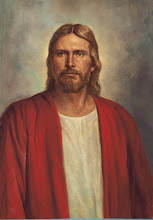
The supreme Governor of the universe and the Father of mankind. We learn from the revelations that have been given that there are three separate persons in the Godhead: the Father, the Son, and the Holy Ghost. From latter-day revelation we learn that the Father and the Son have tangible bodies of flesh and bone, and that the Holy Ghost is a personage of spirit without flesh and bone (D&C 130: 22-23).
When one speaks of God, it is generally the Father who is referred to; that is, Elohim. All mankind are his children. The personage known as Jehovah in Old Testament times, and who is usually identified in the Old Testament as LORD (in capital letters), is the Son, known as Jesus Christ, and who is also a God. Jesus works under the direction of the Father and is in complete harmony with him. All mankind are his brethren and sisters, he being the eldest of the spirit children of Elohim. Many of the things that the scripture says were done were actually done by the LORD (Jesus). Thus the scripture says that “God created the heaven and the earth” (Gen. 1: 1), but we know that it was actually the LORD (Jesus) who was the creator (John 1: 3, 10), or as Paul said, God created all things by Christ Jesus (Eph. 3: 9). The Holy Ghost is also a God and is variously called the Holy Spirit, the Spirit, the Spirit of God, etc.
Although God created all things and is the ruler of the universe, being omnipotent, omniscient, and omnipresent (through his Spirit), mankind has a special relationship to him that differentiates man from all other created things: man is literally God’s offspring, made in his image, whereas all other things are but the work of his hands (cf. Acts 17: 28-29).
The God of the scriptures is a holy being. Man is commanded to be holy because God is holy (Lev. 11: 44-45; Lev. 19: 2). God can be known only by revelation. He must be revealed, or remain forever unknown (cf. Mosiah 4: 9). God first revealed himself to Adam (Moses 5; 6) and has repeatedly made himself known by revelation to chosen patriarchs and prophets since that time. The present translation of John 1: 18 and 1 Jn. 4: 12 is misleading, for these say that no man has ever seen God. However, the scriptures state that there have been many who have seen him. The JST corrects these items to show that no sinful man has ever seen God, and also that Jesus Christ is the only Way to God. God the Father and his Son have been manifested by voice, sight, or otherwise at various times, as at the baptism of Jesus (Matt. 3: 16-17); the Transfiguration (Matt. 17: 1-8); to Stephen (Acts 7: 55-56); and to the Nephites (3 Ne. 11: 7). The Father and the Son personally visited Joseph Smith in the Sacred Grove, in the spring of 1820, near Manchester, New York, in the opening of the dispensation of the fulness of times (JS-H 1: 11-20).
Latter-day revelation confirms the biblical account of God as the literal father of the human family; as a being who is concerned for the welfare of mankind, and a Personage who hears and answers prayers.
For other references to God, see Heb. 1: 1-3; Jacob 4: 5; D&C 20: 17.
See also Holy Ghost; Jehovah.
Showing posts with label God the Father. Show all posts
Showing posts with label God the Father. Show all posts
Tuesday, July 17, 2007


Thursday, June 28, 2007
We are Literal Children of God
Man, a Spirit Child of Heavenly Father
See also Man, Antemortal Existence of; Spirit Body; Worth of Souls
Num. 16: 22
God of the spirits of all flesh.
Deut. 14: 1
Ye are the children of the Lord your God.
Job 32: 8
there is a spirit in man.
Job 33: 4
breath of the Almighty hath given me life.
Ps. 82: 6
Ye are gods . . . children of the most High.
Eccl. 12: 7
the spirit shall return unto God who gave it.
Isa. 42: 5
he that giveth breath . . . and spirit to them that walk.
Hosea 1: 10
Ye are the sons of the living God.
Mal. 2: 10
Have we not all one father.
Matt. 5: 48
(3 Ne. 12: 40) Be ye therefore perfect, even as your Father.
Matt. 6: 9
(3 Ne. 13: 9) Our Father which art in heaven.
Acts 17: 29
we are the offspring of God.
Rom. 8: 16
Spirit itself beareth witness . . . we are the children of God.
Eph. 4: 6
One God and Father of all.
Heb. 12: 9
be in subjection unto the Father of spirits.
1 Ne. 17: 36
he hath created his children.
Alma 40: 11
spirits . . . taken home to that God who gave them life.
D&C 46: 26
from God, for the benefit of the children of God.
D&C 76: 24
inhabitants thereof are begotten sons and daughters of God.
D&C 77: 2
spirit of man in the likeness of his person.
D&C 84: 83
your Father, who is in heaven, knoweth.
D&C 88: 15
spirit and the body are the soul of man.
D&C 88: 75
I may testify unto your Father, and your God.
D&C 93: 33
man is spirit.
Moses 3: 5
God, had created all the children of men.
Moses 6: 51
I made the world, and men before they were in the flesh.
Abr. 3: 22
intelligences that were organized before the world.
See also Luke 23: 46; Acts 7: 59; Eph. 3: 14-15; Eph. 5: 1.
See also Man, Antemortal Existence of; Spirit Body; Worth of Souls
Num. 16: 22
God of the spirits of all flesh.
Deut. 14: 1
Ye are the children of the Lord your God.
Job 32: 8
there is a spirit in man.
Job 33: 4
breath of the Almighty hath given me life.
Ps. 82: 6
Ye are gods . . . children of the most High.
Eccl. 12: 7
the spirit shall return unto God who gave it.
Isa. 42: 5
he that giveth breath . . . and spirit to them that walk.
Hosea 1: 10
Ye are the sons of the living God.
Mal. 2: 10
Have we not all one father.
Matt. 5: 48
(3 Ne. 12: 40) Be ye therefore perfect, even as your Father.
Matt. 6: 9
(3 Ne. 13: 9) Our Father which art in heaven.
Acts 17: 29
we are the offspring of God.
Rom. 8: 16
Spirit itself beareth witness . . . we are the children of God.
Eph. 4: 6
One God and Father of all.
Heb. 12: 9
be in subjection unto the Father of spirits.
1 Ne. 17: 36
he hath created his children.
Alma 40: 11
spirits . . . taken home to that God who gave them life.
D&C 46: 26
from God, for the benefit of the children of God.
D&C 76: 24
inhabitants thereof are begotten sons and daughters of God.
D&C 77: 2
spirit of man in the likeness of his person.
D&C 84: 83
your Father, who is in heaven, knoweth.
D&C 88: 15
spirit and the body are the soul of man.
D&C 88: 75
I may testify unto your Father, and your God.
D&C 93: 33
man is spirit.
Moses 3: 5
God, had created all the children of men.
Moses 6: 51
I made the world, and men before they were in the flesh.
Abr. 3: 22
intelligences that were organized before the world.
See also Luke 23: 46; Acts 7: 59; Eph. 3: 14-15; Eph. 5: 1.
God Has a Body
God, Body of - Corporeal Nature
See also Man, A Spirit Child of Heavenly Father; Man, Physical Creation of
Gen. 1: 27
(Moses 2: 27) God created man in his own image.
Gen. 5: 1
God created man, in the likeness of God made he him.
Gen. 9: 6
in the image of God made he man.
Gen. 18: 33
Lord went his way, as soon as he had left communing.
Gen. 32: 30
I have seen God face to face.
Ex. 24: 10
they saw the God of Israel, there was under his feet.
Ex. 31: 18
(Deut. 9: 10) written with the finger of God.
Ex. 33: 11
Lord spake unto Moses face to face.
Ex. 33: 23
thou shalt see my back parts: but my face shall not.
Num. 12: 8
With him will I speak mouth to mouth.
Matt. 3: 17
a voice from heaven, saying, This is my beloved Son.
Matt. 4: 4
every word that proceedeth out of the mouth of God.
Matt. 17: 5
a voice out of the cloud.
Luke 24: 39
for a spirit hath not flesh and bones, as ye see me have.
John 14: 9
he that hath seen me hath seen the Father.
Acts 7: 56
the Son of man standing on the right hand of God.
Rom. 8: 29
predestinate to be conformed to the image of his Son.
2 Cor. 4: 4
Christ, who is the image of God.
Philip. 2: 6
who, being in the form of God.
Philip. 3: 21
our vile body . . . fashioned like unto his glorious body.
Col. 1: 15
Who is the image of the invisible God.
Heb. 1: 3
the express image of his person.
James 3: 9
men which are made after the similitude of God.
1 Jn. 3: 2
when he shall appear, we shall be like him.
Rev. 22: 4
they shall see his face.
Mosiah 7: 27
(Ether 3: 15) image after which man was created.
D&C 20: 18
he created man, male and female, after his own image.
D&C 110: 3
his eyes were as a flame of fire.
D&C 130: 1
Savior shall appear . . . see that he is a man like ourselves.
D&C 130: 22
Father has a body of flesh and bones.
Moses 1: 16
thou art after the similitude of mine Only Begotten.
Moses 6: 9
In the image of his own body . . . created he them.
Abr. 3: 11
Abraham, talked with the Lord, face to face.
Abr. 4: 27
Gods went down to organize man in their own image.
See also Gen. 33: 10; Deut. 4: 28; Acts 17: 29; Col. 3: 10.
See also Man, A Spirit Child of Heavenly Father; Man, Physical Creation of
Gen. 1: 27
(Moses 2: 27) God created man in his own image.
Gen. 5: 1
God created man, in the likeness of God made he him.
Gen. 9: 6
in the image of God made he man.
Gen. 18: 33
Lord went his way, as soon as he had left communing.
Gen. 32: 30
I have seen God face to face.
Ex. 24: 10
they saw the God of Israel, there was under his feet.
Ex. 31: 18
(Deut. 9: 10) written with the finger of God.
Ex. 33: 11
Lord spake unto Moses face to face.
Ex. 33: 23
thou shalt see my back parts: but my face shall not.
Num. 12: 8
With him will I speak mouth to mouth.
Matt. 3: 17
a voice from heaven, saying, This is my beloved Son.
Matt. 4: 4
every word that proceedeth out of the mouth of God.
Matt. 17: 5
a voice out of the cloud.
Luke 24: 39
for a spirit hath not flesh and bones, as ye see me have.
John 14: 9
he that hath seen me hath seen the Father.
Acts 7: 56
the Son of man standing on the right hand of God.
Rom. 8: 29
predestinate to be conformed to the image of his Son.
2 Cor. 4: 4
Christ, who is the image of God.
Philip. 2: 6
who, being in the form of God.
Philip. 3: 21
our vile body . . . fashioned like unto his glorious body.
Col. 1: 15
Who is the image of the invisible God.
Heb. 1: 3
the express image of his person.
James 3: 9
men which are made after the similitude of God.
1 Jn. 3: 2
when he shall appear, we shall be like him.
Rev. 22: 4
they shall see his face.
Mosiah 7: 27
(Ether 3: 15) image after which man was created.
D&C 20: 18
he created man, male and female, after his own image.
D&C 110: 3
his eyes were as a flame of fire.
D&C 130: 1
Savior shall appear . . . see that he is a man like ourselves.
D&C 130: 22
Father has a body of flesh and bones.
Moses 1: 16
thou art after the similitude of mine Only Begotten.
Moses 6: 9
In the image of his own body . . . created he them.
Abr. 3: 11
Abraham, talked with the Lord, face to face.
Abr. 4: 27
Gods went down to organize man in their own image.
See also Gen. 33: 10; Deut. 4: 28; Acts 17: 29; Col. 3: 10.
Thursday, June 21, 2007
Pre-Existence of Man
Modern Christianity views of God:
GOD THE FATHER: In His very nature and essence God is a spirit—not a man. There was never a time when He did not exist, nor can there ever be a time when He will cease to exist as the one true God. He does not change or progress. In addition to being omnipresent (present everywhere), He is eternally omniscient (all knowing) and omnipotent (all powerful), and thus, He is not bound by the constraints of His creation.
LDS views of God:
GOD The FATHER: "To understand the doctrine of pre-existence two great truths must be accepted:1. That God is a personal Being in whose image man is created, an exalted, perfected, and glorified Man of Holiness (Moses 6:57), and not a spirit essence that fills the immensity of space; and 2. That matter or element is self-existent and eternal in nature, creation being merely the organization and reorganization of that substance which 'was not created or made, neither indeed can be.' (D. & C. 93:29.) Unless God the Father was a personal Being, he could not have begotten spirits in his image, and if there had been no self-existent spirit element, there would have been no substance from which those spirit bodies could have been organized.
Biblical Verses of the Pre-Existence of Man
(Numbers 16:22.)
22 And they fell upon their faces, and said, O God, the God of the spirits of all flesh, shall one man sin, and wilt thou be wroth with all the congregation?
(Numbers 27:16.)
16 Let the LORD, the God of the spirits of all flesh, set a man over the congregation,
(Job 38:7.)
7 When the morning stars sang together, and all the sons of God shouted for joy?
(Ecclesiastes 12:7.)
7 Then shall the dust return to the earth as it was: and the spirit shall return unto God who gave it.
(Jeremiah 1:5.)
5 Before I formed thee in the belly I knew thee; and before thou camest forth out of the womb I sanctified thee, and I ordained thee a prophet unto the nations.
(Zechariah 12:1.)
1 The burden of the word of the LORD for Israel, saith the LORD, which stretcheth forth the heavens, and layeth the foundation of the earth, and formeth the spirit of man within him.
(John 9:2.)
2 And his disciples asked him, saying, Master, who did sin, this man, or his parents, that he was born blind?
(Acts 17:28.)
28 For in him we live, and move, and have our being; as certain also of your own poets have said, For we are also his offspring.
(Hebrews 12:9.)
9 Furthermore we have had fathers of our flesh which corrected us, and we gave them reverence: shall we not much rather be in subjection unto the Father of spirits, and live?
"Pre-existence is the term commonly used to describe the pre-mortal existence of the spirit children of God the Father. Speaking of this prior existence in a spirit sphere, the First Presidency of the Church (Joseph F. Smith, John R. Winder, and Anthon H. Lund) said: 'All men and women are in the similitude of the universal Father and Mother, and are literally the sons and daughters of Deity'; as spirits they were the 'offspring of celestial parentage.' (Man: His Origin and Destiny, pp. 351, 355.) These spirit beings, the offspring of exalted parents, were men and women, appearing in all respects as mortal persons do, excepting only that their spirit bodies were made of a more pure and refined substance than the elements from which mortal bodies are made. (Ether 3:16; D. & C. 131:7-8.)
"To understand the doctrine of pre-existence two great truths must be accepted:1. That God is a personal Being in whose image man is created, an exalted, perfected, and glorified Man of Holiness (Moses 6:57), and not a spirit essence that fills the immensity of space; and 2. That matter or element is self-existent and eternal in nature, creation being merely the organization and reorganization of that substance which 'was not created or made, neither indeed can be.' (D. & C. 93:29.) Unless God the Father was a personal Being, he could not have begotten spirits in his image, and if there had been no self-existent spirit element, there would have been no substance from which those spirit bodies could have been organized.
"From the time of their spirit birth, the Father's pre-existent offspring were endowed with agency and subjected to the provisions of the laws ordained for their government. They had power to obey or disobey and to progress in one field or another. 'The first principles of man are self-existent with God,' the Prophet said. 'God himself, finding he was in the midst of spirits and glory, because he was more intelligent, saw proper to institute laws whereby the rest could have a privilege to advance like himself.' (Teachings, p. 354.)
"The pre-existent life was thus a period—undoubtedly an infinitely long one—of probation, progression and schooling. The spirit hosts were taught and given experiences in various administrative capacities. Some so exercised their agency and so conformed to law as to become 'noble and great'; these were foreordained before their mortal births to perform great missions for the Lord in this life. (Abra. 3:22-28.) Christ, the Firstborn, was the mightiest of all the spirit children of the Father. (D. & C. 93:21-23.) Mortal progression and testing is a continuation of what began in pre-existence." (Mormon Doctrine, 2nd ed., pp. 589-590.)
(Bruce R. McConkie, Doctrinal New Testament Commentary, 3 vols. [Salt Lake City: Bookcraft, 1965-1973], 3: 227.)
(Jude 1:6.)
6 And the angels which kept not their first estate, but left their own habitation, he hath reserved in everlasting chains under darkness unto the judgment of the great day.
Jude's argument here is: Why should the wicked and ungodly think they shall escape damnation when God even cast one-third of the hosts of heaven out for their rebellion? See 2 Pet. 2:1-9.
Implicit in his usage of this illustration is the fact that his readers (members of the Church who had already received the truth!) knew about pre-existence, the war in heaven, and the probationary nature of this mortal estate.
The angels which kept not their first estate] See Rev. 12:1-17.
First estate] "Both Abraham and Jude speak of pre-existence as our first estate, that is, it was the first time we lived as conscious identities. The spirits who were faithful in that first estate earned the right to be born into this world and get mortal bodies, bodies which would become the eternal habitation of the spirit after the resurrection. (Abra. 3:22-28.) But the rebellious pre-existent spirits, 'the angels which kept not their first estate' (Jude 6), have been denied bodies and the probationary experiences of this second estate of mortality." (Mormon Doctrine, 2nd ed., p. 282.)
Of our first estate and the eternal plan of salvation there formulated, Joseph Smith says: "At the first organization in heaven we were all present, and saw the Savior chosen and appointed and the plan of salvation made, and we sanctioned it. We came to this earth that we might have a body and present it pure before God in the celestial kingdom. The great principle of happiness consists in having a body. The devil has no body, and herein is his punishment." (Teachings of the Prophet Joseph Smith, p. 181.) Also: "They who have tabernacles, have power over those who have not." (Teachings, p. 190.) And also: "The spirits in the eternal world are like the spirits in this world. When those have come into this world and received tabernacles, then died and again have risen and received glorified bodies, they will have an ascendency over the spirits who have received no bodies, or kept not their first estate, like the devil. The punishment of the devil was that he should not have a habitation like men." (Teachings, pp. 305-306.)
In everlasting chains] Lucifer and one-third of the hosts of heaven are damned forever. For them there is no progression, no advancement, no light—only darkness to all eternity. Of them and of the sons of perdition who shall be added to their number, the Lord says: "I will say unto them—Depart from me, ye cursed, into everlasting fire, prepared for the devil and his angels. And now, behold, I say unto you, never at any time have I declared from mine own mouth that they should return, for where I am they cannot come, for they have no power." (D. & C. 29:28-29.)
Pre-existence] See Heb. 12:9-10.
(Bruce R. McConkie, Doctrinal New Testament Commentary, 3 vols. [Salt Lake City: Bookcraft, 1965-1973], 3: 420.)
(Revelation 12:7.)
7 And there was war in heaven: Michael and his angels fought against the dragon; and the dragon fought and his angels,
Satan Maketh War in Heaven and on Earth
John now sees the organization of the Church in the meridian dispensation and the attempt to create the Millennial Kingdom by the saints of that day. He sees the inevitable and destined failure of that attempt, the full restoration of the kingdom to Israel being reserved for a later dispensation. See Commentary II, pp. 21-27. Then the day of universal apostasy and spiritual darkness is revealed; the great warfare of Satan with earth's inhabitants is shown forth; the restoration of the gospel is alluded to; and some events, probably in this dispensation, in which the Church is preserved are named.
A woman ("the church of God"!) gives birth to a man child ("the kingdom of our God and his Christ" which shall hold sway during the Millennial Era, the kingdom John has just seen in vision!). See Rev. 11:14-19. Such is the Prophet's inspired interpretation. Among Biblical scholars of the world, the man child is presumed to be Christ, a speculative conclusion which, though seemingly persuasive, is refuted by the obvious fact that the Church did not bring forth Christ; he is the Creator of the Church. Among Latter-day Saint scriptural exegetes, it is not uncommon to say that the man child is the priesthood, a seemingly persuasive speculation, which again however must be rejected by the same line of reasoning. The Church did not bring forth the priesthood, but the priesthood is the power that brought the Church into being.
A woman clothed with the sun] The Church in all its glory, beauty, power and perfection—a glory like the sun in the firmament; the Church in which there is power to prepare men to attain that celestial world whose glory is typified by the brightness of that same heavenly luminary. (D. & C. 76:70.)
The moon under her feet] As the moon shines by reflected light, so do all earthly churches and kingdoms. They are under, beneath and lower than the true Church. The highest eternal reward they can offer is the terrestrial kingdom, whose glory is like the moon. (1 Cor. 15:40-41.)
Upon her head a crown of twelve stars] The twelve apostles of the Lamb, who are at the head and preside over the Church, and who with "the saints, ... small and great" (Rev. 11:15), shall have place in the promised kingdom.
3. John saw Lucifer (the great red dragon), who appears in various forms (having seven heads and ten horns), and who rules over many nations and kingdoms (wearing seven crowns).
4, 7-10. The whole chapter deals with warfare between the saints and the devil. These five verses are parenthetical interpolations; they are inserted to show that this war on earth (note verse 17) actually commenced in heaven and is but a continuation of the conflict commenced there.
4. The third part] One-third of that great host of spirit children destined to receive a mortal probation on this planet rebelled and followed Lucifer. (D. & C. 29:36.)
The stars of heaven] Figurative language describing the spirit children of the Father, among whom were "the morning stars" who sang together at the prospect of gaining mortal bodies and the experiences of an earthly probation. (Job 38:4-7.)
Cast them to the earth] The rebellious spirits, denied bodies, were cast down to earth. "I beheld Satan as lightning fall from heaven," Jesus said. (Luke 10:18.) And so it was also with all those who followed him.
5. A rod of iron] The gospel, the priesthood, the laws and power of God. In Lehi's dream, seen later by Nephi, "the rod of iron. . . was the word of God" which led to eternal life. (1 Ne. 11:25.)
6, 14. In the war on earth, Satan prevailed over the meridian saints, and the Church of God was taken away; dire and universal apostasy prevailed until the day of restoration.
And there was war in heaven] What kind of war? The same kind that prevails on earth; the only kind Satan and spirit beings can wage—a war of words, a tumult of opinions, a conflict of ideologies; a war between truth and error, between light and darkness, between the gospel of Jesus Christ, with all its saving power, and the false religions of the world, which have a form of godliness but are devoid of saving grace. And the battle lines are still drawn. It is now on earth as it was then in heaven; every man must choose which general he will follow.
Michael] See Jude 7-13.
9. The Devil] "The devil (literally meaning slanderer) is a spirit son of God who was born in the morning of pre-existence. (D. & C. 76:25-26.) Endowed with agency, the free power of choice, he chose the evil part from the beginning, thus placing himself in eternal opposition to the divine will. He was 'a liar from the beginning.' (D. & C. 93:25.)" (Mormon Doctrine, 2nd ed., p. 192.) See Commentary I, pp. 166-169; 266-269; 307-314; 416-417.
Satan] "Satan is a formal Hebrew name for the devil and means adversary, signifying that he wages open war with the truth and all who obey its principles." (Mormon Doctrine, 2nd ed., p. 677.)
10. Now is the time and the day when salvation may be won because Satan has been cast down to earth. He and his followers are here in opposition to all righteousness. It is only by resisting his wiles and rising above his carnal way of life that men can pass the test of mortality which assures them of salvation. Without opposition there could be no salvation; "it must needs be, that there is an opposition in all things. If not so,. . . righteousness could not be brought to pass, neither wickedness, neither holiness nor misery, neither good nor bad." (2 Ne. 2:11.)
11. Overcame him by the blood of the lamb] If there had been no atonement of Christ, Satan's designs for men would have prevailed. In that event, there would have been neither immortality nor eternal life, and all men would have remained forever in "the grasp of this awful monster. . . death and hell." (2 Ne. 9:6-26.) Except for the shedding of the blood of Christ there is no way to overcome the world and gain salvation.
12-13. Satan makes war with the saints in the meridian of time.
14. He prevails; the Church is taken from the earth—for a specified period, for the age of spiritual darkness and universal apostasy.
15-17. Again the Church is found among men; there has been a restoration of the everlasting gospel. Satan continues his warfare, but the Lord preserves his latter-day kingdom. As Satan centers his opposition upon the gathered remnants of a once glorious people, the especial targets of his fiery darts are those who are obedient and faithful.
(Bruce R. McConkie, Doctrinal New Testament Commentary, 3 vols. [Salt Lake City: Bookcraft, 1965-1973], 3: 520.)
GOD THE FATHER: In His very nature and essence God is a spirit—not a man. There was never a time when He did not exist, nor can there ever be a time when He will cease to exist as the one true God. He does not change or progress. In addition to being omnipresent (present everywhere), He is eternally omniscient (all knowing) and omnipotent (all powerful), and thus, He is not bound by the constraints of His creation.
LDS views of God:
GOD The FATHER: "To understand the doctrine of pre-existence two great truths must be accepted:1. That God is a personal Being in whose image man is created, an exalted, perfected, and glorified Man of Holiness (Moses 6:57), and not a spirit essence that fills the immensity of space; and 2. That matter or element is self-existent and eternal in nature, creation being merely the organization and reorganization of that substance which 'was not created or made, neither indeed can be.' (D. & C. 93:29.) Unless God the Father was a personal Being, he could not have begotten spirits in his image, and if there had been no self-existent spirit element, there would have been no substance from which those spirit bodies could have been organized.
Biblical Verses of the Pre-Existence of Man
(Numbers 16:22.)
22 And they fell upon their faces, and said, O God, the God of the spirits of all flesh, shall one man sin, and wilt thou be wroth with all the congregation?
(Numbers 27:16.)
16 Let the LORD, the God of the spirits of all flesh, set a man over the congregation,
(Job 38:7.)
7 When the morning stars sang together, and all the sons of God shouted for joy?
(Ecclesiastes 12:7.)
7 Then shall the dust return to the earth as it was: and the spirit shall return unto God who gave it.
(Jeremiah 1:5.)
5 Before I formed thee in the belly I knew thee; and before thou camest forth out of the womb I sanctified thee, and I ordained thee a prophet unto the nations.
(Zechariah 12:1.)
1 The burden of the word of the LORD for Israel, saith the LORD, which stretcheth forth the heavens, and layeth the foundation of the earth, and formeth the spirit of man within him.
(John 9:2.)
2 And his disciples asked him, saying, Master, who did sin, this man, or his parents, that he was born blind?
(Acts 17:28.)
28 For in him we live, and move, and have our being; as certain also of your own poets have said, For we are also his offspring.
(Hebrews 12:9.)
9 Furthermore we have had fathers of our flesh which corrected us, and we gave them reverence: shall we not much rather be in subjection unto the Father of spirits, and live?
"Pre-existence is the term commonly used to describe the pre-mortal existence of the spirit children of God the Father. Speaking of this prior existence in a spirit sphere, the First Presidency of the Church (Joseph F. Smith, John R. Winder, and Anthon H. Lund) said: 'All men and women are in the similitude of the universal Father and Mother, and are literally the sons and daughters of Deity'; as spirits they were the 'offspring of celestial parentage.' (Man: His Origin and Destiny, pp. 351, 355.) These spirit beings, the offspring of exalted parents, were men and women, appearing in all respects as mortal persons do, excepting only that their spirit bodies were made of a more pure and refined substance than the elements from which mortal bodies are made. (Ether 3:16; D. & C. 131:7-8.)
"To understand the doctrine of pre-existence two great truths must be accepted:1. That God is a personal Being in whose image man is created, an exalted, perfected, and glorified Man of Holiness (Moses 6:57), and not a spirit essence that fills the immensity of space; and 2. That matter or element is self-existent and eternal in nature, creation being merely the organization and reorganization of that substance which 'was not created or made, neither indeed can be.' (D. & C. 93:29.) Unless God the Father was a personal Being, he could not have begotten spirits in his image, and if there had been no self-existent spirit element, there would have been no substance from which those spirit bodies could have been organized.
"From the time of their spirit birth, the Father's pre-existent offspring were endowed with agency and subjected to the provisions of the laws ordained for their government. They had power to obey or disobey and to progress in one field or another. 'The first principles of man are self-existent with God,' the Prophet said. 'God himself, finding he was in the midst of spirits and glory, because he was more intelligent, saw proper to institute laws whereby the rest could have a privilege to advance like himself.' (Teachings, p. 354.)
"The pre-existent life was thus a period—undoubtedly an infinitely long one—of probation, progression and schooling. The spirit hosts were taught and given experiences in various administrative capacities. Some so exercised their agency and so conformed to law as to become 'noble and great'; these were foreordained before their mortal births to perform great missions for the Lord in this life. (Abra. 3:22-28.) Christ, the Firstborn, was the mightiest of all the spirit children of the Father. (D. & C. 93:21-23.) Mortal progression and testing is a continuation of what began in pre-existence." (Mormon Doctrine, 2nd ed., pp. 589-590.)
(Bruce R. McConkie, Doctrinal New Testament Commentary, 3 vols. [Salt Lake City: Bookcraft, 1965-1973], 3: 227.)
(Jude 1:6.)
6 And the angels which kept not their first estate, but left their own habitation, he hath reserved in everlasting chains under darkness unto the judgment of the great day.
Jude's argument here is: Why should the wicked and ungodly think they shall escape damnation when God even cast one-third of the hosts of heaven out for their rebellion? See 2 Pet. 2:1-9.
Implicit in his usage of this illustration is the fact that his readers (members of the Church who had already received the truth!) knew about pre-existence, the war in heaven, and the probationary nature of this mortal estate.
The angels which kept not their first estate] See Rev. 12:1-17.
First estate] "Both Abraham and Jude speak of pre-existence as our first estate, that is, it was the first time we lived as conscious identities. The spirits who were faithful in that first estate earned the right to be born into this world and get mortal bodies, bodies which would become the eternal habitation of the spirit after the resurrection. (Abra. 3:22-28.) But the rebellious pre-existent spirits, 'the angels which kept not their first estate' (Jude 6), have been denied bodies and the probationary experiences of this second estate of mortality." (Mormon Doctrine, 2nd ed., p. 282.)
Of our first estate and the eternal plan of salvation there formulated, Joseph Smith says: "At the first organization in heaven we were all present, and saw the Savior chosen and appointed and the plan of salvation made, and we sanctioned it. We came to this earth that we might have a body and present it pure before God in the celestial kingdom. The great principle of happiness consists in having a body. The devil has no body, and herein is his punishment." (Teachings of the Prophet Joseph Smith, p. 181.) Also: "They who have tabernacles, have power over those who have not." (Teachings, p. 190.) And also: "The spirits in the eternal world are like the spirits in this world. When those have come into this world and received tabernacles, then died and again have risen and received glorified bodies, they will have an ascendency over the spirits who have received no bodies, or kept not their first estate, like the devil. The punishment of the devil was that he should not have a habitation like men." (Teachings, pp. 305-306.)
In everlasting chains] Lucifer and one-third of the hosts of heaven are damned forever. For them there is no progression, no advancement, no light—only darkness to all eternity. Of them and of the sons of perdition who shall be added to their number, the Lord says: "I will say unto them—Depart from me, ye cursed, into everlasting fire, prepared for the devil and his angels. And now, behold, I say unto you, never at any time have I declared from mine own mouth that they should return, for where I am they cannot come, for they have no power." (D. & C. 29:28-29.)
Pre-existence] See Heb. 12:9-10.
(Bruce R. McConkie, Doctrinal New Testament Commentary, 3 vols. [Salt Lake City: Bookcraft, 1965-1973], 3: 420.)
(Revelation 12:7.)
7 And there was war in heaven: Michael and his angels fought against the dragon; and the dragon fought and his angels,
Satan Maketh War in Heaven and on Earth
John now sees the organization of the Church in the meridian dispensation and the attempt to create the Millennial Kingdom by the saints of that day. He sees the inevitable and destined failure of that attempt, the full restoration of the kingdom to Israel being reserved for a later dispensation. See Commentary II, pp. 21-27. Then the day of universal apostasy and spiritual darkness is revealed; the great warfare of Satan with earth's inhabitants is shown forth; the restoration of the gospel is alluded to; and some events, probably in this dispensation, in which the Church is preserved are named.
A woman ("the church of God"!) gives birth to a man child ("the kingdom of our God and his Christ" which shall hold sway during the Millennial Era, the kingdom John has just seen in vision!). See Rev. 11:14-19. Such is the Prophet's inspired interpretation. Among Biblical scholars of the world, the man child is presumed to be Christ, a speculative conclusion which, though seemingly persuasive, is refuted by the obvious fact that the Church did not bring forth Christ; he is the Creator of the Church. Among Latter-day Saint scriptural exegetes, it is not uncommon to say that the man child is the priesthood, a seemingly persuasive speculation, which again however must be rejected by the same line of reasoning. The Church did not bring forth the priesthood, but the priesthood is the power that brought the Church into being.
A woman clothed with the sun] The Church in all its glory, beauty, power and perfection—a glory like the sun in the firmament; the Church in which there is power to prepare men to attain that celestial world whose glory is typified by the brightness of that same heavenly luminary. (D. & C. 76:70.)
The moon under her feet] As the moon shines by reflected light, so do all earthly churches and kingdoms. They are under, beneath and lower than the true Church. The highest eternal reward they can offer is the terrestrial kingdom, whose glory is like the moon. (1 Cor. 15:40-41.)
Upon her head a crown of twelve stars] The twelve apostles of the Lamb, who are at the head and preside over the Church, and who with "the saints, ... small and great" (Rev. 11:15), shall have place in the promised kingdom.
3. John saw Lucifer (the great red dragon), who appears in various forms (having seven heads and ten horns), and who rules over many nations and kingdoms (wearing seven crowns).
4, 7-10. The whole chapter deals with warfare between the saints and the devil. These five verses are parenthetical interpolations; they are inserted to show that this war on earth (note verse 17) actually commenced in heaven and is but a continuation of the conflict commenced there.
4. The third part] One-third of that great host of spirit children destined to receive a mortal probation on this planet rebelled and followed Lucifer. (D. & C. 29:36.)
The stars of heaven] Figurative language describing the spirit children of the Father, among whom were "the morning stars" who sang together at the prospect of gaining mortal bodies and the experiences of an earthly probation. (Job 38:4-7.)
Cast them to the earth] The rebellious spirits, denied bodies, were cast down to earth. "I beheld Satan as lightning fall from heaven," Jesus said. (Luke 10:18.) And so it was also with all those who followed him.
5. A rod of iron] The gospel, the priesthood, the laws and power of God. In Lehi's dream, seen later by Nephi, "the rod of iron. . . was the word of God" which led to eternal life. (1 Ne. 11:25.)
6, 14. In the war on earth, Satan prevailed over the meridian saints, and the Church of God was taken away; dire and universal apostasy prevailed until the day of restoration.
And there was war in heaven] What kind of war? The same kind that prevails on earth; the only kind Satan and spirit beings can wage—a war of words, a tumult of opinions, a conflict of ideologies; a war between truth and error, between light and darkness, between the gospel of Jesus Christ, with all its saving power, and the false religions of the world, which have a form of godliness but are devoid of saving grace. And the battle lines are still drawn. It is now on earth as it was then in heaven; every man must choose which general he will follow.
Michael] See Jude 7-13.
9. The Devil] "The devil (literally meaning slanderer) is a spirit son of God who was born in the morning of pre-existence. (D. & C. 76:25-26.) Endowed with agency, the free power of choice, he chose the evil part from the beginning, thus placing himself in eternal opposition to the divine will. He was 'a liar from the beginning.' (D. & C. 93:25.)" (Mormon Doctrine, 2nd ed., p. 192.) See Commentary I, pp. 166-169; 266-269; 307-314; 416-417.
Satan] "Satan is a formal Hebrew name for the devil and means adversary, signifying that he wages open war with the truth and all who obey its principles." (Mormon Doctrine, 2nd ed., p. 677.)
10. Now is the time and the day when salvation may be won because Satan has been cast down to earth. He and his followers are here in opposition to all righteousness. It is only by resisting his wiles and rising above his carnal way of life that men can pass the test of mortality which assures them of salvation. Without opposition there could be no salvation; "it must needs be, that there is an opposition in all things. If not so,. . . righteousness could not be brought to pass, neither wickedness, neither holiness nor misery, neither good nor bad." (2 Ne. 2:11.)
11. Overcame him by the blood of the lamb] If there had been no atonement of Christ, Satan's designs for men would have prevailed. In that event, there would have been neither immortality nor eternal life, and all men would have remained forever in "the grasp of this awful monster. . . death and hell." (2 Ne. 9:6-26.) Except for the shedding of the blood of Christ there is no way to overcome the world and gain salvation.
12-13. Satan makes war with the saints in the meridian of time.
14. He prevails; the Church is taken from the earth—for a specified period, for the age of spiritual darkness and universal apostasy.
15-17. Again the Church is found among men; there has been a restoration of the everlasting gospel. Satan continues his warfare, but the Lord preserves his latter-day kingdom. As Satan centers his opposition upon the gathered remnants of a once glorious people, the especial targets of his fiery darts are those who are obedient and faithful.
(Bruce R. McConkie, Doctrinal New Testament Commentary, 3 vols. [Salt Lake City: Bookcraft, 1965-1973], 3: 520.)
Wednesday, June 20, 2007
Personality of the Father and the Son
Man Created in the Image and Likeness of God
The simple story told by the Prophet Joseph Smith of his interview with the Father and the Son makes it easy to understand the teachings of the Bible relating to this important matter. It must be remembered, however, that this knowledge was not obtained by the Prophet through a study of the Bible. We take the Bible merely to prove that his story harmonizes fully with the teachings thereof, some of which we shall now consider.
And God said, Let us make man in our image, after our likeness: and let them have dominion over the fish of the sea, and over the fowl of the air, and over the cattle, and over all the earth, and over every creeping thing that creepeth upon the earth.
So God created man in his own image, in the image of God created he him; male and female created he them. (Genesis 1:26-27.)
Attempts have been made to explain that this creation was only in the spiritual image and likeness of God, but after reading Joseph Smith's simple story, one wonders how a historian could have made a more clear-cut, understandable statement of what actually happened in the creation of man, especially when one reads: "And Adam lived an hundred and thirty years, and begat a son in his own likeness, after his image; and called his name Seth." (Genesis 5:3.)
Joseph Smith found that he was as literally in the image and likeness of God and Jesus Christ as Seth was in the likeness and image of his father Adam.
Moses' Testimony of the Personality of God
This also makes the experience of Moses and his associates and seventy of the elders of Israel seem so reasonable and easy to understand:
Then went up Moses, and Aaron, Nadab, and Abihu, and seventy of the elders of Israel.
And they saw the God of Israel: and there was under his feet as it were a paved work of a sapphire stone, and as it were the body of heaven in his clearness. (Exodus 24:9-10.)
And it came to pass, as Moses entered into the tabernacle, the cloudy pillar descended, and stood at the door of the tabernacle, and the Lord talked with Moses.
And all the people saw the cloudy pillar stand at the tabernacle door: and all the people rose up and worshipped, every man in his tent door.
And the Lord spake unto Moses face to face, as a man speaketh unto his friend. . . . (Exodus 33:9-11.)
Could any historian be expected to describe this event any more clearly than to say that the Lord and Moses talked with each other "face to face, as a man speaketh unto his friend"? Does anyone need to be told how a man speaks to his friend? The Father and the Son spoke with Joseph Smith "face to face, as a man speaketh unto his friend." There is only one thing that made this possible, and that is the fact that God did create man in his own image and likeness. Could any other image or likeness have been half so wonderful?
Paul's Testimony of the Personality of God
Paul, the apostle, tried to make clear what kind of personage God was by telling us that his Son, Jesus Christ, was "the brightness of his glory, and the express image of his person," and that he "sat down on the right hand of the Majesty on high." (Hebrews 1:3.) This, of course, could only have been possible when his Father did have a form on whose right hand he could sit.
Stephen's Testimony of the Personality of God
Paul's description of God gives real meaning to the words of Stephen, when he was being stoned to death by his enemies:
But he, being full of the Holy Ghost, looked up stedfastly into heaven, and saw the glory of God, and Jesus standing on the right hand of God,
And said, Behold, I see the heavens opened, and the Son of man standing on the right hand of God. (Acts 7:55-56.)
Thus he saw two separate and distinct personages, one, the Son, standing on the right hand of the other, the Father.
John's Testimony of the Personality of God
This is in accord also with the report of John's baptism of Jesus:
And Jesus, when he was baptized, went up straightway out of the water: and, lo, the heavens were opened unto him, and he saw the Spirit of God descending like a dove, and lighting upon him:
And lo a voice from heaven, saying, This is my beloved Son, in whom I am well pleased. (Matthew 3:16-17.)
Here each of the three members of the Godhead is distinctly and separately mentioned: (1) Jesus, coming up out of the water; (2) the Holy Ghost, descending like a dove; (3) the voice of the Father from heaven, expressing his love and approval of his Beloved Son. How could one possibly believe these three to be one person without body or form?
The Resurrected Lord
Consideration should now be given to the resurrected Lord. Unless he now has his body of flesh and bone that was laid away in the tomb, he must have died a second time, for when Mary Magdalene and the other Mary came to the sepulchre to see the body of Jesus, they found that an angel of the Lord had descended from heaven and was sitting on the stone that he had rolled back from the door:
His countenance was like lightning, and his raiment white as snow: . . .
And the angel answered and said unto the women, Fear not ye: for I know that ye seek Jesus, which was crucified.
He is not here: for he is risen, as he said. Come, see the place where the Lord lay. (Matthew 28:3, 5-6.)
Following his resurrection, Jesus appeared to many. While the eleven apostles were gathered together at Jerusalem discussing what had happened,
Jesus himself stood in the midst of them, and saith unto them, Peace be unto you.
But they were terrified and affrighted, and supposed that they had seen a spirit.
And he said unto them, Why are ye troubled? and why do thoughts arise in your hearts?
Behold my hands and my feet, that it is I myself: handle me, and see; for a spirit hath not flesh and bones, as ye see me have. (Luke 24:36-39.)
To further prove that he had his body, he took a piece of broiled fish and of honeycomb and did eat before them.
With his resurrected body he ascended to heaven in the presence of five hundred brethren: . . . he was seen of above five hundred brethren at once. . . ." (1 Corinthians 15:6.)
His apostles saw him ascend into heaven and the "two men [who] stood by them in white apparel" affirmed the fact:
And while they looked stedfastly toward heaven as he went up, behold, two men stood by them in white apparel;
Which also said, Ye men of Galilee, why stand ye gazing up into heaven? this same Jesus, which is taken up from you into heaven, shall so come in like manner as ye have seen him go into heaven. (Acts 1:10-11.)
If Jesus is one in spirit with his Father, without body or form, so large that he fills the universe and so small that he dwells in each heart, as so many believe and as the churches teach, then what meaning has the resurrection which is commemorated each Easter in the Christian churches, and what did he do with his body after he showed it to his apostles and others?
Joseph Smith's Testimony of the Personality of Jesus
Joseph Smith again beheld the same Jesus who had been seen ascending into heaven after his resurrection. This is the testimony given of Jesus by Joseph Smith and Sidney Rigdon, following a vision they received at Hiram, Ohio, on February 16, 1832:
And while we meditated upon these things, the Lord touched the eyes of our understandings and they were opened, and the glory of the Lord shone round about.
And we beheld the glory of the Son, on the right hand of the Father, and received of his fulness:
And saw the holy angels, and them who are sanctified before his throne, worshiping God, and the Lamb, who worship him forever and ever.
And now, after the many testimonies which have been given of him, this is the testimony, last of all, which we give of him: That he lives!
For we saw him, even on the right hand of God; and we heard the voice bearing record that he is the Only Begotten of the Father—
That by him, and through him, and of him, the worlds are and were created, and the inhabitants thereof are begotten sons and daughters unto God. (Doctrine and Covenants [D&C] 76:19-24.)
Note how this parallels Joseph Smith's first vision and the testimony of the Father at Jesus' baptism. The Father spoke of his Son—two separate and distinct persons. The Father must have had a voice or he could not have spoken.
This testimony shall now stand as a witness unto all to whom it shall come, until he shall again return to reign as "Lord of lords and King of kings." (See Revelation 17:14.)
An understanding of the reality of his existence and personality gives real meaning to the promise found in Christ's Sermon on the Mount: "Blessed are the pure in heart: for they shall see God." (Matthew 5:8.)
Scriptures Often Misunderstood Concerning God's Personality
There are a few statements in the Bible that have been misunderstood and have led to a misconception of the personality and form of God and of his Son, Jesus Christ. Brief consideration might be given to some of them:
No man hath seen God at any time; the only begotten Son, which is in the bosom of the Father, he hath declared him. (John 1:18.)
No man hath seen God at any time. If we love one another, God dwelleth in us, and his love is perfected in us. (1 John 4:12.)
In the Inspired Version of the Bible, as rendered by the Prophet Joseph Smith, we read the following:
And no man hath seen God at any time, except he hath borne record of the Son; for except it is through him no man can be saved. (John 1:19.)
He also gives us the rendition of 1 John 4:12 as follows:
No man hath seen God at any time, except them who believe. If we love one another, God dwelleth in us, and his love is perfected in us.
The Prophet Joseph Smith's understanding of the true meaning of these scriptures was made plain in a revelation received by him from the Lord at Hiram, Ohio, in November 1831: "For no man has seen God at any time in the flesh, except quickened by the Spirit of God." (D&C 67:11.)
This doctrine was further clarified in the visions of Moses as revealed to the Prophet Joseph Smith:
But now mine own eyes have beheld God; but not my natural, but my spiritual eyes, for my natural eyes could not have beheld; for I should have withered and died in his presence; but his glory was upon me; and I beheld his face, for I was transfigured before him. (Pearl of Great Price, Moses 1:11.)
It is thus plain that man can only see God when "quickened by the Spirit of God." This is apparently what John had in mind in the following statement:
It is written in the prophets, And they shall be all taught of God. Every man therefore that hath heard, and hath learned of the Father, cometh unto me.
Not that any man hath seen the Father, save he which is of God, he hath seen the Father. (John 6:45-46.)
Paul spoke of God as an "invisible God":
In whom we have redemption through his blood, even the forgiveness of sins:
Who is the image of the invisible God, the firstborn of every creature. (Colossians 1:14-15.)
Further study of Paul's teachings indicates that he had the same understanding as John; that while God is invisible to men generally, he is not invisible to the prophets, for he indicated that Moses saw the invisible God: "By faith he forsook Egypt, not fearing the wrath of the king: for he endured, as seeing him who is invisible." (Hebrews 11:27.)
John also referred to God as a spirit, which is confusing to some: "God is a Spirit: and they that worship him must worship him in spirit and in truth." (John 4:24.)
This should not be confusing, since we are all spirits, clothed with bodies of flesh and bones. John says we are to "worship him in spirit and in truth." He would not, however, imply that our spirits should leave our bodies so that we can worship him "in spirit."
Paul declared: "But he that is joined unto the Lord is one spirit." (1 Corinthians 6:17.) We are spirits in the same sense that John had in mind when he said "God is a Spirit."
The Oneness of the Father and the Son
There has been much misunderstanding regarding the oft-repeated statement that Jesus and his Father are one. A careful reading of the seventeenth chapter of John should clarify this matter fully. As Jesus was about to be offered up, he prayed unto his Father and thanked him for his apostles, saying, "that they may be one, as we are." (John 17:11.) Then he added:
Neither pray I for these alone, but for them also which shall believe on me through their word;
That they all may be one; as thou, Father, art in me, and I in thee, that they also may be one in us; that the world may believe that thou hast sent me. (John 17:20-21.)
Now it is very apparent that Jesus was not speaking of oneness of personage, but oneness of purpose, for he further prayed that they might be with him, which would be unnecessary if the oneness referred to was of personage instead of purpose.
Father, I will that they also, whom thou hast given me, be with me where I am; that they may behold my glory, which thou hast given me: for thou lovedst me before the foundation of the world. (John 17:24.)
Again it is evident that the oneness referred to has no reference to oneness of personage, for if Jesus and his Father were one in person, how absurd to think that Jesus would pray unto himself, or that he would love himself before the foundation of the world. He said: "And this is life eternal, that they might know thee the only true God, and Jesus Christ, whom thou hast sent." (John 17:3.)
This true knowledge of God and of his Son, Jesus Christ, has come again to the world in this dispensation, not through a study of the Bible, but through the actual appearance of these heavenly personages to the young Joseph Smith, as he has so eloquently testified.
(Legrand Richards, A Marvelous Work and a Wonder [Salt Lake City: Deseret Book Co., 1950], 22.)
The simple story told by the Prophet Joseph Smith of his interview with the Father and the Son makes it easy to understand the teachings of the Bible relating to this important matter. It must be remembered, however, that this knowledge was not obtained by the Prophet through a study of the Bible. We take the Bible merely to prove that his story harmonizes fully with the teachings thereof, some of which we shall now consider.
And God said, Let us make man in our image, after our likeness: and let them have dominion over the fish of the sea, and over the fowl of the air, and over the cattle, and over all the earth, and over every creeping thing that creepeth upon the earth.
So God created man in his own image, in the image of God created he him; male and female created he them. (Genesis 1:26-27.)
Attempts have been made to explain that this creation was only in the spiritual image and likeness of God, but after reading Joseph Smith's simple story, one wonders how a historian could have made a more clear-cut, understandable statement of what actually happened in the creation of man, especially when one reads: "And Adam lived an hundred and thirty years, and begat a son in his own likeness, after his image; and called his name Seth." (Genesis 5:3.)
Joseph Smith found that he was as literally in the image and likeness of God and Jesus Christ as Seth was in the likeness and image of his father Adam.
Moses' Testimony of the Personality of God
This also makes the experience of Moses and his associates and seventy of the elders of Israel seem so reasonable and easy to understand:
Then went up Moses, and Aaron, Nadab, and Abihu, and seventy of the elders of Israel.
And they saw the God of Israel: and there was under his feet as it were a paved work of a sapphire stone, and as it were the body of heaven in his clearness. (Exodus 24:9-10.)
And it came to pass, as Moses entered into the tabernacle, the cloudy pillar descended, and stood at the door of the tabernacle, and the Lord talked with Moses.
And all the people saw the cloudy pillar stand at the tabernacle door: and all the people rose up and worshipped, every man in his tent door.
And the Lord spake unto Moses face to face, as a man speaketh unto his friend. . . . (Exodus 33:9-11.)
Could any historian be expected to describe this event any more clearly than to say that the Lord and Moses talked with each other "face to face, as a man speaketh unto his friend"? Does anyone need to be told how a man speaks to his friend? The Father and the Son spoke with Joseph Smith "face to face, as a man speaketh unto his friend." There is only one thing that made this possible, and that is the fact that God did create man in his own image and likeness. Could any other image or likeness have been half so wonderful?
Paul's Testimony of the Personality of God
Paul, the apostle, tried to make clear what kind of personage God was by telling us that his Son, Jesus Christ, was "the brightness of his glory, and the express image of his person," and that he "sat down on the right hand of the Majesty on high." (Hebrews 1:3.) This, of course, could only have been possible when his Father did have a form on whose right hand he could sit.
Stephen's Testimony of the Personality of God
Paul's description of God gives real meaning to the words of Stephen, when he was being stoned to death by his enemies:
But he, being full of the Holy Ghost, looked up stedfastly into heaven, and saw the glory of God, and Jesus standing on the right hand of God,
And said, Behold, I see the heavens opened, and the Son of man standing on the right hand of God. (Acts 7:55-56.)
Thus he saw two separate and distinct personages, one, the Son, standing on the right hand of the other, the Father.
John's Testimony of the Personality of God
This is in accord also with the report of John's baptism of Jesus:
And Jesus, when he was baptized, went up straightway out of the water: and, lo, the heavens were opened unto him, and he saw the Spirit of God descending like a dove, and lighting upon him:
And lo a voice from heaven, saying, This is my beloved Son, in whom I am well pleased. (Matthew 3:16-17.)
Here each of the three members of the Godhead is distinctly and separately mentioned: (1) Jesus, coming up out of the water; (2) the Holy Ghost, descending like a dove; (3) the voice of the Father from heaven, expressing his love and approval of his Beloved Son. How could one possibly believe these three to be one person without body or form?
The Resurrected Lord
Consideration should now be given to the resurrected Lord. Unless he now has his body of flesh and bone that was laid away in the tomb, he must have died a second time, for when Mary Magdalene and the other Mary came to the sepulchre to see the body of Jesus, they found that an angel of the Lord had descended from heaven and was sitting on the stone that he had rolled back from the door:
His countenance was like lightning, and his raiment white as snow: . . .
And the angel answered and said unto the women, Fear not ye: for I know that ye seek Jesus, which was crucified.
He is not here: for he is risen, as he said. Come, see the place where the Lord lay. (Matthew 28:3, 5-6.)
Following his resurrection, Jesus appeared to many. While the eleven apostles were gathered together at Jerusalem discussing what had happened,
Jesus himself stood in the midst of them, and saith unto them, Peace be unto you.
But they were terrified and affrighted, and supposed that they had seen a spirit.
And he said unto them, Why are ye troubled? and why do thoughts arise in your hearts?
Behold my hands and my feet, that it is I myself: handle me, and see; for a spirit hath not flesh and bones, as ye see me have. (Luke 24:36-39.)
To further prove that he had his body, he took a piece of broiled fish and of honeycomb and did eat before them.
With his resurrected body he ascended to heaven in the presence of five hundred brethren: . . . he was seen of above five hundred brethren at once. . . ." (1 Corinthians 15:6.)
His apostles saw him ascend into heaven and the "two men [who] stood by them in white apparel" affirmed the fact:
And while they looked stedfastly toward heaven as he went up, behold, two men stood by them in white apparel;
Which also said, Ye men of Galilee, why stand ye gazing up into heaven? this same Jesus, which is taken up from you into heaven, shall so come in like manner as ye have seen him go into heaven. (Acts 1:10-11.)
If Jesus is one in spirit with his Father, without body or form, so large that he fills the universe and so small that he dwells in each heart, as so many believe and as the churches teach, then what meaning has the resurrection which is commemorated each Easter in the Christian churches, and what did he do with his body after he showed it to his apostles and others?
Joseph Smith's Testimony of the Personality of Jesus
Joseph Smith again beheld the same Jesus who had been seen ascending into heaven after his resurrection. This is the testimony given of Jesus by Joseph Smith and Sidney Rigdon, following a vision they received at Hiram, Ohio, on February 16, 1832:
And while we meditated upon these things, the Lord touched the eyes of our understandings and they were opened, and the glory of the Lord shone round about.
And we beheld the glory of the Son, on the right hand of the Father, and received of his fulness:
And saw the holy angels, and them who are sanctified before his throne, worshiping God, and the Lamb, who worship him forever and ever.
And now, after the many testimonies which have been given of him, this is the testimony, last of all, which we give of him: That he lives!
For we saw him, even on the right hand of God; and we heard the voice bearing record that he is the Only Begotten of the Father—
That by him, and through him, and of him, the worlds are and were created, and the inhabitants thereof are begotten sons and daughters unto God. (Doctrine and Covenants [D&C] 76:19-24.)
Note how this parallels Joseph Smith's first vision and the testimony of the Father at Jesus' baptism. The Father spoke of his Son—two separate and distinct persons. The Father must have had a voice or he could not have spoken.
This testimony shall now stand as a witness unto all to whom it shall come, until he shall again return to reign as "Lord of lords and King of kings." (See Revelation 17:14.)
An understanding of the reality of his existence and personality gives real meaning to the promise found in Christ's Sermon on the Mount: "Blessed are the pure in heart: for they shall see God." (Matthew 5:8.)
Scriptures Often Misunderstood Concerning God's Personality
There are a few statements in the Bible that have been misunderstood and have led to a misconception of the personality and form of God and of his Son, Jesus Christ. Brief consideration might be given to some of them:
No man hath seen God at any time; the only begotten Son, which is in the bosom of the Father, he hath declared him. (John 1:18.)
No man hath seen God at any time. If we love one another, God dwelleth in us, and his love is perfected in us. (1 John 4:12.)
In the Inspired Version of the Bible, as rendered by the Prophet Joseph Smith, we read the following:
And no man hath seen God at any time, except he hath borne record of the Son; for except it is through him no man can be saved. (John 1:19.)
He also gives us the rendition of 1 John 4:12 as follows:
No man hath seen God at any time, except them who believe. If we love one another, God dwelleth in us, and his love is perfected in us.
The Prophet Joseph Smith's understanding of the true meaning of these scriptures was made plain in a revelation received by him from the Lord at Hiram, Ohio, in November 1831: "For no man has seen God at any time in the flesh, except quickened by the Spirit of God." (D&C 67:11.)
This doctrine was further clarified in the visions of Moses as revealed to the Prophet Joseph Smith:
But now mine own eyes have beheld God; but not my natural, but my spiritual eyes, for my natural eyes could not have beheld; for I should have withered and died in his presence; but his glory was upon me; and I beheld his face, for I was transfigured before him. (Pearl of Great Price, Moses 1:11.)
It is thus plain that man can only see God when "quickened by the Spirit of God." This is apparently what John had in mind in the following statement:
It is written in the prophets, And they shall be all taught of God. Every man therefore that hath heard, and hath learned of the Father, cometh unto me.
Not that any man hath seen the Father, save he which is of God, he hath seen the Father. (John 6:45-46.)
Paul spoke of God as an "invisible God":
In whom we have redemption through his blood, even the forgiveness of sins:
Who is the image of the invisible God, the firstborn of every creature. (Colossians 1:14-15.)
Further study of Paul's teachings indicates that he had the same understanding as John; that while God is invisible to men generally, he is not invisible to the prophets, for he indicated that Moses saw the invisible God: "By faith he forsook Egypt, not fearing the wrath of the king: for he endured, as seeing him who is invisible." (Hebrews 11:27.)
John also referred to God as a spirit, which is confusing to some: "God is a Spirit: and they that worship him must worship him in spirit and in truth." (John 4:24.)
This should not be confusing, since we are all spirits, clothed with bodies of flesh and bones. John says we are to "worship him in spirit and in truth." He would not, however, imply that our spirits should leave our bodies so that we can worship him "in spirit."
Paul declared: "But he that is joined unto the Lord is one spirit." (1 Corinthians 6:17.) We are spirits in the same sense that John had in mind when he said "God is a Spirit."
The Oneness of the Father and the Son
There has been much misunderstanding regarding the oft-repeated statement that Jesus and his Father are one. A careful reading of the seventeenth chapter of John should clarify this matter fully. As Jesus was about to be offered up, he prayed unto his Father and thanked him for his apostles, saying, "that they may be one, as we are." (John 17:11.) Then he added:
Neither pray I for these alone, but for them also which shall believe on me through their word;
That they all may be one; as thou, Father, art in me, and I in thee, that they also may be one in us; that the world may believe that thou hast sent me. (John 17:20-21.)
Now it is very apparent that Jesus was not speaking of oneness of personage, but oneness of purpose, for he further prayed that they might be with him, which would be unnecessary if the oneness referred to was of personage instead of purpose.
Father, I will that they also, whom thou hast given me, be with me where I am; that they may behold my glory, which thou hast given me: for thou lovedst me before the foundation of the world. (John 17:24.)
Again it is evident that the oneness referred to has no reference to oneness of personage, for if Jesus and his Father were one in person, how absurd to think that Jesus would pray unto himself, or that he would love himself before the foundation of the world. He said: "And this is life eternal, that they might know thee the only true God, and Jesus Christ, whom thou hast sent." (John 17:3.)
This true knowledge of God and of his Son, Jesus Christ, has come again to the world in this dispensation, not through a study of the Bible, but through the actual appearance of these heavenly personages to the young Joseph Smith, as he has so eloquently testified.
(Legrand Richards, A Marvelous Work and a Wonder [Salt Lake City: Deseret Book Co., 1950], 22.)
Monday, June 4, 2007
God, Body of-Corporeal Nature
(Genesis 1:27.)
27 So God created man in his own image, in the image of God created he him; male and female created he them.
(Genesis 5:1.)
1 This is the book of the generations of Adam. In the day that God created man, in the likeness of God made he him;
(Genesis 9:6.)
6 Whoso sheddeth man's blood, by man shall his blood be shed: for in the image of God made he man.
(Genesis 18:33.)
33 And the LORD went his way, as soon as he had left communing with Abraham: and Abraham returned unto his place.
(Genesis 32:30.)
30 And Jacob called the name of the place Peniel: for I have seen God face to face, and my life is preserved.
(Exodus 24:10.)
10 And they saw the God of Israel: and there was under his feet as it were a paved work of a sapphire stone, and as it were the body of heaven in his clearness.
(Exodus 31:18.)
18 And he gave unto Moses, when he had made an end of communing with him upon mount Sinai, two tables of testimony, tables of stone, written with the finger of God.
(Exodus 33:11.)
11 And the LORD spake unto Moses face to face, as a man speaketh unto his friend. And he turned again into the camp: but his servant Joshua, the son of Nun, a young man, departed not out of the tabernacle.
(Numbers 12:7-8.)
7 My servant Moses is not so, who is faithful in all mine house.
8 With him will I speak mouth to mouth, even apparently, and not in dark speeches; and the similitude of the LORD shall he behold: wherefore then were ye not afraid to speak against my servant Moses?
(Matthew 3:17.)
17 And lo a voice from heaven, saying, This is my beloved Son, in whom I am well pleased.
(Matthew 4:4.)
4 But he answered and said, It is written, Man shall not live by bread alone, but by every word that proceedeth out of the mouth of God.
(Matthew 17:5.)
5 While he yet spake, behold, a bright cloud overshadowed them: and behold a voice out of the cloud, which said, This is my beloved Son, in whom I am well pleased; hear ye him.
(Luke 24:39-43.)
39 Behold my hands and my feet, that it is I myself: handle me, and see; for a spirit hath not flesh and bones, as ye see me have.
40 And when he had thus spoken, he shewed them his hands and his feet.
41 And while they yet believed not for joy, and wondered, he said unto them, Have ye here any meat?
42 And they gave him a piece of a broiled fish, and of an honeycomb.
43 And he took it, and did eat before them.
(John 14:9.)
9 Jesus saith unto him, Have I been so long time with you, and yet hast thou not known me, Philip? he that hath seen me hath seen the Father; and how sayest thou then, Shew us the Father?
(Acts 7:55-56.)
55 But he, being full of the Holy Ghost, looked up stedfastly into heaven, and saw the glory of God, and Jesus standing on the right hand of God,
56 And said, Behold, I see the heavens opened, and the Son of man standing on the right hand of God.
(Romans 8:28-29.)
28 And we know that all things work together for good to them that love God, to them who are the called according to his purpose.
29 For whom he did foreknow, he also did predestinate to be conformed to the image of his Son, that he might be the firstborn among many brethren.
(2 Corinthians 4:4.)
4 In whom the god of this world hath blinded the minds of them which believe not, lest the light of the glorious gospel of Christ, who is the image of God, should shine unto them.
(Philippians 2:5-6.)
5 Let this mind be in you, which was also in Christ Jesus:
6 Who, being in the form of God, thought it not robbery to be equal with God:
(Philippians 3:20-21.)
20 For our conversation is in heaven; from whence also we look for the Saviour, the Lord Jesus Christ:
21 Who shall change our vile body, that it may be fashioned like unto his glorious body, according to the working whereby he is able even to subdue all things unto himself.
(Colossians 1:12-15.)
12 Giving thanks unto the Father, which hath made us meet to be partakers of the inheritance of the saints in light:
13 Who hath delivered us from the power of darkness, and hath translated us into the kingdom of his dear Son:
14 In whom we have redemption through his blood, even the forgiveness of sins:
15 Who is the image of the invisible God, the firstborn of every creature:
(Hebrews 1:1-3.)
1 God, who at sundry times and in divers manners spake in time past unto the fathers by the prophets,
2 Hath in these last days spoken unto us by his Son, whom he hath appointed heir of all things, by whom also he made the worlds;
3 Who being the brightness of his glory, and the express image of his person, and upholding all things by the word of his power, when he had by himself purged our sins, sat down on the right hand of the Majesty on high;
(James 3:9.)
9 Therewith bless we God, even the Father; and therewith curse we men, which are made after the similitude of God.
(1 John 3:2.)
2 Beloved, now are we the sons of God, and it doth not yet appear what we shall be: but we know that, when he shall appear, we shall be like him; for we shall see him as he is.
(Revelation 22:4.)
And there shall be no more curse: but the throne of God and of the Lamb shall be in it; and his servants shall serve him:
4 And they shall see his face; and his name shall be in their foreheads.
27 So God created man in his own image, in the image of God created he him; male and female created he them.
(Genesis 5:1.)
1 This is the book of the generations of Adam. In the day that God created man, in the likeness of God made he him;
(Genesis 9:6.)
6 Whoso sheddeth man's blood, by man shall his blood be shed: for in the image of God made he man.
(Genesis 18:33.)
33 And the LORD went his way, as soon as he had left communing with Abraham: and Abraham returned unto his place.
(Genesis 32:30.)
30 And Jacob called the name of the place Peniel: for I have seen God face to face, and my life is preserved.
(Exodus 24:10.)
10 And they saw the God of Israel: and there was under his feet as it were a paved work of a sapphire stone, and as it were the body of heaven in his clearness.
(Exodus 31:18.)
18 And he gave unto Moses, when he had made an end of communing with him upon mount Sinai, two tables of testimony, tables of stone, written with the finger of God.
(Exodus 33:11.)
11 And the LORD spake unto Moses face to face, as a man speaketh unto his friend. And he turned again into the camp: but his servant Joshua, the son of Nun, a young man, departed not out of the tabernacle.
(Numbers 12:7-8.)
7 My servant Moses is not so, who is faithful in all mine house.
8 With him will I speak mouth to mouth, even apparently, and not in dark speeches; and the similitude of the LORD shall he behold: wherefore then were ye not afraid to speak against my servant Moses?
(Matthew 3:17.)
17 And lo a voice from heaven, saying, This is my beloved Son, in whom I am well pleased.
(Matthew 4:4.)
4 But he answered and said, It is written, Man shall not live by bread alone, but by every word that proceedeth out of the mouth of God.
(Matthew 17:5.)
5 While he yet spake, behold, a bright cloud overshadowed them: and behold a voice out of the cloud, which said, This is my beloved Son, in whom I am well pleased; hear ye him.
(Luke 24:39-43.)
39 Behold my hands and my feet, that it is I myself: handle me, and see; for a spirit hath not flesh and bones, as ye see me have.
40 And when he had thus spoken, he shewed them his hands and his feet.
41 And while they yet believed not for joy, and wondered, he said unto them, Have ye here any meat?
42 And they gave him a piece of a broiled fish, and of an honeycomb.
43 And he took it, and did eat before them.
(John 14:9.)
9 Jesus saith unto him, Have I been so long time with you, and yet hast thou not known me, Philip? he that hath seen me hath seen the Father; and how sayest thou then, Shew us the Father?
(Acts 7:55-56.)
55 But he, being full of the Holy Ghost, looked up stedfastly into heaven, and saw the glory of God, and Jesus standing on the right hand of God,
56 And said, Behold, I see the heavens opened, and the Son of man standing on the right hand of God.
(Romans 8:28-29.)
28 And we know that all things work together for good to them that love God, to them who are the called according to his purpose.
29 For whom he did foreknow, he also did predestinate to be conformed to the image of his Son, that he might be the firstborn among many brethren.
(2 Corinthians 4:4.)
4 In whom the god of this world hath blinded the minds of them which believe not, lest the light of the glorious gospel of Christ, who is the image of God, should shine unto them.
(Philippians 2:5-6.)
5 Let this mind be in you, which was also in Christ Jesus:
6 Who, being in the form of God, thought it not robbery to be equal with God:
(Philippians 3:20-21.)
20 For our conversation is in heaven; from whence also we look for the Saviour, the Lord Jesus Christ:
21 Who shall change our vile body, that it may be fashioned like unto his glorious body, according to the working whereby he is able even to subdue all things unto himself.
(Colossians 1:12-15.)
12 Giving thanks unto the Father, which hath made us meet to be partakers of the inheritance of the saints in light:
13 Who hath delivered us from the power of darkness, and hath translated us into the kingdom of his dear Son:
14 In whom we have redemption through his blood, even the forgiveness of sins:
15 Who is the image of the invisible God, the firstborn of every creature:
(Hebrews 1:1-3.)
1 God, who at sundry times and in divers manners spake in time past unto the fathers by the prophets,
2 Hath in these last days spoken unto us by his Son, whom he hath appointed heir of all things, by whom also he made the worlds;
3 Who being the brightness of his glory, and the express image of his person, and upholding all things by the word of his power, when he had by himself purged our sins, sat down on the right hand of the Majesty on high;
(James 3:9.)
9 Therewith bless we God, even the Father; and therewith curse we men, which are made after the similitude of God.
(1 John 3:2.)
2 Beloved, now are we the sons of God, and it doth not yet appear what we shall be: but we know that, when he shall appear, we shall be like him; for we shall see him as he is.
(Revelation 22:4.)
And there shall be no more curse: but the throne of God and of the Lamb shall be in it; and his servants shall serve him:
4 And they shall see his face; and his name shall be in their foreheads.
Jesus Christ, Baptism of
(Matthew 3:13-17.)
13 ¶ Then cometh Jesus from Galilee to Jordan unto John, to be baptized of him.
14 But John forbad him, saying, I have need to be baptized of thee, and comest thou to me?
15 And Jesus answering said unto him, Suffer it to be so now: for thus it becometh us to fulfil all righteousness. Then he suffered him.
16 And Jesus, when he was baptized, went up straightway out of the water: and, lo, the heavens were opened unto him, and he saw the Spirit of God descending like a dove, and lighting upon him:
17 And lo a voice from heaven, saying, This is my beloved Son, in whom I am well pleased.
(Mark 1:8-11.)
8 I indeed have baptized you with water: but he shall baptize you with the Holy Ghost.
9 And it came to pass in those days, that Jesus came from Nazareth of Galilee, and was baptized of John in Jordan.
10 And straightway coming up out of the water, he saw the heavens opened, and the Spirit like a dove descending upon him:
11 And there came a voice from heaven, saying, Thou art my beloved Son, in whom I am well pleased.
(Mark 10:37-40.)
37 They said unto him, Grant unto us that we may sit, one on thy right hand, and the other on thy left hand, in thy glory.
38 But Jesus said unto them, Ye know not what ye ask: can ye drink of the cup that I drink of? and be baptized with the baptism that I am baptized with?
39 And they said unto him, We can. And Jesus said unto them, Ye shall indeed drink of the cup that I drink of; and with the baptism that I am baptized withal shall ye be baptized:
40 But to sit on my right hand and on my left hand is not mine to give; but it shall be given to them for whom it is prepared.
(Luke 3:21-22.)
21 Now when all the people were baptized, it came to pass, that Jesus also being baptized, and praying, the heaven was opened,
22 And the Holy Ghost descended in a bodily shape like a dove upon him, and a voice came from heaven, which said, Thou art my beloved Son; in thee I am well pleased.
(John 1:29-34.)
29 ¶ The next day John seeth Jesus coming unto him, and saith, Behold the Lamb of God, which taketh away the sin of the world.
30 This is he of whom I said, After me cometh a man which is preferred before me: for he was before me.
31 And I knew him not: but that he should be made manifest to Israel, therefore am I come baptizing with water.
32 And John bare record, saying, I saw the Spirit descending from heaven like a dove, and it abode upon him.
33 And I knew him not: but he that sent me to baptize with water, the same said unto me, Upon whom thou shalt see the Spirit descending, and remaining on him, the same is he which baptizeth with the Holy Ghost.
34 And I saw, and bare record that this is the Son of God.
13 ¶ Then cometh Jesus from Galilee to Jordan unto John, to be baptized of him.
14 But John forbad him, saying, I have need to be baptized of thee, and comest thou to me?
15 And Jesus answering said unto him, Suffer it to be so now: for thus it becometh us to fulfil all righteousness. Then he suffered him.
16 And Jesus, when he was baptized, went up straightway out of the water: and, lo, the heavens were opened unto him, and he saw the Spirit of God descending like a dove, and lighting upon him:
17 And lo a voice from heaven, saying, This is my beloved Son, in whom I am well pleased.
(Mark 1:8-11.)
8 I indeed have baptized you with water: but he shall baptize you with the Holy Ghost.
9 And it came to pass in those days, that Jesus came from Nazareth of Galilee, and was baptized of John in Jordan.
10 And straightway coming up out of the water, he saw the heavens opened, and the Spirit like a dove descending upon him:
11 And there came a voice from heaven, saying, Thou art my beloved Son, in whom I am well pleased.
(Mark 10:37-40.)
37 They said unto him, Grant unto us that we may sit, one on thy right hand, and the other on thy left hand, in thy glory.
38 But Jesus said unto them, Ye know not what ye ask: can ye drink of the cup that I drink of? and be baptized with the baptism that I am baptized with?
39 And they said unto him, We can. And Jesus said unto them, Ye shall indeed drink of the cup that I drink of; and with the baptism that I am baptized withal shall ye be baptized:
40 But to sit on my right hand and on my left hand is not mine to give; but it shall be given to them for whom it is prepared.
(Luke 3:21-22.)
21 Now when all the people were baptized, it came to pass, that Jesus also being baptized, and praying, the heaven was opened,
22 And the Holy Ghost descended in a bodily shape like a dove upon him, and a voice came from heaven, which said, Thou art my beloved Son; in thee I am well pleased.
(John 1:29-34.)
29 ¶ The next day John seeth Jesus coming unto him, and saith, Behold the Lamb of God, which taketh away the sin of the world.
30 This is he of whom I said, After me cometh a man which is preferred before me: for he was before me.
31 And I knew him not: but that he should be made manifest to Israel, therefore am I come baptizing with water.
32 And John bare record, saying, I saw the Spirit descending from heaven like a dove, and it abode upon him.
33 And I knew him not: but he that sent me to baptize with water, the same said unto me, Upon whom thou shalt see the Spirit descending, and remaining on him, the same is he which baptizeth with the Holy Ghost.
34 And I saw, and bare record that this is the Son of God.
Saturday, June 2, 2007
Man, Potential to Become Like Heavenly Father
(Genesis 1:26.)
26 ¶ And God said, Let us make man in our image, after our likeness: and let them have dominion over the fish of the sea, and over the fowl of the air, and over the cattle, and over all the earth, and over every creeping thing that creepeth upon the earth.
(Genesis 3:22.)
22 ¶ And the LORD God said, Behold, the man is become as one of us, to know good and evil: and now, lest he put forth his hand, and take also of the tree of life, and eat, and live for ever:
(Leviticus 19:2.)
2 Speak unto all the congregation of the children of Israel, and say unto them, Ye shall be holy: for I the LORD your God am holy.
(Psalms 8:4-5.)
4 What is man, that thou art mindful of him? and the son of man, that thou visitest him?
5 For thou hast made him a little lower than the angels, and hast crowned him with glory and honour.
(Psalms 82:5-6.)
5 They know not, neither will they understand; they walk on in darkness: all the foundations of the earth are out of course.
6 I have said, Ye are gods; and all of you are children of the most High.
(Matthew 5:48.)
48 Be ye therefore perfect, even as your Father which is in heaven is perfect.
(Luke 24:37-39.)
37 But they were terrified and affrighted, and supposed that they had seen a spirit.
38 And he said unto them, Why are ye troubled? and why do thoughts arise in your hearts?
39 Behold my hands and my feet, that it is I myself: handle me, and see; for a spirit hath not flesh and bones, as ye see me have.
(John 10:33-34.)
33 The Jews answered him, saying, For a good work we stone thee not; but for blasphemy; and because that thou, being a man, makest thyself God.
34 Jesus answered them, Is it not written in your law, I said, Ye are gods?
(Acts 17:28-29.)
28 For in him we live, and move, and have our being; as certain also of your own poets have said, For we are also his offspring.
29 Forasmuch then as we are the offspring of God, we ought not to think that the Godhead is like unto gold, or silver, or stone, graven by art and man's device.
(Romans 8:16-17.)
16 The Spirit itself beareth witness with our spirit, that we are the children of God:
17 And if children, then heirs; heirs of God, and joint-heirs with Christ; if so be that we suffer with him, that we may be also glorified together.
(2 Corinthians 3:17-18.)
17 Now the Lord is that Spirit: and where the Spirit of the Lord is, there is liberty.
18 But we all, with open face beholding as in a glass the glory of the Lord, are changed into the same image from glory to glory, even as by the Spirit of the Lord.
(Galatians 4:6-7.)
6 And because ye are sons, God hath sent forth the Spirit of his Son into your hearts, crying, Abba, Father.
7 Wherefore thou art no more a servant, but a son; and if a son, then an heir of God through Christ.
(Ephesians 4:11-13.)
11 And he gave some, apostles; and some, prophets; and some, evangelists; and some, pastors and teachers;
12 For the perfecting of the saints, for the work of the ministry, for the edifying of the body of Christ:
13 Till we all come in the unity of the faith, and of the knowledge of the Son of God, unto a perfect man, unto the measure of the stature of the fulness of Christ:
(Hebrews 12:9.)
9 Furthermore we have had fathers of our flesh which corrected us, and we gave them reverence: shall we not much rather be in subjection unto the Father of spirits, and live?
(1 John 3:1-2.)
1 Behold, what manner of love the Father hath bestowed upon us, that we should be called the sons of God: therefore the world knoweth us not, because it knew him not.
2 Beloved, now are we the sons of God, and it doth not yet appear what we shall be: but we know that, when he shall appear, we shall be like him; for we shall see him as he is.
(Revelation 3:20-21.)
20 Behold, I stand at the door, and knock: if any man hear my voice, and open the door, I will come in to him, and will sup with him, and he with me.
21 To him that overcometh will I grant to sit with me in my throne, even as I also overcame, and am set down with my Father in his throne.
26 ¶ And God said, Let us make man in our image, after our likeness: and let them have dominion over the fish of the sea, and over the fowl of the air, and over the cattle, and over all the earth, and over every creeping thing that creepeth upon the earth.
(Genesis 3:22.)
22 ¶ And the LORD God said, Behold, the man is become as one of us, to know good and evil: and now, lest he put forth his hand, and take also of the tree of life, and eat, and live for ever:
(Leviticus 19:2.)
2 Speak unto all the congregation of the children of Israel, and say unto them, Ye shall be holy: for I the LORD your God am holy.
(Psalms 8:4-5.)
4 What is man, that thou art mindful of him? and the son of man, that thou visitest him?
5 For thou hast made him a little lower than the angels, and hast crowned him with glory and honour.
(Psalms 82:5-6.)
5 They know not, neither will they understand; they walk on in darkness: all the foundations of the earth are out of course.
6 I have said, Ye are gods; and all of you are children of the most High.
(Matthew 5:48.)
48 Be ye therefore perfect, even as your Father which is in heaven is perfect.
(Luke 24:37-39.)
37 But they were terrified and affrighted, and supposed that they had seen a spirit.
38 And he said unto them, Why are ye troubled? and why do thoughts arise in your hearts?
39 Behold my hands and my feet, that it is I myself: handle me, and see; for a spirit hath not flesh and bones, as ye see me have.
(John 10:33-34.)
33 The Jews answered him, saying, For a good work we stone thee not; but for blasphemy; and because that thou, being a man, makest thyself God.
34 Jesus answered them, Is it not written in your law, I said, Ye are gods?
(Acts 17:28-29.)
28 For in him we live, and move, and have our being; as certain also of your own poets have said, For we are also his offspring.
29 Forasmuch then as we are the offspring of God, we ought not to think that the Godhead is like unto gold, or silver, or stone, graven by art and man's device.
(Romans 8:16-17.)
16 The Spirit itself beareth witness with our spirit, that we are the children of God:
17 And if children, then heirs; heirs of God, and joint-heirs with Christ; if so be that we suffer with him, that we may be also glorified together.
(2 Corinthians 3:17-18.)
17 Now the Lord is that Spirit: and where the Spirit of the Lord is, there is liberty.
18 But we all, with open face beholding as in a glass the glory of the Lord, are changed into the same image from glory to glory, even as by the Spirit of the Lord.
(Galatians 4:6-7.)
6 And because ye are sons, God hath sent forth the Spirit of his Son into your hearts, crying, Abba, Father.
7 Wherefore thou art no more a servant, but a son; and if a son, then an heir of God through Christ.
(Ephesians 4:11-13.)
11 And he gave some, apostles; and some, prophets; and some, evangelists; and some, pastors and teachers;
12 For the perfecting of the saints, for the work of the ministry, for the edifying of the body of Christ:
13 Till we all come in the unity of the faith, and of the knowledge of the Son of God, unto a perfect man, unto the measure of the stature of the fulness of Christ:
(Hebrews 12:9.)
9 Furthermore we have had fathers of our flesh which corrected us, and we gave them reverence: shall we not much rather be in subjection unto the Father of spirits, and live?
(1 John 3:1-2.)
1 Behold, what manner of love the Father hath bestowed upon us, that we should be called the sons of God: therefore the world knoweth us not, because it knew him not.
2 Beloved, now are we the sons of God, and it doth not yet appear what we shall be: but we know that, when he shall appear, we shall be like him; for we shall see him as he is.
(Revelation 3:20-21.)
20 Behold, I stand at the door, and knock: if any man hear my voice, and open the door, I will come in to him, and will sup with him, and he with me.
21 To him that overcometh will I grant to sit with me in my throne, even as I also overcame, and am set down with my Father in his throne.
Jesus Christ, Relationships with the Father in the New Testament
(Luke 2:52.)
52 And Jesus increased in wisdom and stature, and in favour with God and man.
(Luke 23:34-35.)
34 ¶ Then said Jesus, Father, forgive them; for they know not what they do. And they parted his raiment, and cast lots.
35 And the people stood beholding. And the rulers also with them derided him, saying, He saved others; let him save himself, if he be Christ, the chosen of God.
(John 1:1-2.)
1 In the beginning was the Word, and the Word was with God, and the Word was God.
2 The same was in the beginning with God.
(John 5:17-20.)
17 ¶ But Jesus answered them, My Father worketh hitherto, and I work.
18 Therefore the Jews sought the more to kill him, because he not only had broken the sabbath, but said also that God was his Father, making himself equal with God.
19 Then answered Jesus and said unto them, Verily, verily, I say unto you, The Son can do nothing of himself, but what he seeth the Father do: for what things soever he doeth, these also doeth the Son likewise.
20 For the Father loveth the Son, and sheweth him all things that himself doeth: and he will shew him greater works than these, that ye may marvel.
(John 8:27-30.)
27 They understood not that he spake to them of the Father.
28 Then said Jesus unto them, When ye have lifted up the Son of man, then shall ye know that I am he, and that I do nothing of myself; but as my Father hath taught me, I speak these things.
29 And he that sent me is with me: the Father hath not left me alone; for I do always those things that please him.
30 As he spake these words, many believed on him.
(John 10:15.)
15 As the Father knoweth me, even so know I the Father: and I lay down my life for the sheep.
(John 14:10-12.)
10 Believest thou not that I am in the Father, and the Father in me? the words that I speak unto you I speak not of myself: but the Father that dwelleth in me, he doeth the works.
11 Believe me that I am in the Father, and the Father in me: or else believe me for the very works' sake.
12 Verily, verily, I say unto you, He that believeth on me, the works that I do shall he do also; and greater works than these shall he do; because I go unto my Father.
(John 17:3-7.)
3 And this is life eternal, that they might know thee the only true God, and Jesus Christ, whom thou hast sent.
4 I have glorified thee on the earth: I have finished the work which thou gavest me to do.
5 And now, O Father, glorify thou me with thine own self with the glory which I had with thee before the world was.
6 I have manifested thy name unto the men which thou gavest me out of the world: thine they were, and thou gavest them me; and they have kept thy word.
7 Now they have known that all things whatsoever thou hast given me are of thee.
(John 17:26.)
26 And I have declared unto them thy name, and will declare it: that the love wherewith thou hast loved me may be in them, and I in them.
(Acts 7:55-56.)
55 But he, being full of the Holy Ghost, looked up stedfastly into heaven, and saw the glory of God, and Jesus standing on the right hand of God,
56 And said, Behold, I see the heavens opened, and the Son of man standing on the right hand of God.
(1 Corinthians 11:3.)
3 But I would have you know, that the head of every man is Christ; and the head of the woman is the man; and the head of Christ is God.
(1 Corinthians 15:28.)
28 And when all things shall be subdued unto him, then shall the Son also himself be subject unto him that put all things under him, that God may be all in all.
(2 Corinthians 4:6.)
6 For God, who commanded the light to shine out of darkness, hath shined in our hearts, to give the light of the knowledge of the glory of God in the face of Jesus Christ.
(Philippians 2:4-6.)
4 Look not every man on his own things, but every man also on the things of others.
5 Let this mind be in you, which was also in Christ Jesus:
6 Who, being in the form of God, thought it not robbery to be equal with God:
(Colossians 1:18-19.)
18 And he is the head of the body, the church: who is the beginning, the firstborn from the dead; that in all things he might have the preeminence.
19 For it pleased the Father that in him should all fulness dwell;
(Colossians 2:8-9.)
8 Beware lest any man spoil you through philosophy and vain deceit, after the tradition of men, after the rudiments of the world, and not after Christ.
9 For in him dwelleth all the fulness of the Godhead bodily.
(Hebrews 1:1-2.)
1 God, who at sundry times and in divers manners spake in time past unto the fathers by the prophets,
2 Hath in these last days spoken unto us by his Son, whom he hath appointed heir of all things, by whom also he made the worlds;
(1 John 2:1.)
1 My little children, these things write I unto you, that ye sin not. And if any man sin, we have an advocate with the Father, Jesus Christ the righteous:
52 And Jesus increased in wisdom and stature, and in favour with God and man.
(Luke 23:34-35.)
34 ¶ Then said Jesus, Father, forgive them; for they know not what they do. And they parted his raiment, and cast lots.
35 And the people stood beholding. And the rulers also with them derided him, saying, He saved others; let him save himself, if he be Christ, the chosen of God.
(John 1:1-2.)
1 In the beginning was the Word, and the Word was with God, and the Word was God.
2 The same was in the beginning with God.
(John 5:17-20.)
17 ¶ But Jesus answered them, My Father worketh hitherto, and I work.
18 Therefore the Jews sought the more to kill him, because he not only had broken the sabbath, but said also that God was his Father, making himself equal with God.
19 Then answered Jesus and said unto them, Verily, verily, I say unto you, The Son can do nothing of himself, but what he seeth the Father do: for what things soever he doeth, these also doeth the Son likewise.
20 For the Father loveth the Son, and sheweth him all things that himself doeth: and he will shew him greater works than these, that ye may marvel.
(John 8:27-30.)
27 They understood not that he spake to them of the Father.
28 Then said Jesus unto them, When ye have lifted up the Son of man, then shall ye know that I am he, and that I do nothing of myself; but as my Father hath taught me, I speak these things.
29 And he that sent me is with me: the Father hath not left me alone; for I do always those things that please him.
30 As he spake these words, many believed on him.
(John 10:15.)
15 As the Father knoweth me, even so know I the Father: and I lay down my life for the sheep.
(John 14:10-12.)
10 Believest thou not that I am in the Father, and the Father in me? the words that I speak unto you I speak not of myself: but the Father that dwelleth in me, he doeth the works.
11 Believe me that I am in the Father, and the Father in me: or else believe me for the very works' sake.
12 Verily, verily, I say unto you, He that believeth on me, the works that I do shall he do also; and greater works than these shall he do; because I go unto my Father.
(John 17:3-7.)
3 And this is life eternal, that they might know thee the only true God, and Jesus Christ, whom thou hast sent.
4 I have glorified thee on the earth: I have finished the work which thou gavest me to do.
5 And now, O Father, glorify thou me with thine own self with the glory which I had with thee before the world was.
6 I have manifested thy name unto the men which thou gavest me out of the world: thine they were, and thou gavest them me; and they have kept thy word.
7 Now they have known that all things whatsoever thou hast given me are of thee.
(John 17:26.)
26 And I have declared unto them thy name, and will declare it: that the love wherewith thou hast loved me may be in them, and I in them.
(Acts 7:55-56.)
55 But he, being full of the Holy Ghost, looked up stedfastly into heaven, and saw the glory of God, and Jesus standing on the right hand of God,
56 And said, Behold, I see the heavens opened, and the Son of man standing on the right hand of God.
(1 Corinthians 11:3.)
3 But I would have you know, that the head of every man is Christ; and the head of the woman is the man; and the head of Christ is God.
(1 Corinthians 15:28.)
28 And when all things shall be subdued unto him, then shall the Son also himself be subject unto him that put all things under him, that God may be all in all.
(2 Corinthians 4:6.)
6 For God, who commanded the light to shine out of darkness, hath shined in our hearts, to give the light of the knowledge of the glory of God in the face of Jesus Christ.
(Philippians 2:4-6.)
4 Look not every man on his own things, but every man also on the things of others.
5 Let this mind be in you, which was also in Christ Jesus:
6 Who, being in the form of God, thought it not robbery to be equal with God:
(Colossians 1:18-19.)
18 And he is the head of the body, the church: who is the beginning, the firstborn from the dead; that in all things he might have the preeminence.
19 For it pleased the Father that in him should all fulness dwell;
(Colossians 2:8-9.)
8 Beware lest any man spoil you through philosophy and vain deceit, after the tradition of men, after the rudiments of the world, and not after Christ.
9 For in him dwelleth all the fulness of the Godhead bodily.
(Hebrews 1:1-2.)
1 God, who at sundry times and in divers manners spake in time past unto the fathers by the prophets,
2 Hath in these last days spoken unto us by his Son, whom he hath appointed heir of all things, by whom also he made the worlds;
(1 John 2:1.)
1 My little children, these things write I unto you, that ye sin not. And if any man sin, we have an advocate with the Father, Jesus Christ the righteous:
Subscribe to:
Posts (Atom)