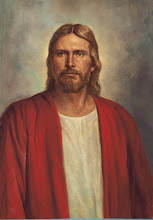
JESUS CHRIST AND THE PLAN OF SALVATION
Latter-day Saints believe there is purpose in life, that there are things to be felt and experienced and accomplished in this existence that bring peace and contentment; there are other attitudes and actions that lead to misery and despair. The Latter-day Saints hold tenaciously to the principle that God our Father has a plan for us. The plan—called variously the plan of salvation, the plan of redemption, the great plan of happiness—serves as a guide, a roadmap of sorts, through trying and confusing and even ironic circumstances in life. In this chapter we will focus on the vital role of Jesus Christ in that plan of salvation.
AN ETERNAL GOSPEL
Latter-day Saints have a rather unusual view of Christianity. They believe that Christian doctrines have been taught and Christian sacraments administered by Christian prophets since the beginning of time. Adam and Eve were Christians. Noah warned the people in his day to repent, believe, and be baptized in the name of Jesus Christ. Abraham and Moses and Isaiah and Jeremiah and Ezekiel were Christian prophets. If all of this seems odd, anachronistic in the sense that there could obviously be no Christianity until the coming to earth of the Christ, Latter-day Saints believe otherwise. They believe and teach that among the plain and precious truths lost from the holy records that became the Bible is the knowledge of Christ's eternal gospel, the message that a gospel or plan of salvation was had from the dawn of time. In this sense, the Latter-day Saints do not accept a developmental or evolutionary approach to the New Testament. They do not accept the view that the antediluvians, for example, were primitives or that the so-called Christian era we generally associate with the birth or ministry of Jesus is in some way superior, on a higher plane, or more spiritually advanced than the eras of the Old Testament patriarchs or prophets. It is true that the Latter-day Saints speak of the Christian era as "the meridian of time," but this has reference to the centrality of Christ's ministry, teachings, and atoning sacrifice more than to the uniqueness of the message delivered in the first century.
Latter-day Saints believe that God has revealed himself and his plan of salvation during different periods of the earth's history; these periods are known as dispensations. The Adamic dispensation was the first. LDS scripture declares that Adam and Eve, after their expulsion from the Garden of Eden, called upon God in prayer and came to know the course in life they should pursue through God's voice, by the ministry of angels, and by revelation through the power of the Holy Ghost. They then taught the gospel to their children and grandchildren, and thus the knowledge of God, of a coming Savior, and of a plan for the redemption and reclamation of wandering souls was in effect early on. (See Pearl of Great Price, Moses 5:1-8.) From the Pearl of Great Price comes the following counsel of God to Adam:["[God] called upon our father Adam by his own voice, saying: I am God; I made the world, and men before they were in the flesh. And he also said unto him: If thou wilt turn unto me, and hearken unto my voice, and believe, and repent of all thy transgressions, and be baptized, even in water, in the name of mine Only Begotten Son, who is full of grace and truth, which is Jesus Christ, the only name which shall be given under heaven, whereby salvation shall come unto the children of men, ye shall receive the gift of the Holy Ghost." (Moses 6:51-52.) Adam was further instructed to teach his children of the necessity for spiritual rebirth, that by "transgression cometh the fall, which fall bringeth death, and inasmuch as ye were born into the world by water, and blood, and the spirit, which I have made, and so became of dust a living soul, even so ye must be born again into the kingdom of heaven, of water, and of the Spirit, and be cleansed by blood, even the blood of mine Only Begotten." (Moses 6:59.)
Other dispensations followed, periods of time wherein the heavens were opened, prophets were called and empowered, and new truths and new authorities were restored to the earth, usually following a time of falling away or apostasy. Thus the ministries and teachings of Enoch, Noah, Abraham, Moses, Jesus, and Joseph Smith introduced major dispensations, periods wherein God—his person and plan—was revealed anew. Lest there be misunderstanding at this point, I hasten to add that Jesus Christ is chief, preeminent, and supreme over all the prophets. Latter-day Saints would acknowledge Jesus as a prophet, a restorer, a revealer of God, but more than this, they stand firm in attesting to his divinity. While the prophets were called of God, Jesus is God. He is the Son of God. Under the Father, his is the power by which men and women are forgiven, redeemed, and born again to a new spiritual life. LDS scriptures teach that all the prophets from the beginning testified of Christ—that all of those called as spokesmen or mouthpieces for God were, first and foremost, witnesses of the Redeemer, inasmuch as "the testimony of Jesus is the spirit of prophecy." (Rev. 19:10.) In the words of Peter, to Christ "give all the prophets witness." (Acts 10:43; see also 1 Pet. 1:10-11.)
In the Book of Mormon, one of the prophet leaders, living in about 73 B.C., explains to his son, "Behold, you marvel why these things"—the coming atonement of Jesus of Nazareth—"should be known so long beforehand. Behold, I say unto you, is not a soul at this time as precious unto God as a soul will be at the time of his coming? Is it not as necessary that the plan of redemption should be made known unto this people as well as unto their children? Is it not as easy at this time for the Lord to send his angel to declare these glad tidings unto us as unto our children, or as after the time of his coming?" (Alma 39:17-19.) In that same vein, Joseph Smith recorded the following in April of 1830:
The Almighty God gave his Only Begotten Son, as it is written in those scriptures which have been given of him. He suffered temptations but gave no heed unto them. He was crucified, died, and rose again the third day; and ascended into heaven, to sit down on the right hand of the Father . . .; that as many as would believe and be baptized in his holy name, and endure in faith to the end, should be saved—not only those who believed after he came in the meridian of time, in the flesh, but all those from the beginning, even as many as were before he came, who believed in the words of the holy prophets, who spake as they were inspired by the gift of the Holy Ghost, who truly testified of him in all things, should have eternal life, as well as those who should come after, who should believe in the gifts and callings of God by the Holy Ghost, which beareth record of the Father and of the Son. (D&C 20:21-27; emphasis added.)
The fullness of the gospel plan, the covenant between God and humankind, is thus known as the new and everlasting covenant. It is new in the sense that it is new to those to whom it is restored and revealed; it is everlasting in the sense that it has been around for a long, long time. We will speak in some detail of the nature of the covenant in a later chapter. For now, let us quote briefly from Joseph Smith on the eternal nature of the gospel covenant:
Perhaps our friends will say that the Gospel and its ordinances were not known till the days of John, the son of Zacharias, in the days of Herod, the king of Judea.
But we will here look at this point: For our own part we cannot believe that the ancients in all ages were so ignorant of the system of heaven as many suppose, since all that were ever saved, were saved through the power of this great plan of redemption, as much before the coming of Christ as since; if not, God has had different plans in operation (if we may so express it), to bring men back to dwell with Himself; and this we cannot believe, since there has been no change in the constitution of man since he fell. . . . It will be noticed that, according to Paul (see Gal. 3:8) the Gospel was preached to Abraham. We would like to be informed in what name the Gospel was then preached, whether it was in the name of Christ or some other name. If in any other name, was it the Gospel? And if it was the Gospel, and that preached in the name of Christ, had it any ordinances [sacraments]? If not, was it the Gospel?<#>1
To say this another way, Latter-day Saints teach that the knowledge of a Savior and the plan of salvation have been revealed throughout history, and not simply since the mortal ministry of Jesus of Nazareth. This may be one reason why so many elements common to Christianity, remnants of a primitive Christian message—a god becoming a man, a virgin birth, the sacrifice of a god, and so on—are to be found in cultures far and wide, even dating well before the birth of Jesus. As Joseph F. Smith, nephew of the Prophet Joseph and himself sixth president of the Church, explained, "When I read books that are scattered broadcast through the world, throwing discredit upon words and teachings and doctrines of the Lord Jesus Christ, saying that some of the ideas Jesus uttered, truths that he promulgated, have been enunciated before by the ancient philosophers among the heathen nations of the world, I want to tell you that there is not a heathen philosopher that ever lived in all the world from the beginning, that had a truth or enunciated a principle of God's truth that did not receive it from the fountain head, from God himself."<#>2 On another occasion he stated:
Let it be remembered that Christ was with the Father from the beginning, that the gospel of truth and light existed from the beginning, and is from everlasting to everlasting. The Father, Son, and Holy Ghost, as one God, are the fountain of truth. From this fountain all the ancient learned philosophers have received their inspiration and wisdom—from it they have received all their knowledge. If we find truth in broken fragments through the ages, it may be set down as an incontrovertible fact that it originated at the fountain, and was given to philosophers, inventors, patriots, reformers, and prophets by the inspiration of God. It came from him through his Son Jesus Christ and the Holy Ghost, in the first place, and from no other source. It is eternal.
Christ, therefore, being the fountain of truth, is no imitator. He taught the truth first; it was his before it was given to man. When he came to the earth he not only proclaimed new thought, but repeated some of the everlasting principles which had been heretofore only partly understood and enunciated by the wisest of men. And in so doing he enlarged in every instance upon the wisdom which they had originally received from him, because of his superior abilities and wisdom, and his association with the Father and the Holy Ghost. He did not imitate men. They made known in their imperfect way what the inspiration of Jesus Christ had taught them, for they obtained their enlightenment first from him.<#>3
THE ATONEMENT OF CHRIST
Gospel means "good news" or "glad tidings." The bad news is that because of the fall of our first parents we are subject to the effects and pull of sin and death. The bad news is that because of the fall men and women experience spiritual death—separation and alienation from the presence and influence of God and of things of righteousness. The bad news is that every man, woman, and child will one day face the grim reaper, the universal horror we know as physical death. The good news is that there is help, relief, extrication from the pain and penalty of our sins. The good news is that there is reconciliation with God the Father through the mediation of his Son, Jesus Christ. The good news is that there is an atonement, literally an at-one-ment with the Father. The good news is that the victory of the grave and the sting of death are swallowed up in the power of One greater than death. (1 Cor. 15:54-55; see also Isa. 25:8.) The good news is the promise of eventual life after death through the resurrection. In short, the gospel is the good news that Christ came to earth, lived and taught and suffered and died and rose again, all to the end that those who believe and obey might be delivered from death and sin unto eternal life. This good news Latter-day Saints have in common with Christians throughout the world.
Latter-day Saints believe that Jesus was and is a perfect man, that he did what no other man or woman has ever done—he lived a perfect life. He was tempted in all points just as we are, but he did not yield. (Heb. 4:15; 1 Pet. 2:22.) Jesus was the truth and he taught the truth, and his teachings stand as a formula for happiness, a guide for personal, interpersonal, and world peace. His messages, as contained in the New Testament, are timely and timeless; they are a treasure house of wisdom and divine direction for our lives. Other men and women have spoken the truth, offered wise counsel for our lives, and even provided profound insight as to who we are and what life is all about. But Jesus did what no other person could do—he atoned for our sins and rose from the dead. Only a god, only a person with power over death, could do such things.
Mormons teach that the atonement of Christ began in the Garden of Gethsemane and was consummated on the cross of Calvary. His sufferings, as described in the four Gospels, represented far more than the anticipation and fear of the cross,
although no sane person would do other than dread such a cruel fate. Rather, his sufferings in the Garden—including sweating blood (Luke 22:44)—came because of his agony for the sins of the world. One of the direct consequences of sin is the withdrawal of the Father's Spirit, resulting in feelings of loss, anxiety, disappointment, fear, alienation, and guilt. Latter-day Saint scripture and prophet leaders affirm that Jesus experienced the withdrawal of the Father's Spirit and thus suffered in both body and spirit.<#>4 The withdrawal of the Spirit lasted for a period of hours in Gethsemane and reoccurred on the cross the next day. It was for this reason that Jesus cried out, "My God, my God, why hast thou forsaken me?" (Matt. 27:46.) A Book of Mormon prophet described our Lord's sufferings as follows: "He cometh into the world that he may save all men if they will hearken unto his voice; for behold, he suffereth the pains of all men, yea, the pains of every living creature, both men, women, and children, who belong to the family of Adam." (2 Ne. 9:21.) Another Nephite leader explained, "He shall suffer temptations, and pain of body, hunger, thirst, and fatigue, even more than man can suffer, except it be unto death; for behold, blood cometh from every pore, so great shall be his anguish for the wickedness and the abominations of his people." (Mosiah 3:7.)
How this atonement took place is unknown. The Latter-day Saints believe in Christ and trust in his redeeming mercy and grace. They accept the word of scripture, both ancient and modern, in regard to the ransoming mission of Jesus the Christ. They know from personal experience—having been transformed from pain to peace, from darkness to light—of the power in Christ to renew the human soul. But, like the rest of the Christian world, they cannot rationally conceive the work of a God. They cannot grasp how one man can assume the effect of another man's error, and, more especially, how one man, even a man possessed of the power of God the Father, can suffer for another's sins. The atonement, the greatest act of mercy and love in all eternity, though real, is, for now, incomprehensible and unfathomable.
In a subsequent chapter we will discuss the LDS view of the premortal and postmortal nature of men and women. For now, let us simply observe that physical death is the separation of spirit and body. Following death, the spirit goes into a spirit world to await the time when spirit and body are reunited, the time we know as the resurrection. Latter-day Saints accept the account in the New Testament that Jesus of Nazareth died on the cross, was taken down by his disciples, and was placed in a tomb. On the third day he rose from the dead. His physical body was joined again with his spirit. With that physical body he walked and talked and taught and ate and ministered. The resurrection of Jesus is of monumental importance; it was the first occurrence of a resurrection and stands as a physical proof of the divine Sonship of Jesus. Again, in a way that is incomprehensible to finite minds, the LDS people believe, as do Christians everywhere, that Christ's rising from the tomb opened the door for all men and women to rise one day from death to life. In short, because he rose, we shall also, in the proper time: "He cometh unto his own, that salvation might come unto the children of men even through faith on his name; and even after all this they shall consider him a man, and say that he hath a devil, and shall scourge him, and shall crucify him. And he shall rise the third day from the dead." (Book of Mormon, Mosiah 3:9-10.) Also: "If Christ had not come into the world . . . , there could have been no redemption. And if Christ had not risen from the dead, or have broken the bands of death that the grave should have no victory, and that death should have no sting, there could have been no resurrection. But there is a resurrection, therefore the grave hath no victory, and the sting of death is swallowed up in Christ. He is the light and the life of the world; yea, a light that is endless, that can never be darkened; yea, and also a life which is endless, that there can be no more death." (Book of Mormon, Mosiah 16:6-9.)
In the Pearl of Great Price are recorded the following words of God to Moses the Lawgiver: "This is my work and my glory—to bring to pass the immortality and eternal life of man." (Pearl of Great Price, Moses 1:39.) This is a capsule statement, a succinct summary of the work of redemption in Christ. Latter-day Saints believe there are two types of salvation made available through the atonement of Jesus Christ—universal and individual. All who take a physical body—good or bad, evil or righteous—will be resurrected. That is, all will one day rise from death to life, their spirits reuniting with their bodies, never again to be divided. "As in Adam all die, even so in Christ shall all be made alive." (1 Cor. 15:22.) This is universal salvation. It is salvation from physical death, a salvation available to all. Immortality is salvation from the grave. It is endless life. It is a universal gift.
Individual salvation is another matter. Though all salvation is available through the goodness and grace of Christ, Latter-day Saints believe there are certain things that must be done in order for divine grace and mercy to be activated in the lives of individual followers of Christ. We must come unto him—accept him as Lord and Savior, have faith on his name, repent of sin, be baptized, receive the gift of the Holy Ghost, and strive to keep God's commandments to the end of our days. Eternal life, known also as salvation or exaltation, comes to those who believe and seek to remain true to the gospel covenant. Christ is "the author of eternal salvation unto all them that obey him." (Heb. 5:9.) One Book of Mormon prophet thus observed,["[Christ] shall come into the world to redeem his people; and he shall take upon him the transgressions of those who believe on his name; and these are they that shall have eternal life, and salvation cometh to none else. Therefore the wicked remain as though there had been no redemption made, except it be the loosing of the bands of death; for behold, the day cometh that all shall rise from the dead and stand before God, and be judged according to their works." (Book of Mormon, Alma 11:40-41.) Eternal life is endless life, but it is also life with and like God. It is God's life. It is the highest form of salvation.
ALL MAY BE SAVED
Latter-day Saints believe that all men and women have the capacity to be saved. "We believe," Joseph Smith wrote in 1842, "that through the Atonement of Christ, all mankind may be saved, by obedience to the laws and ordinances of the Gospel." (Pearl of Great Price, A of F 1:3.) Stated another way, no one who comes to earth is outside the reach of Christ's power to save, no soul beyond the pale of mercy and grace. "God is no respecter of persons, but in every nation he that feareth him, and worketh righteousness, is accepted with him." (Acts 10:34-35.) Latter-day Saints do not believe in predestination. They do not believe that men and women are chosen or elected unconditionally to salvation or reprobation.
In Joseph Smith's day the great debate was between the Presbyterians and the Methodists. The Presbyterians subscribed to the tenets of Calvinism. They believed in such principles as the unconditional election of individuals to eternal life, limited atonement (only the elect are saved through Christ's atonement), the irresistibility of grace (no one chosen for salvation can resist the call to the same), and the perseverance of saints (one cannot fall from grace). The Methodists believed that men and women had a say in whether or not they would be saved, that there was a method, a system by which people could develop spiritually, that our works and labors in this life were necessary. They believed that a person could be in God's grace today and fall from it tomorrow, repent and be restored to that grace thereafter, and so on. For Joseph the Prophet, the two positions were extreme; truth took a road between them both.<#>5 Early on in his life, Joseph seemed to oppose the doctrine of predestination; this may explain why he seemed somewhat partial to the Methodists.
In regard to the individual responsibility men and women have to accept the doctrine of Christ, Latter-day Saints believe that the highest rewards hereafter and the greatest happiness here are reserved for those who come unto Christ and accept his gospel. Though they acknowledge the decency of men and women of goodwill everywhere, the effort of many outside the Christian faith to make a positive difference in the world, and the nobility and refined character of so many who adopt other religious views, still the Latter-day Saints hold to the position that Jesus is the Christ, the Messiah, the Savior of all men and women. His message and redemptive labors are infinite in scope and meant to be accepted by all. He will one day return in glory to the earth, assume responsibility for the purification of this planet, and reign as King of kings and Lord of lords.
1 Teachings, pp. 59-60.
2 Gospel Doctrine (Salt Lake City: Deseret Book Co., 1971), p. 395.
3 Ibid., pp. 398-99.
4 See D&C 19:15-20; Brigham Young, Journal of Discourses 3:205-6.
5 See Teachings, pp. 338-39.
(Robert L. Millet, The Mormon Faith: Understanding Restored Christianity [Salt Lake City: Deseret Book Co., 1998], 53 - 54.)
Showing posts with label Atonement. Show all posts
Showing posts with label Atonement. Show all posts
Friday, June 8, 2007


Don't the Mormons believe they will be saved by their works and not by the grace of Christ?
10. Don't the Mormons believe they will be saved by their works and not by the grace of Christ?
Entrance into God's kingdom comes through covenant—a two-way promise between God and man. The follower of Christ promises to do what he can do—have faith, repent, be baptized, receive the Holy Ghost, endure faithfully to the end, and undertake deeds of Christian service. God on his part agrees to do for us what we could not do for ourselves—forgive our sins, transform our souls and purify our hearts, resurrect us from the dead, and save us hereafter in a kingdom of glory. LDS scriptures are very clear and consistent in stating that salvation or eternal life is a gift, in fact, the greatest of all the gifts of God. (D&C 6:13; 14:7.) Salvation is not something that can be purchased, bartered for, or, in the strictest sense, earned. Over and over again, the Book of Mormon, for example, affirms that men and women are saved by the grace of Jesus Christ and that there is no other way whereby salvation can be acquired. (2 Ne. 10:24; 25:23; Alma 22:14.) On the other hand, good works are expected of those who claim to have taken upon them the name of Christ. In fact, it is only as they strive to do their best to keep their part of the Christian covenant that the grace or divine enabling power can be extended and received as the free gift that it is. (Moroni 10:32.) In short, good works are necessary but not sufficient for salvation. The theological issue is thus not whether people are saved by grace or by works. Instead, the greater questions are: In whom do I trust? Upon whom do I rely? The Book of Mormon prophets attest that the people of God must always rely wholly (alone) upon the merits and mercy of the Holy Messiah. (1 Ne. 10:6; 2 Ne. 31:19; Moro. 6:4.)
(Robert L. Millet, The Mormon Faith: Understanding Restored Christianity [Salt Lake City: Deseret Book Co., 1998], 168 - 169.)
Entrance into God's kingdom comes through covenant—a two-way promise between God and man. The follower of Christ promises to do what he can do—have faith, repent, be baptized, receive the Holy Ghost, endure faithfully to the end, and undertake deeds of Christian service. God on his part agrees to do for us what we could not do for ourselves—forgive our sins, transform our souls and purify our hearts, resurrect us from the dead, and save us hereafter in a kingdom of glory. LDS scriptures are very clear and consistent in stating that salvation or eternal life is a gift, in fact, the greatest of all the gifts of God. (D&C 6:13; 14:7.) Salvation is not something that can be purchased, bartered for, or, in the strictest sense, earned. Over and over again, the Book of Mormon, for example, affirms that men and women are saved by the grace of Jesus Christ and that there is no other way whereby salvation can be acquired. (2 Ne. 10:24; 25:23; Alma 22:14.) On the other hand, good works are expected of those who claim to have taken upon them the name of Christ. In fact, it is only as they strive to do their best to keep their part of the Christian covenant that the grace or divine enabling power can be extended and received as the free gift that it is. (Moroni 10:32.) In short, good works are necessary but not sufficient for salvation. The theological issue is thus not whether people are saved by grace or by works. Instead, the greater questions are: In whom do I trust? Upon whom do I rely? The Book of Mormon prophets attest that the people of God must always rely wholly (alone) upon the merits and mercy of the Holy Messiah. (1 Ne. 10:6; 2 Ne. 31:19; Moro. 6:4.)
(Robert L. Millet, The Mormon Faith: Understanding Restored Christianity [Salt Lake City: Deseret Book Co., 1998], 168 - 169.)
Much has been said about the Mormons not being Christian. Are they?
In recent years the criticism of Latter-day Saints and a movement to exclude them from the category of Christian have intensified. There are those who feel uncomfortable with them because of their belief in modern prophets and additional scripture. Others reject the LDS claim to Christianity because the Church does not subscribe to the creeds of Christendom or is not in the historical Christian tradition. On what basis, then, do the Latter-day Saints themselves claim to be Christian? They believe in Jesus Christ; that he is the Son of the Eternal Father, the Only Begotten in the flesh; that Christ is God, that he is Lord and Savior, the Redeemer of the world; that we are saved by obedience to his commandments and by virtue of his atoning blood; that only through reliance upon his merits, mercy, and grace can people find happiness here and eternal reward hereafter; and that his was the only perfect and sinless life, a life to be emulated and followed. Jesus Christ is the central figure in the doctrine and practice of The Church of Jesus Christ of Latter-day Saints. That so many misunderstand, prejudge, and exclude is sad and strangely ironic.
(Robert L. Millet, The Mormon Faith: Understanding Restored Christianity [Salt Lake City: Deseret Book Co., 1998], 164.)
(Robert L. Millet, The Mormon Faith: Understanding Restored Christianity [Salt Lake City: Deseret Book Co., 1998], 164.)
How Does Christ Save? Jameas E. Talmage, The Vitality of Mormonism
His Plan Combines Justice and Mercy
THE results of the Atonement accomplished by the Lord Jesus Christ comprise (1) universal deliverance from bodily death, that is to say the assured resurrection of all the dead, and (2) deliverance from the effects of individual sin.
It is but just that since death has been entailed upon the entire race through the act of our first parents, redemption therefrom should be likewise universal, without effort or sacrifice on our part. We shall each be resurrected from death, our disembodied spirits tabernacling again in their bodies of flesh and bones, whether we be relatively clean, or filthy from sin; but the time or order of our respective liberation from the grave will be determined by our state of righteousness or guilt. So the Scriptures aver. (See e. g. John 5:28-29; 1 Cor. 15:23; Book of Mormon, 2 Nephi 9:6-13; and D&C 88:96-102.)
Herein is a lawful adjustment between justice and mercy. We are mortal through no personal fault; we shall be made immortal without personal merit. Such is justice. And though many have committed crimes far more heinous than Adam's disobedience, even they shall eventually be absolved from their hereditary mortality. Such is mercy.
The Divine plan of salvation, made effective through the Atonement, is likewise of universal application, so that every man may become a beneficiary thereof; but that plan is not self-operative. The Church of Jesus Christ of Latter-day Saints summarizes the conditions in this wise:
"We believe that men will be punished for their own sins, and not for Adam's transgression.
"We believe that, through the Atonement of Christ, all mankind may be saved, by obedience to the laws and ordinances of the Gospel."
However great his moral weakness and sinful tendencies entailed by heredity, every responsible individual knows right from wrong, with some degree of conviction; and in the final judgment of that soul every element, whether of extenuation or crimination, will be taken into due account. Means of making amends for sin, and thereby establishing eligibility as fit subjects for remission or forgiveness, are freely offered to all men; but the prescribed conditions must be complied with or the incubus of sin can not be lifted.
Salvation is not to be had for the mere asking. It is too precious a pearl to be wantonly cast at the feet of the unrepentant and unregenerate who, heedless of its eternal worth, would fain tread it into the mire wherein they wallow. Christ's plan for saving the souls of men contemplates no universal and unconditional remission of sins. That would be justice travestied and mercy corrupted. So far as I am personally responsible for sin, I, and I alone am accountable. This is just. But though I make all material restitution possible to my brother whom I may have wronged, I cannot alone wipe the stain of guilt from my soul. To obtain remission from God whose laws I have violated, to be again reconciled to Him through expiation for my transgression, I am in dire need of help. That help is provided through obedience to the laws and ordinances of the Gospel of Jesus Christ. I am not left without hope; but on the contrary have the Divine assurance of possible emancipation. This is mercy, indeed.
"He that believeth and is baptized shall be saved; but he that believeth not shall be damned." (Mark 16:16). So spake the Christ. The belief here specified must mean that active, vital, potent belief which we distinctively designate faith. A mere assent of the mind to any proposition, without application and action, remains a mental concept and nothing more. Our Lord's association of belief with baptism is proof that no empty or idle belief can avail to save. Genuine faith in the Lord Jesus Christ naturally leads to obedience to His commands; and the firstfruits of faith are embodied in repentance. None but the truly repentant believer is an acceptable subject for baptism.
Thus no man can consistently hope for salvation in the Kingdom of God except through the Atonement of Jesus Christ; and the Atonement is made operative for the remission of sins through individual compliance with the conditions explicitly set forth by "the author of eternal salvation unto all them that obey him." (Heb. 5:9). Christ's method of saving souls is that of providing definite means, which any one may accept or reject to his own eternal gain or loss.
Universal amnesty for crime may serve to increase crime. God's system of benevolence, which comprises and exceeds all that we call charity, consists in helping sinners to help themselves. Indiscriminate giving fosters pauperism in both the temporal and the spiritual sense. Man alone cannot save himself; and just as truly, Christ alone cannot save him. Obedience to the laws and ordinances of the Gospel is the price of salvation.
An ancient Hebrew prophet thus set forth in simplicity the plan of salvation dependent upon the Atonement of Christ:
"His blood atoneth for the sins of those who have fallen by the transgression of Adam, who have died, not knowing the will of God concerning them, or who have ignorantly sinned. But, wo, wo unto him who knoweth that he rebelleth against God; for salvation cometh to none such, except it be through repentance and faith on the Lord Jesus Christ." (Book of Mormon, Mosiah 3:11-12).
In these latter days the Lord hath given this commandment unto the Church: "Thou shalt declare repentance and faith on the Savior and remission of sins by baptism and by fire, yea, even the Holy Ghost." (D&C 19:31.)
(James E. Talmage, The Vitality of Mormonism [Boston: Gorham Press, 1919], 62.)
THE results of the Atonement accomplished by the Lord Jesus Christ comprise (1) universal deliverance from bodily death, that is to say the assured resurrection of all the dead, and (2) deliverance from the effects of individual sin.
It is but just that since death has been entailed upon the entire race through the act of our first parents, redemption therefrom should be likewise universal, without effort or sacrifice on our part. We shall each be resurrected from death, our disembodied spirits tabernacling again in their bodies of flesh and bones, whether we be relatively clean, or filthy from sin; but the time or order of our respective liberation from the grave will be determined by our state of righteousness or guilt. So the Scriptures aver. (See e. g. John 5:28-29; 1 Cor. 15:23; Book of Mormon, 2 Nephi 9:6-13; and D&C 88:96-102.)
Herein is a lawful adjustment between justice and mercy. We are mortal through no personal fault; we shall be made immortal without personal merit. Such is justice. And though many have committed crimes far more heinous than Adam's disobedience, even they shall eventually be absolved from their hereditary mortality. Such is mercy.
The Divine plan of salvation, made effective through the Atonement, is likewise of universal application, so that every man may become a beneficiary thereof; but that plan is not self-operative. The Church of Jesus Christ of Latter-day Saints summarizes the conditions in this wise:
"We believe that men will be punished for their own sins, and not for Adam's transgression.
"We believe that, through the Atonement of Christ, all mankind may be saved, by obedience to the laws and ordinances of the Gospel."
However great his moral weakness and sinful tendencies entailed by heredity, every responsible individual knows right from wrong, with some degree of conviction; and in the final judgment of that soul every element, whether of extenuation or crimination, will be taken into due account. Means of making amends for sin, and thereby establishing eligibility as fit subjects for remission or forgiveness, are freely offered to all men; but the prescribed conditions must be complied with or the incubus of sin can not be lifted.
Salvation is not to be had for the mere asking. It is too precious a pearl to be wantonly cast at the feet of the unrepentant and unregenerate who, heedless of its eternal worth, would fain tread it into the mire wherein they wallow. Christ's plan for saving the souls of men contemplates no universal and unconditional remission of sins. That would be justice travestied and mercy corrupted. So far as I am personally responsible for sin, I, and I alone am accountable. This is just. But though I make all material restitution possible to my brother whom I may have wronged, I cannot alone wipe the stain of guilt from my soul. To obtain remission from God whose laws I have violated, to be again reconciled to Him through expiation for my transgression, I am in dire need of help. That help is provided through obedience to the laws and ordinances of the Gospel of Jesus Christ. I am not left without hope; but on the contrary have the Divine assurance of possible emancipation. This is mercy, indeed.
"He that believeth and is baptized shall be saved; but he that believeth not shall be damned." (Mark 16:16). So spake the Christ. The belief here specified must mean that active, vital, potent belief which we distinctively designate faith. A mere assent of the mind to any proposition, without application and action, remains a mental concept and nothing more. Our Lord's association of belief with baptism is proof that no empty or idle belief can avail to save. Genuine faith in the Lord Jesus Christ naturally leads to obedience to His commands; and the firstfruits of faith are embodied in repentance. None but the truly repentant believer is an acceptable subject for baptism.
Thus no man can consistently hope for salvation in the Kingdom of God except through the Atonement of Jesus Christ; and the Atonement is made operative for the remission of sins through individual compliance with the conditions explicitly set forth by "the author of eternal salvation unto all them that obey him." (Heb. 5:9). Christ's method of saving souls is that of providing definite means, which any one may accept or reject to his own eternal gain or loss.
Universal amnesty for crime may serve to increase crime. God's system of benevolence, which comprises and exceeds all that we call charity, consists in helping sinners to help themselves. Indiscriminate giving fosters pauperism in both the temporal and the spiritual sense. Man alone cannot save himself; and just as truly, Christ alone cannot save him. Obedience to the laws and ordinances of the Gospel is the price of salvation.
An ancient Hebrew prophet thus set forth in simplicity the plan of salvation dependent upon the Atonement of Christ:
"His blood atoneth for the sins of those who have fallen by the transgression of Adam, who have died, not knowing the will of God concerning them, or who have ignorantly sinned. But, wo, wo unto him who knoweth that he rebelleth against God; for salvation cometh to none such, except it be through repentance and faith on the Lord Jesus Christ." (Book of Mormon, Mosiah 3:11-12).
In these latter days the Lord hath given this commandment unto the Church: "Thou shalt declare repentance and faith on the Savior and remission of sins by baptism and by fire, yea, even the Holy Ghost." (D&C 19:31.)
(James E. Talmage, The Vitality of Mormonism [Boston: Gorham Press, 1919], 62.)
Wednesday, May 30, 2007
Atonement: Teachings of Joseph Smith
Atonement
But notwithstanding the transgression, by which man had cut himself off from an immediate intercourse with his Maker without a Mediator, it appears that the great and glorious plan of His redemption was previously provided; the sacrifice prepared; the atonement wrought out in the mind and purpose of God, even in the person of the Son, through whom man was now to look for acceptance, and through whose merits he was now taught that he alone could find redemption, since the word had been pronounced, Unto dust thou shalt return.
But that man was not able himself to erect a system, or plan with power sufficient to free him from a destruction which awaited him, is evident from the fact that God, as before remarked, prepared a sacrifice in the gift of His own Son who should be sent in due time, to prepare a way, or open a door through which man might enter into the Lord's presence, whence he had been cast out for disobedience. (Joseph Smith, History of The Church of Jesus Christ of Latter-day Saints, 7 vols. 2:15)
Now I understand by this quotation [Moses 7:62], that God clearly manifested to Enoch the redemption which He prepared, by offering the Messiah as a Lamb slain from before the foundation of the world; and by virtue of the same, the glorious resurrection of the Savior, and the resurrection of all the human family, even a resurrection of their corporeal bodies, is brought to pass. (Joseph Smith, History of The Church of Jesus Christ of Latter-day Saints, 7 vols. 2:260)
"What are the fundamental principles of your religion?"
The fundamental principles of our religion are the testimony of the Apostles and Prophets, concerning Jesus Christ, that He died, was buried, and rose again the third day, and ascended into heaven; and all other things which pertain to our religion are only appendages to it. But in connection with these, we believe in the gift of the Holy Ghost, the power of faith, the enjoyment of the spiritual gifts according to the will of God, the restoration of the house of Israel, and the final triumph of truth. (Joseph Smith, History of The Church of Jesus Christ of Latter-day Saints, 7 vols. 3:30)
[God] foreordained the fall of man; but all merciful as He is, He foreordained at the same time, a plan of redemption for all mankind. I believe in the Divinity of Jesus Christ, and that He died for the sins of all men, who in Adam had fallen. (Joseph Smith, History of The Church of Jesus Christ of Latter-day Saints, 7 vols. 4:78)
Through the atonement of Christ and the resurrection and obedience in the gospel, we shall again be conformed to the image of [God's] Son, Jesus Christ. Then we shall have attained to the image, glory, and character of God. (Joseph Smith, The Words of Joseph Smith, p. 231; standardized)
Salvation could not come to the world without the mediation of Jesus Christ. (Joseph Smith, History of The Church of Jesus Christ of Latter-day Saints, 7 vols. 5:555)
The salvation of Jesus Christ was wrought out for all men, in order to triumph over the devil; for if it did not catch him in one place, it would in another. (Joseph Smith, History of The Church of Jesus Christ of Latter-day Saints, 7 vols. 6:314)
But notwithstanding the transgression, by which man had cut himself off from an immediate intercourse with his Maker without a Mediator, it appears that the great and glorious plan of His redemption was previously provided; the sacrifice prepared; the atonement wrought out in the mind and purpose of God, even in the person of the Son, through whom man was now to look for acceptance, and through whose merits he was now taught that he alone could find redemption, since the word had been pronounced, Unto dust thou shalt return.
But that man was not able himself to erect a system, or plan with power sufficient to free him from a destruction which awaited him, is evident from the fact that God, as before remarked, prepared a sacrifice in the gift of His own Son who should be sent in due time, to prepare a way, or open a door through which man might enter into the Lord's presence, whence he had been cast out for disobedience. (Joseph Smith, History of The Church of Jesus Christ of Latter-day Saints, 7 vols. 2:15)
Now I understand by this quotation [Moses 7:62], that God clearly manifested to Enoch the redemption which He prepared, by offering the Messiah as a Lamb slain from before the foundation of the world; and by virtue of the same, the glorious resurrection of the Savior, and the resurrection of all the human family, even a resurrection of their corporeal bodies, is brought to pass. (Joseph Smith, History of The Church of Jesus Christ of Latter-day Saints, 7 vols. 2:260)
"What are the fundamental principles of your religion?"
The fundamental principles of our religion are the testimony of the Apostles and Prophets, concerning Jesus Christ, that He died, was buried, and rose again the third day, and ascended into heaven; and all other things which pertain to our religion are only appendages to it. But in connection with these, we believe in the gift of the Holy Ghost, the power of faith, the enjoyment of the spiritual gifts according to the will of God, the restoration of the house of Israel, and the final triumph of truth. (Joseph Smith, History of The Church of Jesus Christ of Latter-day Saints, 7 vols. 3:30)
[God] foreordained the fall of man; but all merciful as He is, He foreordained at the same time, a plan of redemption for all mankind. I believe in the Divinity of Jesus Christ, and that He died for the sins of all men, who in Adam had fallen. (Joseph Smith, History of The Church of Jesus Christ of Latter-day Saints, 7 vols. 4:78)
Through the atonement of Christ and the resurrection and obedience in the gospel, we shall again be conformed to the image of [God's] Son, Jesus Christ. Then we shall have attained to the image, glory, and character of God. (Joseph Smith, The Words of Joseph Smith, p. 231; standardized)
Salvation could not come to the world without the mediation of Jesus Christ. (Joseph Smith, History of The Church of Jesus Christ of Latter-day Saints, 7 vols. 5:555)
The salvation of Jesus Christ was wrought out for all men, in order to triumph over the devil; for if it did not catch him in one place, it would in another. (Joseph Smith, History of The Church of Jesus Christ of Latter-day Saints, 7 vols. 6:314)
Subscribe to:
Posts (Atom)